Travelers are using reward points to reroute or escape trips affected by global airspace shutdowns.
Points function as an alternative currency when standard travel systems fail to keep pace with immediate human needs.
Reward Points Become a Crisis Tool
Midnight at Noi Bai International Airport feels different when the flight boards go red. Passengers recently found themselves trapped in a frantic loop of refreshing mobile browsers as regional stability in the Middle East dissolved. The Travelers Use Reward Points to Escape Global Airspace Shutdowns report carried a March 12, 2026 time marker for readers following the latest account. Qatar Airways, a primary carrier for long-haul routes connecting Southeast Asia to the West, saw its infrastructure buckle.
Airspace closures over Iran and Iraq, triggered by the recent US-Israel airstrikes, effectively severed the primary artery between Hanoi and the American East Coast. When the airline's booking systems crashed under the pressure of thousands of simultaneous re-routing requests, travelers faced a grim choice: wait for a resolution that might not come for days or pay exorbitant cash sums for the few remaining seats on alternative routes. Survival in these moments depends on liquidity, yet cash often proves to be the least efficient tool. One stranded traveler, trying to return to New York City, watched as economy ticket prices for last-minute departures climbed by hundreds of dollars every ten minutes.
Airspace Closures Change Trip Math
Standard retail commerce failed to keep pace with the immediate human need for exit. The traveler realized that their original $1,142 itinerary, booked months in advance, was now a worthless piece of digital paper. In this environment, airline customer service desks become sites of desperation rather than assistance. Staff members often lack the authority or the technical access to override global system failures, leaving passengers to manage the chaos on their own.
Points function as an alternative currency when central banking and standard retail commerce fail to keep pace with immediate human needs. Success for the stranded involves more than having money in a bank account. It requires a specific kind of financial diversification. This strategy relies on transferable reward points, specifically those held in ecosystems like Chase Ultimate Rewards or Capital One Miles.
Traveler Flexibility
Unlike cash, which loses its purchasing power as airlines hike fares during a crisis, reward points often maintain a more stable value through fixed award charts or partner transfer ratios. By shifting focus from cash-based search engines to loyalty portals, the traveler in Hanoi managed to secure a new path home. Their story highlights a shift in how sophisticated travelers view their credit card balances. These are no longer just for upgrades or luxury vacations.
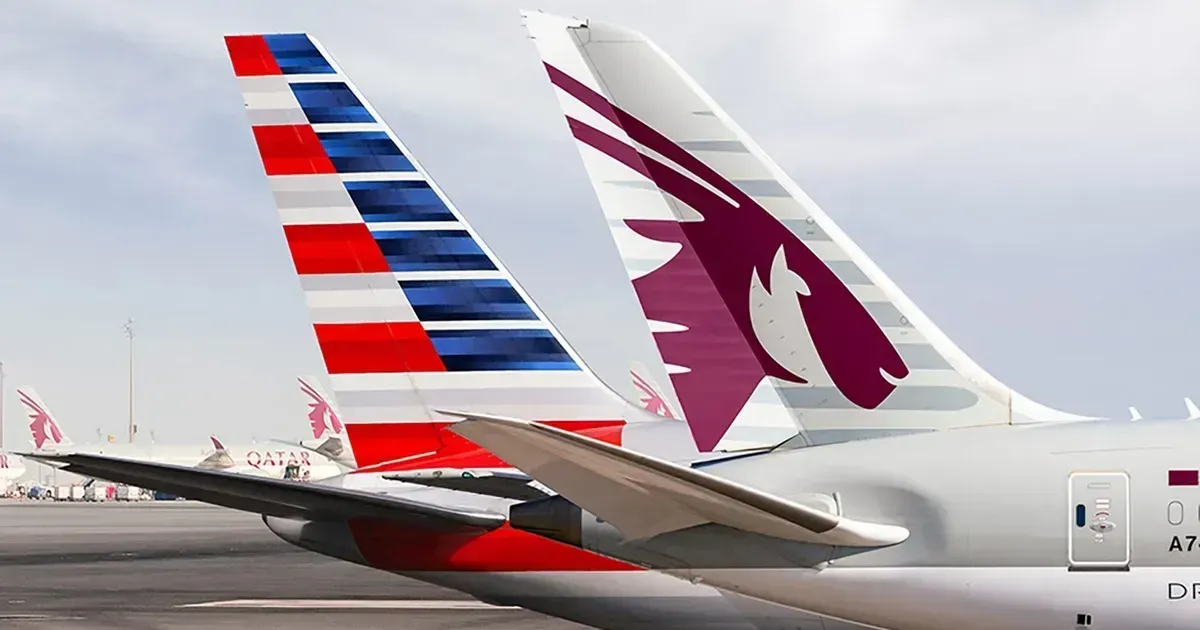
They are insurance policies against geopolitical volatility. Breaking down the numbers reveals the staggering financial burden of an emergency reroute. The original journey home was a multi-leg trip: a Qatar Airways flight from Hanoi to Boston via Doha and a subsequent American Airlines flight to New York City. The initial investment totaled $1,142, which included a $760 base ticket, a $249 seat upgrade, and a $133 connecting flight.
Strategic Diversification of Loyalty Assets Maintaining a singular loyalty to one airline is a dangerous gamble in the current global climate. Diversification across multiple credit card ecosystems ensures that if one transfer partner experiences a blackout, another remains viable. The Hanoi incident proves that travelers need a mix of points that can be sent to various international carriers. This diversification acts as an insurance policy. If United Airlines has no seats, perhaps British Airways or Cathay Pacific does. Relying on a single airline's miles limits a traveler to that carrier's operational success. In a crisis, that carrier's operational success is the first thing to disappear. Economic volatility in the travel sector means that point valuations fluctuate less wildly than last-minute cash fares. A flight that costs $4,000 in cash during a crisis might still be available for 80,000 points if award space exists. The price ceiling is the primary benefit of keeping an emergency stash. It prevents the traveler from being exploited by algorithms that detect high demand and adjust prices accordingly. Every frequent traveler should treat their points balance like an emergency fund, separate from their primary savings. That realization changed the way the stranded travelers in Vietnam viewed their Chase Sapphire Preferred cards. The card was no longer a tool for earning 3x on dining. It was a literal ticket home. Future disruptions are an inevitability rather than a possibility. Whether the cause is weather, war, or technical collapse, the result remains the same for the individual at the gate. Preparation must happen months in advance. One cannot earn 50,000 points while sitting on the airport floor in Hanoi. The work begins with strategic spending and disciplined point accumulation. Keeping a minimum balance of 50,000 to 100,000 transferable points ensures that no matter where a person is in the world, they have a way out that does not involve draining their bank account or waiting in a five-hour customer service line. That specific case highlights a broader fragility in our interconnected world, where a strike in one hemisphere can strand a vacationer in another.
Points as Crisis Insurance
Do you actually believe your airline ticket is a contract for transportation? Security is an expensive illusion bought with loyalty programs and digital credits because the airline industry has effectively abandoned its duty of care. When the first missile flies or the first server farm overheats, these corporations retreat behind crashed apps and busy signals. They leave you to rot in a terminal while their algorithms strip-mine your desperation for every last cent. It is an indictment of the modern travel industry that a person must act as their own travel agent, insurer, and logistics coordinator. We have reached a point where 'loyalty' is not a reward for your business, but a ransom you pay to ensure you aren't left behind during the next systemic collapse. If you are not hoarding transferable points, you are essentially traveling without a parachute. The industry's failure in Hanoi is not a one-off error. It is the new baseline. Stop trusting the system to work when things go wrong. The system is designed to protect the carrier's bottom line, not your scheduled arrival. Your only real protection is a diversified portfolio of points that the airlines cannot easily devalue or ignore when the world starts to burn.