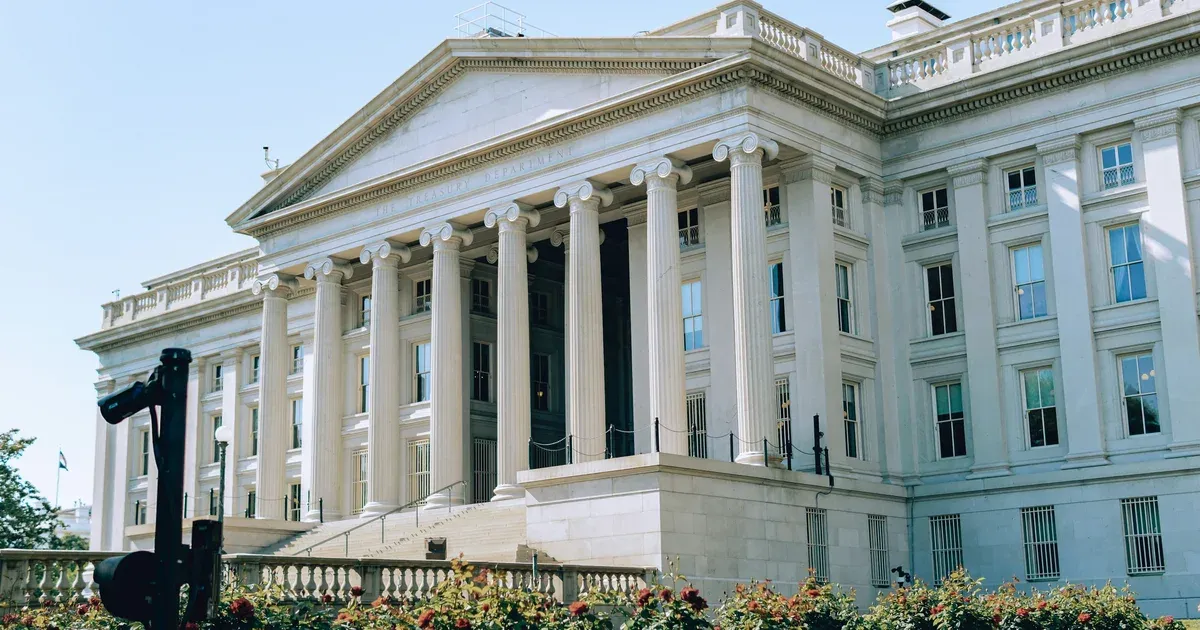
The Treasury's report of a $1 trillion deficit through February has pushed Washington's budget debate across a new threshold. The deficit milestone arrived on March 11, 2026.
The Deficit Improves and Still Looks Terrible
Washington accountants reached a sobering milestone on Tuesday. Treasury Department records show the federal budget deficit surpassed $1 trillion for the first five months of the fiscal year 2026. While the number sounds astronomical, the $1.004 trillion figure reveals a specific trend in government finance. February 2026 statistics reflect a 12% decline from the same period in 2025, suggesting a narrowing of the gap between what the government spends and what it collects in taxes. Treasury officials released the monthly budget statement during a period of intense scrutiny regarding federal spending.
Total outlays for the current fiscal year have outpaced revenue, yet the rate of growth in the deficit has slowed compared to previous cycles. Economists attribute this relative improvement to a combination of higher tax receipts and the expiration of several temporary spending programs that weighed heavily on the 2025 books. Revenue surged as individual income tax payments arrived in higher volumes, bolstered by a resilient labor market and modest wage growth. Debt servicing costs remain a primary concern for the Congressional Budget Office and private sector analysts alike. High interest rates, maintained by the Federal Reserve to combat persistent inflation, have increased the price of borrowing for the U.S.
, with Washington calling a slower fiscal deterioration a partial improvement.
Every new bond issuance carries a higher yield than the maturing debt it replaces. Interest payments on the national debt now rival the cost of major federal agencies, creating a persistent drain on the available budget. Spending on Social Security and Medicare continues to dominate the federal ledger. Enrollment in these programs increases as the population ages, creating a structural deficit that persists regardless of the political climate in Congress.
Defense spending also saw a moderate increase, driven by modernization efforts and procurement contracts signed in earlier years.
Interest Costs Keep Eating the Budget
But the reduction in emergency outlays, which spiked during the economic volatility of 2025, provided enough of a cushion to bring the overall deficit down by 12% on a year-to-date basis. Revenue collections for the fiscal year reached levels that surprised some market observers. Corporate tax receipts showed resilience, while individual withholdings reflected a steady employment environment. This reduction in the deficit gap does not erase the long-term challenges of the U.S. debt load.
It merely provides a slower path toward the next trillion-dollar increase in the total national debt. Critics point out that running a $1 trillion deficit in just five months would have been unthinkable two decades ago, yet it has become the standard operational reality for the modern American state. The math doesn't add up for long-term sustainability. Lawmakers face a difficult choice between raising revenue through tax changes or implementing deep cuts to popular programs. Budget negotiations often stall in the face of these polar options, leading to the use of continuing resolutions that maintain the status quo.
Such fiscal inertia contributes to the predictability of the deficit reaching the $1 trillion mark by February each year. Financial markets have largely priced in these numbers, though any unexpected spike in spending could trigger volatility in the bond market. Comparison with the 2025 fiscal year reveals how much the 12% improvement depends on timing. Last year, several one-time expenditures and adjustments to tax filing deadlines shifted the deficit higher in the early months. Removing those anomalies shows a more consistent, albeit still massive, imbalance.
Federal agencies are currently operating under strict guidance to manage discretionary funds, but the vast majority of the budget remains tied to mandatory programs that do not require annual congressional approval.
Why Trillion-Dollar Gaps Became Normal
Can a society survive indefinitely when its accountants view a trillion-dollar shortfall as a victory for prudence? Washington has become so addicted to the drug of deficit spending that a 12% reduction in the speed of our fiscal decay is celebrated as a triumph. This perspective is not just cynical; it is grounded in the reality of a political class that has entirely abandoned the concept of a balanced budget. We are watching a slow-motion collision between demographic reality and fiscal fantasy. Social Security and Medicare are not just line items; they are the tectonic plates of the American economy, and they are shifting in a way that no amount of individual tax revenue can stabilize.
The 2026 deficit numbers should be viewed as a warning rather than a relief. When interest payments on our national debt begin to eclipse the defense budget, the sovereignty of the nation is effectively outsourced to the bond market. Those who find comfort in a 12% improvement are ignoring the fact that we are still borrowing $200 billion a month just to keep the lights on. It is time to stop pretending that minor fluctuations in tax receipts will solve a structural crisis that requires genuine political courage to address.