A shutdown-weakened Department of Homeland Security is now carrying the Trump administration’s Haitian deportation fight through already strained immigration courts. The timing mattered because the dispute was still unfolding on March 11, 2026, while DHS faced pressure on multiple fronts.
The Trump administration’s Haitian deportation push is moving through a shutdown environment already straining immigration courts.
TPS Fight Adds Pressure to DHS
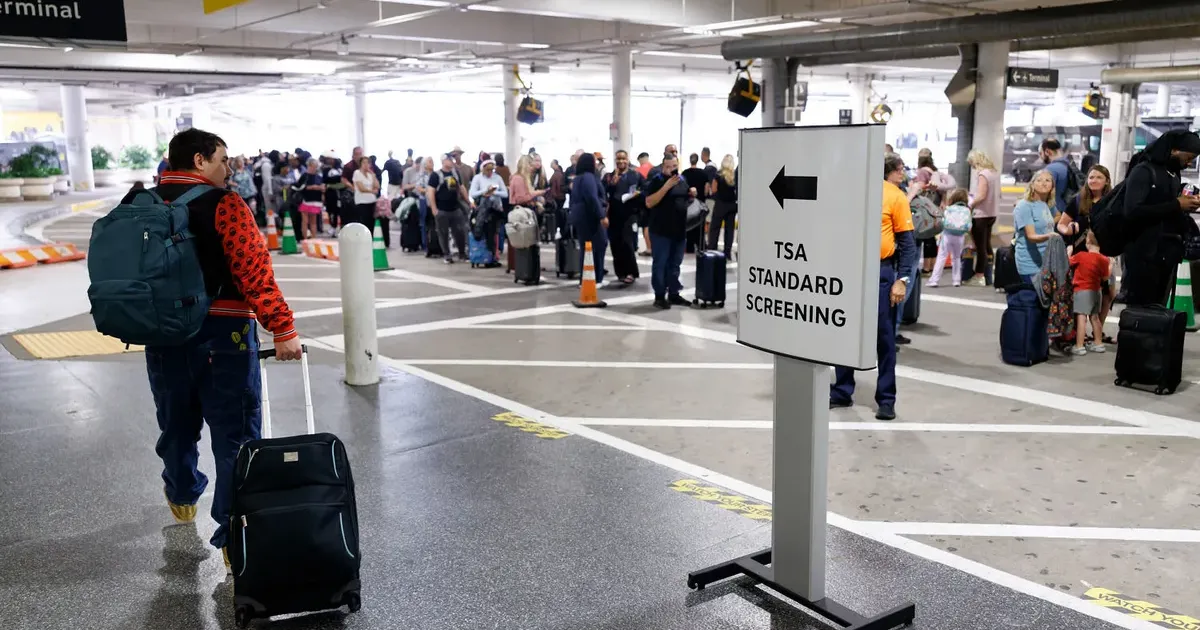
Anthony Riley stared at his latest eviction notice on Wednesday, a grim consequence of a political standoff three hundred miles away in Washington. Working as a Transportation Security Administration officer in upstate New York, the 58-year-old father of three continues to screen passengers at a regional airport without receiving a paycheck. His SOS messages to state senators represent a growing chorus of desperation among federal employees caught in the gears of a Department of Homeland Security funding lapse. Riley described his family's situation as a direct price paid for his continued service to a government that currently refuses to pay him.
Senate leaders remained entrenched in their respective camps on Wednesday while the department's operations began to fracture. Republicans and Democrats exchanged sharp accusations just steps from the Senate chamber, focused primarily on a series of proposed reforms to Immigration and Customs Enforcement. Senator Eric Schmitt of Missouri dismissed Democratic concerns with a blunt assessment, telling his colleagues they could cry or whine about the situation but ultimately lost the election. Schmitt accused the opposition of stalling to provoke viral incidents involving activists and federal agents in sanctuary jurisdictions.
Legislative paralysis has become the standard operating procedure in a capital divided by fundamental disagreements over the scope of border enforcement. Major disagreements center on whether to separate the funding for different agencies within the department. Democrats offered a proposal to fund the TSA and the Federal Emergency Management Agency immediately while continuing to debate the more contentious budget for immigration enforcement. Republican leadership, however, rejected this carve-out approach.
Senate Majority Leader John Thune argued that the White House had already made significant concessions on ICE reforms, claiming the administration went further than any Democrat previously thought possible. Thune insisted that the department must be reopened in its entirety, with new enforcement protocols firmly in place.
Shutdown Politics Narrow the Options
This financial starvation of the TSA occurred as airport operations nationwide began to slip into chaos. Senator Katie Britt of Alabama pointed to mounting delays and logistical failures at major hubs, blaming the Democratic refusal to accept the White House's terms for the growing disruption. Britt argued that the shutdown was being used as a political tool while travelers faced the consequences of understaffed security checkpoints. Despite the recent high-profile firing of Kristi Noem, which some analysts expected might ease tensions, the partisan divide has only widened.
While the legislative branch remained frozen, the judicial front saw aggressive new movement from the executive branch. Solicitor General D. John Sauer asked the Supreme Court on Wednesday to end temporary legal protections for approximately 350,000 Haitians. This aggressive posture by Solicitor General D. John Sauer seeks an emergency intervention to terminate the Temporary Protected Status (TPS) designation that has allowed Haitian nationals to live and work in the United States legally. The Justice Department argued that these protections were never intended to be permanent fixtures of American immigration policy. Sauer warned the justices that numerous other cases involving similar protections for different nationalities are already waiting in the wings. Syria's TPS designation remains under similar fire, with a separate case currently pending before the high court.
The administration's legal strategy appears to be a multi-pronged effort to dismantle the humanitarian parole and protection systems established over several decades. Critics of the move argue that ending these protections during a period of intense civil unrest in Haiti would be catastrophic.
Governance by Hostage-Taking
Washington has finally perfected the art of governance by hostage-taking. By withholding pay from workers like Anthony Riley while simultaneously demanding the Supreme Court enable the mass removal of 350,000 Haitians, the administration is telegraphing its true priorities. It isn't a budget dispute; it is a calculated stress test of American institutions. The Republican refusal to fund FEMA or the TSA without radical ICE reforms demonstrates a willingness to let the nation's infrastructure crumble if it means securing the power to deport at will. D. John Sauer's move to end TPS designations while the department is technically unfunded reveals a chilling irony: the government is too broke to pay its guards but has plenty of resources to litigate the expulsion of its residents. We are watching the deliberate hollowing out of the Department of Homeland Security in real-time. If the executive branch can successfully argue that it has the power to ignore humanitarian crises abroad while ignoring its financial obligations to its own employees at home, the very definition of national security has been perverted. The current stalemate is not a failure of the system. It is the system being used exactly as intended by those who find its humanitarian functions inconvenient.