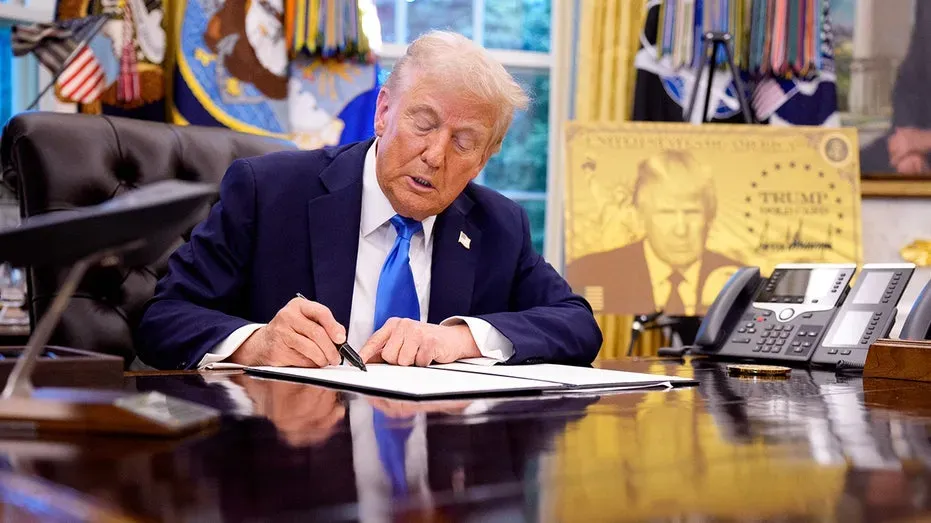
Trump’s Kentucky campaign stop put loyalty politics back at the center of a state-level Republican contest. The Kentucky stop sharpened on March 11, 2026
Court Victory Gives Trump a Rally Line
March brings a volatile mix of military tension and judicial maneuvers to the nation's capital. Kentucky voters gathered in the heart of the Bluegrass State today to hear a familiar pitch from a president who is simultaneously fighting global energy fluctuations and a complex domestic legal war. Seeking to shore up support ahead of the 2026 midterm elections, the administration is moving on multiple fronts to prove its agenda remains viable despite heavy resistance from the judiciary and volatile international markets. Federal appeals court judges handed the White House a significant win on Wednesday by pausing a lower court order that threatened to halt a controversial immigration policy. This decision provides the White House with a near-term reprieve just hours before a deadline that would have ended deportations to so-called third countries. Lawyers representing the Department of Homeland Security argued successfully that the previous injunction created an unworkable scheme. They maintained that blocking these removals would derail sensitive negotiations with foreign governments and risk the cancellation of thousands of planned flights. The First Circuit Court of Appeals in Boston intervened, aligning with previous emergency stays issued by the Supreme Court last year. Judge Brian Murphy, a Biden appointee, had previously issued an 81-page ruling that characterized the third-country removal process as a violation of due process. He argued that the government must first attempt to return migrants to their home countries or a destination designated by an immigration judge before considering an alternative nation.
Legal relief, energy anxiety, and party discipline collided on one stage, giving the Kentucky stop more weight than a standard campaign appearance.
Under Murphy's rejected framework, the administration would have been required to provide meaningful notice and a reasonable fear interview for any migrant facing removal to a third country. Trump administration officials expect the case to move quickly to the high court for a final review on the merits. Legal experts expect the Supreme Court to provide the final word on these jurisdictional battles.
Energy Volatility Shadows the Message
Interior Secretary Doug Burgum moved aggressively today to counter claims that the executive branch was caught off guard by recent shifts in the energy sector. Reports recently surfaced suggesting the administration miscalculated how military operations against Iran would disrupt global supplies. Burgum dismissed these allegations as completely fake news during a press briefing. He asserted that the administration remained fully prepared for the market reaction that occurred after the United States and Israel launched joint strikes at the end of February. Futures for crude oil experienced a 20 percent spike on Sunday evening, though those prices reversed course shortly thereafter.
Market analysts note that the 2026 energy environment remains tied to the stability of the Persian Gulf. While some critics in Congress suggest the White House lacked a contingency plan for the price surge, Burgum insists the fluctuations were within predicted parameters. He stated that the administration's focus remains on American energy independence, arguing that domestic production will eventually insulate consumers from overseas shocks. Still, the sudden volatility has given political ammunition to opponents who argue the administration is overextending its military reach without securing the economic home front. Trump landed in Kentucky on Wednesday afternoon to sell his broader economic vision to a crowd in the district of a persistent Republican critic.
Representative Thomas Massie has long been a thorn in the side of the executive branch, frequently voting against major spending bills and foreign aid packages. This visit marks a direct challenge to the incumbent, as the president officially threw his weight behind retired Captain Ed Gallrein. By supporting a primary challenger, the administration is signaling that loyalty to the 2026 agenda is a prerequisite for its endorsement.
Massie Feud Tests Party Loyalty
The Kentucky rally is testing ground for whether the base prefers Massie's brand of libertarian-leaning fiscal conservatism or a more populist, military-aligned approach. Political survival in 2026 appears to hinge on a delicate balance between domestic growth and foreign entanglements. Gallrein, a former Navy SEAL, has centered his campaign on total alignment with the White House on trade and border security. This specific legal maneuver by the First Circuit to allow third-country deportations will likely feature heavily in the campaign rhetoric throughout the week. Supporters at the Kentucky event cheered for the news of the court's intervention, seeing it as a validation of the tough immigration stance that defined the 2024 campaign.
Trump framed the legal battle as a fight against activist judges who seek to manufacture chaos at the border. Voters in the Midwest and South are increasingly focused on the intersection of foreign policy and their own pocketbooks. Rising costs associated with the Iranian conflict have become a central theme of the 2026 midterm cycle. Democratic strategists are already pointing to the oil price spike as evidence of executive overreach, but the White House is doubling down on its narrative of strength. The Kentucky speech focused on bringing manufacturing jobs back to the region and reducing the regulatory burdens that Burgum discussed earlier in the week.
Success in the upcoming elections will depend on whether the administration can convince the public that the temporary economic pain of overseas operations is worth the long-term gain of global dominance. But the road to November is paved with further judicial challenges. Even with the First Circuit's pause, the underlying constitutional questions about migrant rights remain unresolved.
Why Emergency Politics Has a Price
Does the pursuit of a disruptive foreign policy justify the inevitable domestic economic tremors? The administration clearly thinks so, yet its dismissive attitude toward market volatility suggests a dangerous disconnect from the reality of the American consumer. Secretary Burgum can call the reports of being flat-footed fake news all he wants, but a 20 percent spike in oil futures is not a figment of a journalist's imagination. It is a tax on the working class. While the legal win in the First Circuit offers a temporary shield for the deportation agenda, it highlights a presidency that governs primarily through emergency stays and executive fiat rather than legislative consensus.
Its reliance on the judiciary to bail out controversial policies is a gamble that may eventually fail at the Supreme Court. Still, the decision to target an incumbent like Thomas Massie in a primary shows a preference for blind loyalty over intellectual diversity within the party. A White House that keeps prioritizing ideological purity and military adventurism over stable energy prices may face a harsher 2026 reality check than any court ruling could offer.
If the White House continues to prioritize ideological purity and military adventurism over stable energy prices, the 2026 midterms may provide a much harsher reality check than any court ruling could offer.