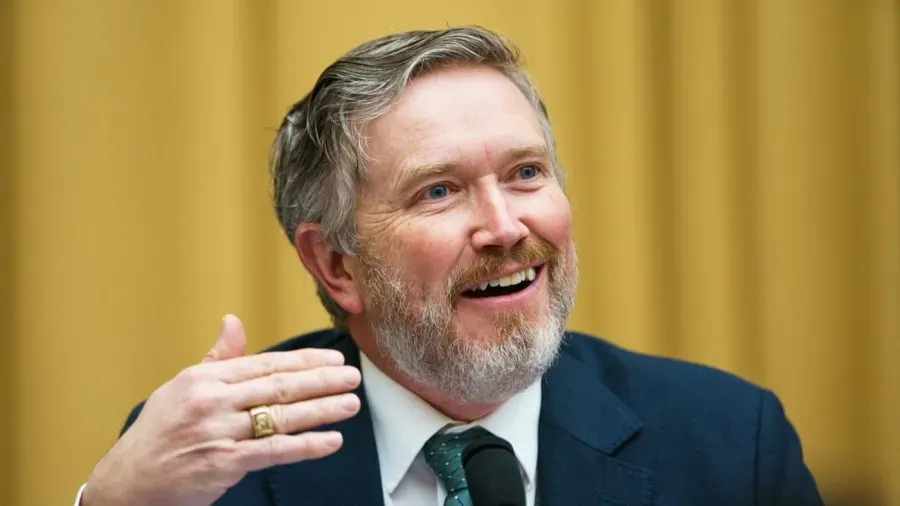
Trump’s challenge to Thomas Massie in Kentucky has become a loyalty test for a Republican Party still arguing over dissent from the right.
Trump Brings the Purge to Kentucky
Hebron, Kentucky, became the latest staging ground for an intra-party purge on Wednesday morning. President Donald Trump arrived at a packaging plant in the 4th Congressional District to target Representative Thomas Massie, a man he now describes as his primary antagonist within the Republican ranks. Trump wants a new face in Washington to represent northern Kentucky, and he spent his visit endorsing a challenger intended to replace the libertarian-leaning incumbent. The Kentucky event unfolded on March 11, 2026, as the Republican primary fight became a loyalty test. Massie has long cultivated a reputation for fiscal obstinacy, often standing alone in the House of Representatives to demand recorded votes or to oppose spending packages that his colleagues viewed as routine. Those actions earned him the ire of the White House years ago, but the conflict reached a boiling point this week as the 2026 primary season enters its most aggressive phase. Supporters gathered near the industrial facility to hear Trump outline his grievances against Massie. Trump told the crowd that the incumbent had failed to support the America First agenda at critical junctures. Massie's habit of prioritizing constitutional purity over party unity has finally exhausted the president's patience. This maneuver seeks to prove that no amount of seniority or local popularity can insulate a Republican lawmaker from the consequences of public dissent.
The visit turned a northern Kentucky packaging plant into the stage for Trump's campaign against Representative Thomas Massie.
While Bloomberg suggests that Massie remains popular among his rural base for his hands-off approach to governance, Trump believes his personal endorsement can flip the district. The president is betting that the packaging plant workers and residents of Hebron care more about his approval than Massie's voting record on government transparency. Loyalty is the only currency that matters in the current Republican environment. Internal dissent is not limited to Kentucky's 4th District. Bob Good, the former chairman of the House Freedom Caucus, took to social media on Tuesday to launch a blistering attack on the president's selection process for candidates.
Good, who lost his Virginia seat in 2024 to a Trump-backed challenger, argued that the president's endorsements are now a reliable indicator of who voters should avoid.
Freedom Caucus Defectors Push Back
He suggested that Trump ignores principles, character, and policy positions in favor of candidates who offer the loudest praise on television. Good's assessment carries the pressure of a man who saw his congressional career ended by the very machine he once helped build. He wrote on X that Trump himself is the problem rather than the advisors who surround him. Such a public break from a former leader of the most conservative wing of the party highlights a growing fracture that the Republican National Committee has yet to address. Virginia's 5th Congressional District served as the original laboratory for this experiment in political replacement.
John McGuire ousted Good in 2024 with Trump's full-throated support, a move that many at the time saw as a warning to other Freedom Caucus members. Good had dared to suggest that the party needed a different direction, and the retribution was swift. He now claims that Trump likes RINOs, an acronym for Republicans in Name Only, because they are easier to control. Fox News Digital reached out to the RNC for a response to these allegations, but the organization remained silent on Wednesday morning. The silence from party headquarters reflects a broader uncertainty about how to handle high-profile defectors who were once considered the president's most loyal soldiers.
Disenchantment among former MAGA faithful suggests a widening crack in the foundation. Marjorie Taylor Greene joined the chorus of critics after her own unexpected departure from Congress earlier this year. Once the most visible defender of the Trump administration, Greene now asserts that his endorsements serve to solidify the swamp rather than drain it. She argued in a January post that the presidents recent picks ensure that entrenched interests in Washington remain untouched. Her fallout with Trump last year led to her early resignation, leaving a void in the Georgia delegation and a lingering question about why she turned so sharply against her former mentor.
Massie Tests the Loyalty Machine
Greene's transformation from an insider to a vociferous outsider mirrors Good's trajectory, creating a new class of conservative critics who attack Trump from the right. They believe the president has traded ideological consistency for personal flattery. Market analysts are watching these primary battles with caution. Stability in the House of Representatives often dictates the pace of fiscal policy, and a GOP caucus divided against itself could lead to further gridlock. Trump's visit to the Hebron packaging plant was not just about politics; it was a physical reminder of his focus on industrial districts.
If he successfully unseats Massie, he will have removed one of the few remaining obstacles to total party alignment in Washington. Massie, however, shows no signs of retreating. He has doubled down on his record, reminding voters that he was one of the few to vote against massive spending increases that contributed to national inflation. Still, the power of a presidential visit in a small Kentucky town cannot be underestimated. Voters in the 4th District find themselves caught between two versions of the Republican Party.
One version prizes the independent, often prickly libertarianism that Massie provides. The other version demands a unified front behind a single leader to enact a specific populist vision. Trumps presence in Hebron forces a choice that will resonate far beyond the borders of Kentucky.
Why Fealty Replaced Ideology
Does the Republican Party actually exist anymore, or has it simply become a vanity project for a single ego? Watching the systematic destruction of Thomas Massie and Bob Good reveals a movement that has lost its way. These were not moderates or liberals in disguise; they were the most conservative voices in the country. Yet, they are being discarded because they refused to bend the knee at the appropriate angle. Donald Trump's endorsement strategy is no longer about winning elections, it is about absolute fealty.
He is purging the very people who have the intellectual courage to say no, replacing them with empty vessels who specialize in television appearances and sycophancy. This is how a political party dies. It stops being a vehicle for ideas and starts being a cult of personality where the only sin is independence. Marjorie Taylor Greene was right about one thing before she disappeared into the political wilderness: the swamp is not being drained. It is being refilled with a different kind of sludge, one that is loyal to a person rather than a constitution.
If the GOP continues to eat its own, it will eventually find itself with nothing left to govern but the wreckage of its own making.