Trump’s claim that US forces eliminated Iranian leadership twice has raised the stakes around verification and war messaging. The war narrative hardened on March 11, 2026
Trump Turns Decapitation Into a Talking Point
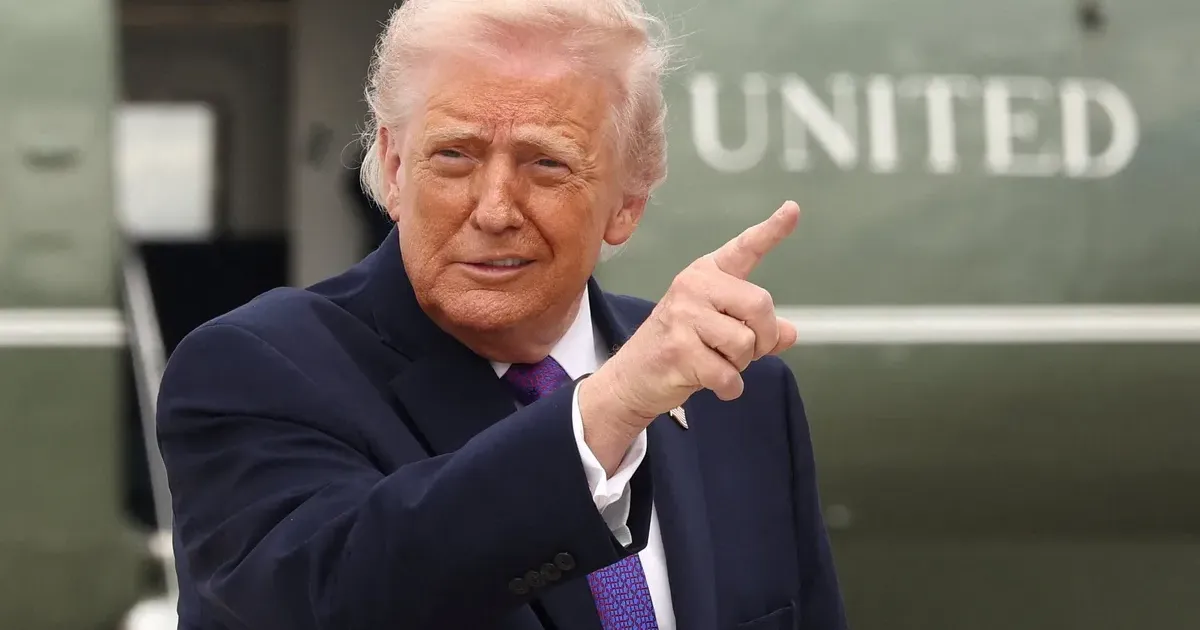
Donald Trump stood before a crowd of factory workers in Ohio on Wednesday and declared that American forces have decapitated the Iranian government on two separate occasions since the conflict began late last month. His remarks arrived as reports from Tehran suggested the new Supreme Leader, Mojtaba Khamenei, remains incapacitated by injuries sustained during the opening salvos of the war. Reporters pressed for specific names, but the president declined to provide details, choosing instead to emphasize that the United States military is running well ahead of its projected four to five week timeline for the campaign. The Pentagon remains silent on specific names. Intelligence officials in Washington and Jerusalem previously confirmed that Ali Khamenei, the long-standing Supreme Leader, died during a joint US-Israeli operation on February 28.
Battlefield claims ran into civilian damage and the risk of state fragmentation, making the victory narrative harder to sustain.
Recent statements from Trump suggest a second high-level neutralization occurred shortly thereafter, potentially targeting the immediate circle of successors. Evidence of internal chaos within the Islamic Republic has surfaced as state media struggles to project an image of stability. While Tehran insists that Mojtaba Khamenei is safe and sound, he has failed to make a single public appearance since assuming his father's mantle. Israeli officials informed Reuters that the 56-year-old cleric suffered significant leg injuries during a bombing raid on the first day of the war. State television in Iran recently began referring to Mojtaba as a war veteran.
Military analysts view this rhetorical shift as an attempt to explain away his physical absence or prepare the public for news of his permanent disability. Trump appears unconcerned with the nuances of Persian succession, telling journalists that a new group has taken over and that the US will see what happens with them. He further asserted that the Iranian Navy and broader Armed Forces have been neutralized on all fronts, a claim that aligns with reports of a systematic dismantling of Iranian maritime capabilities in the Persian Gulf. Red Crescent authorities released a harrowing assessment Wednesday detailing the physical destruction across the Iranian plateau.
Civilian Damage Undercuts the Victory Narrative
Their data indicates that at least 21,700 civilian facilities have suffered moderate to total destruction because of US and Israeli aerial bombardments. Residential areas bore the brunt of these strikes, with 17,353 private homes listed as damaged or destroyed. These figures suggest a density of urban combat that contradicts the surgical precision often touted by Western military spokespeople. TASS reports that the scale of displacement is rapidly outstripping the capacity of regional aid groups to provide even basic shelter. Families in Isfahan and Shiraz are reportedly living in makeshift encampments as the winter chill lingers.
Such widespread damage to the housing stock creates a long-term humanitarian crisis that will persist long after the kinetic phase of the war concludes. Airfields, telecommunications hubs, and power plants comprise the remainder of the damaged civilian infrastructure, leaving large swaths of the population without reliable electricity or clean water. Critics of the administration's strategy point to these numbers as evidence of a scorched-earth policy intended to break the Iranian national will through sheer exhaustion. Pressure on the Iranian regime is mounting from the periphery as well as from the sky. Armed Kurdish groups based in northern Iraq are mobilizing for what looks like a coordinated ground invasion of western Iran.
Female battalions, composed of battle-hardened Kurdish fighters, have been spotted conducting drills near the border. These women, who have spent years resisting the ideological constraints of the Islamic Republic, view the current instability as a moment to seize autonomy for their ethnic enclaves. Speculation is mounting that these units will cross the frontier in the coming days to open a new ground front against a depleted Iranian military. Regional observers note that a Kurdish surge could trigger a domino effect among other disillusioned minorities.
Kurdish Mobilization Opens a New Front
Tehran has historically maintained a tight grip on its diverse provinces through the Revolutionary Guard, but those elite units are currently occupied with defending the capital and key nuclear sites. If the Kurdish fighters successfully hold territory in the west, it would represent a total failure of the central government to maintain its sovereign borders. Such a development would likely force the Iranian command to divert resources from the defense of Tehran, further accelerating the collapse predicted by Trump. Beijing has adopted an increasingly hostile tone toward the American intervention. Chinese officials recently warned that the Pentagon's reliance on autonomous systems and artificial intelligence in this conflict risks an apocalypse reminiscent of a Terminator movie.
This rhetoric highlights a growing international anxiety regarding the speed of modern warfare. Naval mines in the Strait of Hormuz remain a significant threat to global energy markets, despite Trump's claims of total maritime dominance. Shipping companies have largely abandoned the route, leading to a spike in crude prices that is beginning to hit consumers in London and New York. A quick resolution looks unlikely if the insurgency begins. Cyber warfare has also played a silent but devastating role in the neutralization of Iranian defenses.
US Cyber Command reportedly disabled the command-and-control networks used by the Iranian Air Force minutes before the first missiles hit Tehran on February 28. This digital paralysis explains why Iranian air defenses were largely ineffective during the initial strikes. Still, the prospect of a prolonged guerrilla war led by remnants of the Revolutionary Guard looms over the administration's victory laps. If the central government evaporates, the United States may find itself responsible for a fractured nation of 85 million people with no clear leadership to negotiate a surrender.
Why Power Vacuums Do Not End Wars
Washington's appetite for decapitation strikes assumes that a headless hydra simply stops biting. Trump's boast about eliminating Iranian leadership twice in a fortnight is less a stable victory claim than an invitation to a chaotic power vacuum that no amount of smart bombs can fill. The destruction of 17,000 homes is not a statistic of precision; it is a blueprint for a generation of radicalization. History has repeatedly shown that when you demolish the roof over a family's head, you do not win their hearts or minds. You simply ensure they have nothing left to lose but their lives in a pursuit of vengeance.
By bragging about eliminating Iranian leadership twice in a fortnight, Donald Trump is doing more than celebrating a military victory; he is inviting a chaotic power vacuum that no amount of smart bombs can fill.
The administration's focus on a four-week timeline is a dangerous delusion that ignores the reality of the Kurdish mobilization and the inevitable shift to asymmetric warfare. If Mojtaba Khamenei is indeed a cripple in a bunker, his martyrdom or perceived victimization will serve as a more potent recruiting tool than his speeches ever were. This war is not ending; it is changing its shape. That triumphalism is a prelude to a decade of regional instability that will drain the American treasury and moral standing long after the last factory speech in Ohio is forgotten.