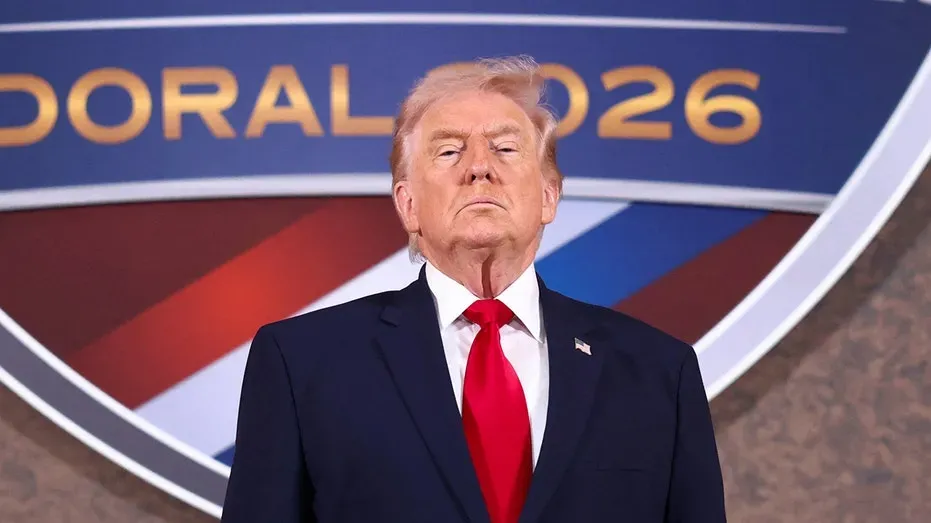
Rising gasoline prices have become the domestic test of Operation Epic Fury, forcing the White House to defend war costs at the pump. By March 11, 2026.
Gas Prices Break the War Message
The latest fuel-price jump marks the twelfth day since the onset of Operation Epic Fury, a military campaign that has drastically altered the global energy equation. Gasoline prices across the United States climbed to an average of $3.54 per gallon on Tuesday, a sharp increase from the sub-two-dollar figures reported only weeks ago. Drivers in several coastal states are seeing even higher numbers at the pump. Diesel prices followed a similar trajectory, hitting $4.72 per gallon, as the fuel-price story became inseparable from the war message. These figures, provided by AAA, illustrate the immediate financial impact of a shuttered Strait of Hormuz, where the movement of global oil tankers has effectively ceased. Energy markets reacted violently when the conflict expanded into a direct U.S.-Israeli offensive against Iranian assets. Crude oil futures broke the $100 per barrel ceiling on Monday. This volatility contrasts sharply with the economic stability touted by President Donald Trump during his State of the Union address on February 27. At that time, the President celebrated gas prices as low as $1.85 in some Midwestern states.
Now, the administration faces a public that is grappling with a fifty-cent-per-gallon surge in less than two weeks. Political opponents and market analysts are closely watching the White House response to these rising costs. President Trump took to Truth Social on Sunday to address the mounting frustration of American consumers. He characterized the price hikes as a very small price to pay for the broader strategic goals of the administration. Such rhetoric is a departure from his previous campaign messaging, which centered on domestic energy affordability and the failures of his predecessor to keep fuel costs low.
The current surge threatens to complicate the Republican party's economic platform ahead of the November midterm elections.
Ukraine Sells Drone Relevance
Kyiv is closely monitoring the escalating tensions in the Middle East with a specific strategic objective. Ukrainian officials are attempting to utilize their expertise in drone warfare to strengthen their standing with the Trump administration. As peace talks regarding the Russia-Ukraine conflict remain on the back burner in Washington, the Ukrainian government sees an opening to showcase military technology that could be key in the Iranian theater. Their innovations in low-cost, high-impact aerial systems have already been tested on the front lines in Eastern Europe. Defense experts in Kyiv suggest that Ukrainian-made drones could give Washington and its allies a tactical advantage against Iranian-backed groups. This offer of military assistance serves a dual purpose. It aims to prove Ukraine's continued relevance to American interests while also securing future support from the White House. The Hill reports that Ukraine is eager to show how its technology can solve the U.S. drone problem in Iran, where sophisticated air defenses and electronic warfare capabilities have challenged Western systems.
Kyiv's persistence stems from a fear of being forgotten as the American focus shifts toward Tehran. By integrating their technological assets into Operation Epic Fury, Ukrainian leadership hopes to maintain a seat at the table during any future discussions regarding European security. The strategy hinges on the assumption that the Trump administration values tangible military contributions over diplomatic pleas. Military camps in the Kurdistan Region of Iraq are buzzing with renewed activity. Commanders of Iranian Kurdish opposition groups told NPR that their fighters are prepared to cross the border and engage the regime in Tehran.
Kurdish Fighters Watch Iranian Border
These groups have lived in exile for years, but the current U.S.-Israeli strikes have emboldened them to seek a more active role in the conflict. They view the weakening of the central Iranian government as a historic opportunity to reclaim territory and influence. One commander expressed that his armed group is simply waiting for the right moment to strike. The coordination between these exiled groups and Western military forces remains a subject of intense speculation. If these fighters enter Iran in large numbers, it could spark a multi-front internal conflict that would further destabilize the regime.
Such a scenario would likely intensify the existing humanitarian crisis in the region and lead to significant migration flows toward Iraq and Turkey. Regional stability hangs in the balance as these paramilitary forces mobilize. Iran has historically responded to Kurdish dissent with heavy-handed military crackdowns. With the Iranian military already stretched thin by Operation Epic Fury, the threat from the northwest adds a new layer of complexity to the regime's survival strategy. Congressional Republicans are finding themselves in a difficult position as they attempt to reconcile the cost of war with their promise of fiscal relief.
For years, the party criticized the high cost of living under the previous administration. The sudden spike in diesel and gasoline prices provides an easy target for Democratic challengers who are eager to paint the GOP as the party of expensive foreign entanglements. Voter sentiment often tracks closely with the price of a gallon of fuel, making the next few months critical for the incumbent majority. Supply chains are already feeling the pressure of $4.72 diesel.
Why Fuel Costs Now Define the Politics
Will the American voter truly tolerate four-dollar gasoline in the name of a foreign regime change? President Trump is gambling his entire domestic legacy on the hope that patriotism outweighs the pain of a shrinking paycheck. History suggests this is a losing bet. By dismissing the fifty-cent jump in gas prices as a minor detail, the administration reveals a profound detachment from the daily struggles of citizens who do not have the luxury of viewing the economy through a lens of grand strategy. The White House has spent a year bragging about two-dollar fuel, yet they now expect the public to ignore the doubling of those costs for a war with no defined exit strategy.
Simultaneously, the opportunistic maneuvering by Kyiv shows exactly how regional conflicts become magnets for every desperate actor on the global stage. Ukraine is not offering drone technology out of the goodness of its heart; it is selling a product to a customer it fears is looking for a way out of the previous contract. We are seeing a dangerous convergence of economic mismanagement and geopolitical desperation. If Operation Epic Fury does not produce a decisive victory within weeks, the Republican party will find that the small price the President mentioned is actually the cost of their own political survival.