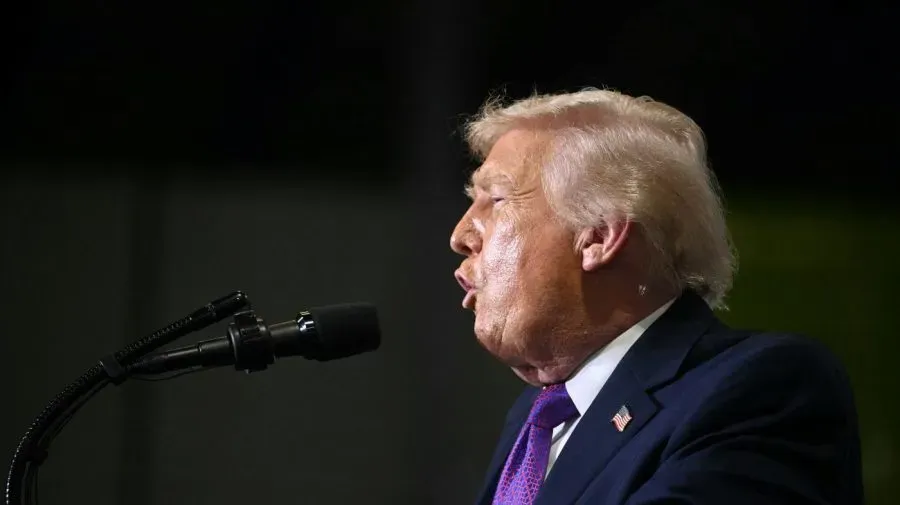
Hebron, Kentucky, became the latest staging ground for an intra-party execution on Wednesday. Standing inside a bustling packaging plant in the heart of the Bluegrass State, President Trump dropped any pretense of Republican unity. He looked directly at the local crowd and signaled that seven-term Representative Thomas Massie had exhausted his political capital. Massie, a libertarian-leaning lawmaker known for his stubborn independence, now finds himself in the crosshairs of a commander-in-chief who demands total legislative alignment.
The President did not mince words when describing the man who represents the very district he was visiting. Trump labeled Massie as the worst member of the Republican caucus, a designation he has previously reserved for his most hated Democratic rivals. Such a public denunciation on home soil is calculated attempt to primary the incumbent. Trump’s visit to Hebron was not a coincidence. It was a targeted strike against a legislator who refused to bend the knee during the most recent budgetary battles in Washington.
Critics of the President often point to his penchant for loyalty, but this specific instance involves not merely personality clashes. Massie’s recent vote against the One Big initiative, a massive legislative package designed to consolidate executive spending power, appears to be the primary catalyst for the fallout. The President views this opposition as a betrayal of the MAGA movement. He told the gathered workers that Massie is a disaster for Kentucky and an obstacle to national progress. This strategy of public shaming has become a staple of Trump’s 2026 political maneuvers.
Military action in the Middle East provided the backdrop for this domestic political theater. Trump used his first major appearance since launching strikes against Tehran to provide what he called an excursion report. He described the military intervention in Iran with casual confidence, calling it a little trip to handle business. The crowd responded with roars of approval, seemingly unfazed by the gravity of a renewed conflict in the Persian Gulf. By framing the strike as a brief outing, the President sought to project strength without the baggage of a prolonged war.
While the White House characterizes the Iran strikes as a surgical necessity, Thomas Massie has historically questioned the constitutionality of such interventions. This ideological gap is widening into a canyon. Massie advocates for a strict interpretation of the War Powers Act, a position that frequently puts him at odds with the executive branch’s broad interpretation of military authority. Trump knows that Massie’s brand of fiscal and foreign policy restraint can be contagious among the libertarian wing of the party. He wants to inoculate the rest of the GOP by removing the source.
The math behind the One Big vote explains the President’s fury.
Republican leadership had spent months crafting a deal that would fund major infrastructure projects while stripping away several environmental regulations. Massie remained one of the few holdouts, citing concerns over the massive increase in the national debt. His refusal to sign on forced several last-minute concessions that weakened the President’s hand in negotiations with the Senate. Trump has a long memory for such slights. He reminded the Kentucky voters that their representative often votes with the radical left when it comes to blocking his agenda, a claim that ignores Massie’s deeply conservative, if unorthodox, voting record.
Political analysts see this as a test of Trump’s kingmaking abilities in a post-2024 environment. If he can successfully unseat a popular incumbent like Massie, it will send a message to every other Republican who might consider breaking ranks. Still, Massie is no stranger to these fights. He survived a similar attempt at ouster during the 2020 cycle when he angered the then-President by forcing a recorded vote on the first COVID-19 relief package. Back then, Massie’s constituent base in the 4th District remained loyal, valuing his reputation as a constitutional watchdog over presidential endorsement.
Conditions on the ground in Kentucky suggest a more polarized environment in 2026. The packaging plant in Hebron reflects a regional economy that is increasingly reliant on federal trade policies and manufacturing incentives. Many of the workers present seemed to favor Trump’s directness over Massie’s intellectualized defense of the Constitution. One worker noted that they want results, not lectures on the federal deficit. This shift in voter sentiment is what the Trump campaign hopes to exploit.
Foreign policy experts at the Brookings Institution have noted that Trump’s excursion terminology intentionally downplays the risks of the Iran strikes. By calling it a trip, he bypasses the somber rhetoric usually associated with military escalation. Reuters reports that the strikes targeted several drone manufacturing sites and command centers, but the full extent of the damage remains unclear. Massie’s skepticism toward these reports is another point of contention for a President who views any doubt as a form of weakness. Trump’s rhetoric at the rally suggests he is ready to treat his domestic opponents with the same aggression he displays toward foreign adversaries.
The primary season will likely be a grueling affair for the 4th District.
Potential challengers are already lining up to receive the coveted Trump endorsement. These hopefuls are parroting the President’s talking points, emphasizing the need for a representative who will be a partner to the White House rather than a prosecutor of it. Massie has yet to release a formal statement in response to the Hebron speech, but his social media activity remains focused on government overreach and the dangers of executive overstep. He appears ready to run on his record, even if that record is currently being set on fire by the head of his own party.
Money will flood the district from both sides. Pro-Trump PACs have already reserved significant airtime for the upcoming months, while libertarian donors are mobilizing to protect one of their few remaining voices in Congress. Such a primary is no longer just about a seat in Kentucky. It is a referendum on the very soul of the Republican Party and whether there is any room left for those who prioritize the Constitution over the cult of personality.
Massie’s survival depends on his ability to convince voters that his independence is an asset, not a liability. He must explain why his opposition to the One Big bill was a defense of their taxpayer dollars, not a personal attack on the President. It is a difficult needle to thread when the most popular figure in the party is calling you a disaster on national television. The Hebron speech was not just a campaign stop, it was a declaration of war against the last remnants of the old GOP guard.
The President did not mince words when describing the man who represents the very district he was visiting. Trump labeled Massie as the worst member of the Republican caucus, a designation he has previously reserved for his most hated Democratic rivals. Such a public denunciation on home soil is calculated attempt to primary the incumbent. Trump’s visit to Hebron was not a coincidence. It was a targeted strike against a legislator who refused to bend the knee during the most recent budgetary battles in Washington.
Critics of the President often point to his penchant for loyalty, but this specific instance involves not merely personality clashes. Massie’s recent vote against the One Big initiative, a massive legislative package designed to consolidate executive spending power, appears to be the primary catalyst for the fallout. The President views this opposition as a betrayal of the MAGA movement. He told the gathered workers that Massie is a disaster for Kentucky and an obstacle to national progress. This strategy of public shaming has become a staple of Trump’s 2026 political maneuvers.
Military action in the Middle East provided the backdrop for this domestic political theater. Trump used his first major appearance since launching strikes against Tehran to provide what he called an excursion report. He described the military intervention in Iran with casual confidence, calling it a little trip to handle business. The crowd responded with roars of approval, seemingly unfazed by the gravity of a renewed conflict in the Persian Gulf. By framing the strike as a brief outing, the President sought to project strength without the baggage of a prolonged war.
While the White House characterizes the Iran strikes as a surgical necessity, Thomas Massie has historically questioned the constitutionality of such interventions. This ideological gap is widening into a canyon. Massie advocates for a strict interpretation of the War Powers Act, a position that frequently puts him at odds with the executive branch’s broad interpretation of military authority. Trump knows that Massie’s brand of fiscal and foreign policy restraint can be contagious among the libertarian wing of the party. He wants to inoculate the rest of the GOP by removing the source.
The math behind the One Big vote explains the President’s fury.
Republican leadership had spent months crafting a deal that would fund major infrastructure projects while stripping away several environmental regulations. Massie remained one of the few holdouts, citing concerns over the massive increase in the national debt. His refusal to sign on forced several last-minute concessions that weakened the President’s hand in negotiations with the Senate. Trump has a long memory for such slights. He reminded the Kentucky voters that their representative often votes with the radical left when it comes to blocking his agenda, a claim that ignores Massie’s deeply conservative, if unorthodox, voting record.
Political analysts see this as a test of Trump’s kingmaking abilities in a post-2024 environment. If he can successfully unseat a popular incumbent like Massie, it will send a message to every other Republican who might consider breaking ranks. Still, Massie is no stranger to these fights. He survived a similar attempt at ouster during the 2020 cycle when he angered the then-President by forcing a recorded vote on the first COVID-19 relief package. Back then, Massie’s constituent base in the 4th District remained loyal, valuing his reputation as a constitutional watchdog over presidential endorsement.
Conditions on the ground in Kentucky suggest a more polarized environment in 2026. The packaging plant in Hebron reflects a regional economy that is increasingly reliant on federal trade policies and manufacturing incentives. Many of the workers present seemed to favor Trump’s directness over Massie’s intellectualized defense of the Constitution. One worker noted that they want results, not lectures on the federal deficit. This shift in voter sentiment is what the Trump campaign hopes to exploit.
Foreign policy experts at the Brookings Institution have noted that Trump’s excursion terminology intentionally downplays the risks of the Iran strikes. By calling it a trip, he bypasses the somber rhetoric usually associated with military escalation. Reuters reports that the strikes targeted several drone manufacturing sites and command centers, but the full extent of the damage remains unclear. Massie’s skepticism toward these reports is another point of contention for a President who views any doubt as a form of weakness. Trump’s rhetoric at the rally suggests he is ready to treat his domestic opponents with the same aggression he displays toward foreign adversaries.
The primary season will likely be a grueling affair for the 4th District.
Potential challengers are already lining up to receive the coveted Trump endorsement. These hopefuls are parroting the President’s talking points, emphasizing the need for a representative who will be a partner to the White House rather than a prosecutor of it. Massie has yet to release a formal statement in response to the Hebron speech, but his social media activity remains focused on government overreach and the dangers of executive overstep. He appears ready to run on his record, even if that record is currently being set on fire by the head of his own party.
Money will flood the district from both sides. Pro-Trump PACs have already reserved significant airtime for the upcoming months, while libertarian donors are mobilizing to protect one of their few remaining voices in Congress. Such a primary is no longer just about a seat in Kentucky. It is a referendum on the very soul of the Republican Party and whether there is any room left for those who prioritize the Constitution over the cult of personality.
Massie’s survival depends on his ability to convince voters that his independence is an asset, not a liability. He must explain why his opposition to the One Big bill was a defense of their taxpayer dollars, not a personal attack on the President. It is a difficult needle to thread when the most popular figure in the party is calling you a disaster on national television. The Hebron speech was not just a campaign stop, it was a declaration of war against the last remnants of the old GOP guard.