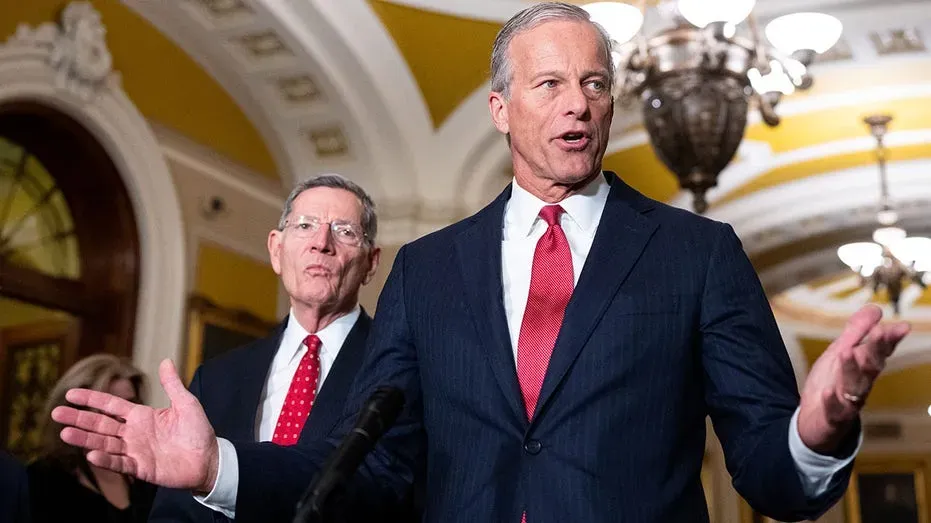
Trump's pressure over the SAVE Act has turned the Senate leadership's already difficult agenda into a sharper loyalty test. The pressure campaign intensified on March 11, 2026.
Trump Turns the SAVE Act Into an Ultimatum
March sunlight filtered through the West Wing windows as Donald Trump issued a blunt ultimatum to the man holding the keys to the Senate. Facing a phalanx of reporters on Wednesday, the president turned his focus toward Senate Majority Leader John Thune, demanding that the South Dakota Republican find a way to pass the Safeguard American Voter Eligibility Act. Known as the SAVE Act, the legislation has become the centerpiece of the administration's legislative agenda for 2026. Trump made his expectations clear, stating that Thune has to be a leader and must deliver the necessary votes. Leaders find a way to get results, the president noted, suggesting that the current impasse in the upper chamber reflects a failure of willpower rather than a lack of numbers. Success for the administration depends on securing a legislative victory that many supporters view as a non-negotiable requirement for election integrity. The SAVE Act mandates that individuals provide documentary proof of citizenship before registering to vote in federal elections. While federal law already prohibits non-citizens from voting, proponents argue that current enforcement mechanisms lack the teeth to prevent illegal participation. Trump's rhetoric has intensified as the spring legislative session begins, with the president using his State of the Union address to implore lawmakers to approve the plan. He framed the measure as a necessary step to stop unpermitted persons from casting ballots in what he calls sacred American elections.
Trump treated Senate procedure as a test of loyalty, forcing John Thune to defend both the bill and the chamber's rules.
House Republicans already cleared their primary hurdle by passing the bill with a narrow 218-213 margin last month. Senate arithmetic remains the primary obstacle to the president's goals. Because the legislation requires 60 votes to overcome a filibuster, the narrow Republican majority lacks the unilateral power to force the bill through without Democratic cooperation. This legislation mandates changes that Democrats have largely dismissed as unnecessary and restrictive.
The Filibuster Becomes the Real Opponent
Thune finds himself caught between the president's directive to pass the bill at the expense of everything else and the institutional realities of a chamber where the minority party holds significant blocking power. Critics within the party have begun to label Thune as incalcitrant or even inept, suggesting that his adherence to traditional Senate norms is hampering the MAGA agenda. Records from the early 20th century provide the historical context for the current procedural stalemate. It was on March 8, 1917, that the Senate first adopted the cloture provision, a rule designed to end debate and force a vote. Before that change, the only way to end a filibuster was through the sheer physical exhaustion of the speakers.
President Woodrow Wilson pushed for the rule during a time of international crisis, yet the modern version of the filibuster has evolved into a tool of permanent obstruction. Trump has not explicitly called for the total abolition of the filibuster, but his insistence that Republicans must act with passion and prioritize the SAVE Act above all other business puts Thune in a corner. Some conservative firebrands are now suggesting that if Thune cannot find 60 votes, he should instead change the rules to require a talking filibuster. A talking filibuster would require Democrats to physically occupy the floor and speak continuously to delay a vote, rather than simply indicating their intent to filibuster from the sidelines.
Proponents believe this would force the minority party to justify their opposition in the public eye. Thune has expressed skepticism about such drastic rule changes, fearing the long-term impact on the Senate's unique role in the American system of government. Republicans who support the move argue that the current era demands bold action over institutional preservation. The arithmetic of the Senate rarely yields to the desires of the executive branch. Voters in Texas recently sent a message that has echoed throughout the halls of the Capitol.
Texas Sends a Warning to Senate Leaders
During the March primary, 60 percent of Republican voters cast ballots against John Cornyn, a senior member of the Senate leadership team. Many analysts interpret this result as a rejection of the established GOP hierarchy and a warning to leaders like Thune. If a veteran like Cornyn can face such a significant rebuke from his home state base, no member of the Senate leadership is safe from the populist energy currently defining the party. Texas Republicans expressed deep frustration with the perceived lack of progress on border security and election integrity, the very issues the SAVE Act seeks to address. Donald Trump continues to use his platform on Truth Social to keep the pressure on Thune.
During the March primary, 60 percent of Republican voters cast ballots against John Cornyn, a senior member of the Senate leadership team.
In recent posts, the president declared that the SAVE Act must be passed at the expense of all other legislative priorities. This procedural tool remains the biggest hurdle, and Trump's refusal to acknowledge the difficulty of reaching the 60-vote threshold has created a rift within the caucus. Some senators are ready to follow the president's lead and dismantle the filibuster entirely, while others worry that such a move would eventually benefit Democrats when they regain the majority. Thune must now weigh the risk of a primary challenge or a leadership coup against the risk of breaking the Senate permanently. Cloture remains a distant hope for the current version of the bill.
Democrats have unified against the measure, claiming it targets vulnerable populations and creates unnecessary barriers to the ballot box. While Bloomberg suggests some moderate Democrats might be open to a compromise version of the bill, Reuters' sources claim the party leadership has instructed all members to hold the line. Thune's ability to peel away at least seven Democratic votes is virtually zero in the current political climate. So the leader is left with two options: fail to pass the president's priority or change the rules of the game.
Why Procedure Is No Longer a Shelter
Rhetoric about institutional stability often masks a fear of genuine political change. John Thune is currently hiding behind the filibuster because he lacks the stomach for the confrontation that Donald Trump demands. It is a classic case of a career politician valuing the decorum of the club over the mandates of the electorate. The Texas primary results were not a fluke; they were a siren. When 60 percent of the Republican base in a state as key as Texas rejects a senior leader like John Cornyn, the message is that the old way of doing business is dead.
Thune's insistence on maintaining the 60-vote threshold is a gift to the Democratic minority, allowing them to veto the core platform of the party that actually won the election. If the Senate is so broken that it cannot verify the citizenship of the people voting for its members, then the Senate is not worth preserving in its current form. Thune should either find the votes, force a talking filibuster to expose his opponents, or step aside for someone who understands that power is meant to be used. Maintaining the status quo is not leadership, it is a slow surrender to irrelevance.