Petro Challenges the Donroe Doctrine
Vienna's gilded diplomatic halls provided the backdrop this week for a sharp critique of American power. President Gustavo Petro, nearing the end of his term as Colombia's first leftist leader, used an interview in the Austrian capital to challenge the aggressive revival of United States hegemony in the Western Hemisphere.
Petro warned that Latin America should not be viewed as a land to be conquered, directly referencing the recent military actions authorized by the White House. Recent strikes against drug smugglers, the forced removal of the Venezuelan presidency, and escalating threats against Cuba characterize what analysts call the Donroe Doctrine. By March 13, 2026, Petro’s Vienna comments had become a preview of Colombia’s election-year foreign policy fight. Washington's current posture toward its southern neighbors has shifted into a gear not seen in decades.
Named after the 1823 policy of James Monroe, this strategic shift seeks to reassert American dominance and purge foreign influence from the region. While historical Monroe-era policies focused on European colonialists, the 2026 iteration targets non-state actors and ideological adversaries with lethal force.
Secretary of State Marco Rubio and billionaire adviser Elon Musk have emerged as the primary architects of this worldview. Rubio recently defended Western civilization as a construct bound by Christian faith, framing mass migration as a direct threat to the stability of Western societies. Musk has taken a more philosophical approach, arguing that empathy is strategic vulnerability for the West.
Colombia Election Becomes a Regional Test
Petro rejected these characterizations during his Vienna stay, describing them as the promotion of a white, Christian, Western civilizational model that excludes the inherent diversity of Latin America. He argued that such an approach ignores the complex socio-economic realities that drive migration and illicit trade.
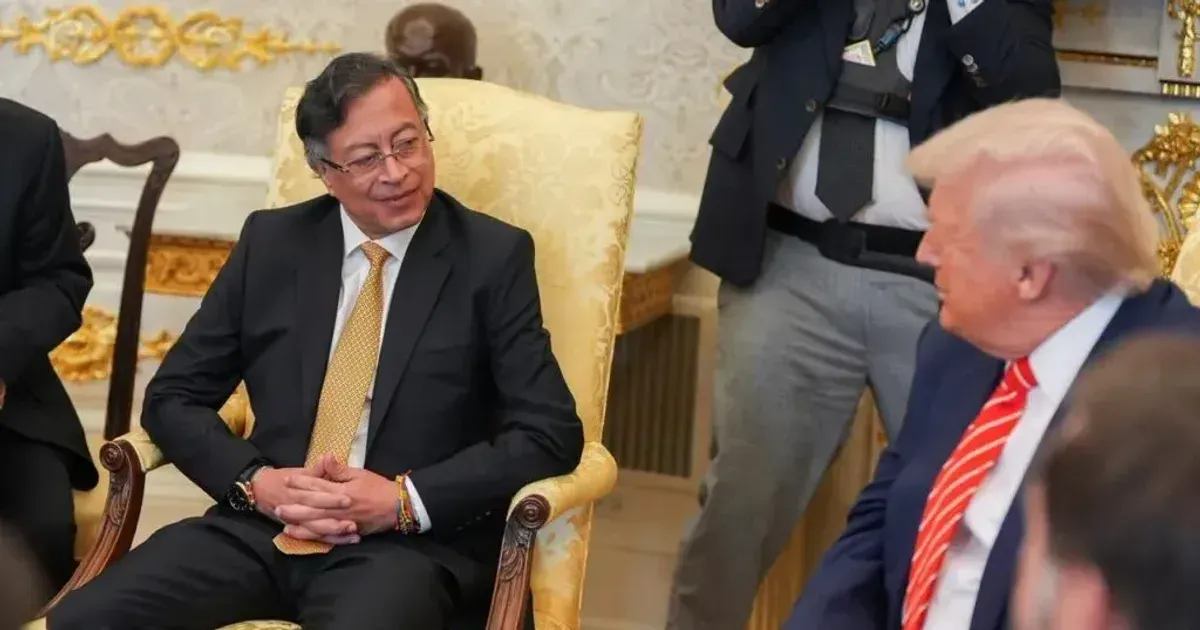
His criticisms place him on a frequent blacklist maintained by the Trump administration, yet the personal relationship between the two leaders remains characteristically volatile. When they met in the Oval Office in February 2026, Trump initially referred to Petro as a sick man, only to describe him as terrific after the session concluded. Does a personal rapport between heads of state carry any weight when their underlying ideologies are in total opposition?
Colombia faces a defining moment as the May 2026 elections approach. Petro has struggled to implement his ambitious reformist agenda over the past four years, hindered by a fractured legislature and consistently low approval ratings.
His domestic difficulties contrast with his high-profile international presence, where he has used the United Nations as a platform to denounce climate inaction and military aggression. Voters in Bogotá and across the countryside appear exhausted by the disconnect between global rhetoric and local economic stagnation. Three primary candidates are vying to replace Petro and determine the future of the Bogotá-Washington axis.
Washington’s Pressure Meets Local Politics
Iván Cepeda represents the leftist coalition, aiming to preserve Petro's environmental and social welfare initiatives. On the right, Paloma Valencia offers a conservative return to traditional security policies and closer military cooperation with the United States.
The most polarizing figure in the race is Abelardo Gabriel de la Espriella, a far-right lawyer who has praised the Donroe Doctrine and suggests that Colombia should align more closely with Trump's interventionist strategies. Election results will dictate whether Petro's legacy remains a permanent shift in Colombian politics or a temporary deviation. Conservative factions argue that Petro's friction with the White House has jeopardized billions in security aid and trade preferences.
They point to the 12% jump in regional shipping costs as a direct result of increased tensions in the Caribbean. Far-right supporters of De la Espriella believe that only a hardline alignment with Washington can resolve the persistent violence within Colombia's borders.
Petro continues to advocate for dialogue over military intervention, citing his February meeting with Trump as a potential template for intercontinental relations. He maintains that the war on drugs is failing because it focuses on symptoms rather than the root causes of global consumption and poverty. Trump's administration, however, has shown little patience for such sociological arguments, preferring the direct application of kinetic force against cartel infrastructure. Secretary Rubio's focus on Christian faith and Western values suggests a civilizational friction that extends beyond mere policy. This ideological divide creates a scenario where diplomatic disagreements are viewed as existential threats to Western stability. Musk's involvement further complicates the dynamic, as his influence over information networks and space-based technology provides the White House with unconventional tools for regional leverage. Petro’s insistence on empathy and climate action finds little resonance in an administration that prioritizes border security and industrial dominance above all else. Regional leaders are watching the Colombian election with high stakes. If De la Espriella or Valencia secures a victory, the United States will have a powerful ally in its mission to reshape the hemisphere. A win for Cepeda would likely solidify a regional bloc resistant to the Donroe Doctrine, potentially leading to further diplomatic standoffs or economic sanctions from Washington. Petro remains a vocal critic of what he terms the applause for genocide in various global conflicts, a stance that has isolated him from several traditional Western allies. Colombia's internal security situation remains a complicating factor in its relationship with the North. Despite Petro's efforts to negotiate total peace with various armed groups, violence persists in many rural departments. Trump's administration views this instability as a justification for unilateral military action, arguing that Bogotá has failed to maintain order. The bombing of alleged smugglers within sovereign Colombian territory earlier this year serves as the most aggressive example of this new reality. Historical precedents suggest that such heavy-handed intervention often yields unintended consequences. Every previous attempt to impose a singular will on the region has resulted in a backlash of nationalist sentiment. Petro's current strategy involves appealing to the international community to recognize the sovereignty of Latin American nations, but his domestic unpopularity weakens his hand. The upcoming election points to a highly fragmented electorate where a small margin could change the continent's trajectory. This May election is a referendum on the very concept of Latin American autonomy in the face of a revived American empire. Economic indicators show that the Colombian peso has fluctuated wildly in response to Trump's public comments about Petro.