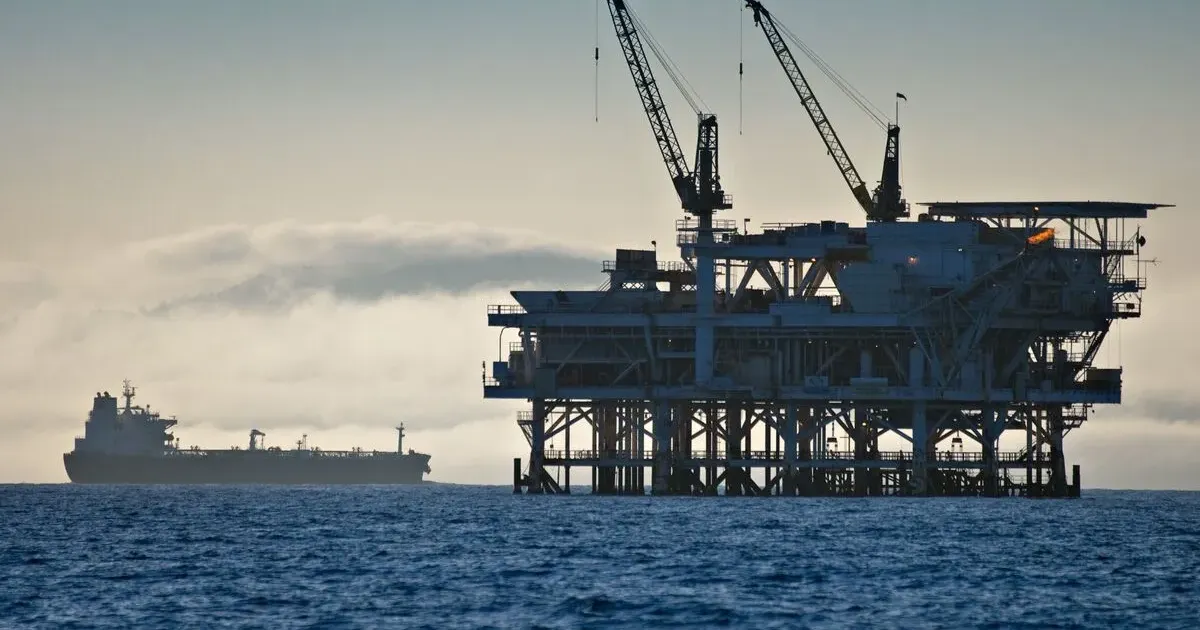
The White House is using emergency industrial powers to push a restart of oil production off the California coast, turning a dormant Santa Barbara County project into a test of federal authority. The plan targets the Santa Ynez Unit and the pipeline system tied to platforms that have been idle since the Refugio spill. By March 18, 2026, the White House was framing the restart as an energy-security measure tied to war-driven pressure on global fuel supplies. California officials see something else: a federal attempt to push aging fossil-fuel infrastructure past state review. The order rests on the Defense Production Act, a 1950 statute usually associated with wartime manufacturing, medical supplies or critical industrial inputs. Applying it to offshore crude does not simply accelerate a permit. It asks whether a president can treat local energy infrastructure as a national-security asset when prices spike and foreign supply routes look fragile.
President Donald Trump is moving to use emergency industrial powers to restart oil production off the California coast, turning a dormant Santa Barbara County project into a test of federal authority.
Emergency Power Meets a Local Spill Memory
The Santa Ynez assets carry a long political shadow. The 2015 Refugio oil spill released more than 100,000 gallons of crude into the Pacific and hardened local resistance to a restart. Platforms such as Hondo, Harmony and Heritage became symbols of both lost production and environmental risk. Sable Offshore, which acquired the assets from ExxonMobil, has argued that modernized systems can bring the project back safely. Opponents say the pipeline history makes speed the wrong standard. That history matters because emergency powers do not erase physical risk. A pipeline that has been idle for years still requires inspection, pressure testing, corrosion review and a credible spill-response plan. Federal officials can prioritize production, but they cannot make old infrastructure young by memo. Sable Offshore may benefit from the order, yet the company also inherits the burden of proving that a restart would not repeat the failure that shut the system down. That proof will matter in court, in local hearings and in any public case the administration makes for overriding Sacramento.
California Prepares the Legal Countermove
Sacramento is expected to challenge the order quickly. The state argument will likely focus on coastal protection, clean-water obligations and the limits of federal preemption. The administration will answer that fuel supply and military readiness are national concerns that cannot be blocked by state-level delay during a global energy shock. The legal fight could turn on how specific the emergency is. If the White House can show a direct connection between West Coast fuel security and defense needs, the case becomes harder for California. If the order looks like a broad political shortcut for drilling, judges may be less willing to let the Defense Production Act swallow ordinary environmental review. The dispute also revives a familiar federalism question. States often set strict environmental rules precisely because local communities absorb the risk of spills, air pollution and coastal damage. The federal government argues that national fuel stability spreads the benefit across the country. The conflict is not abstract; it is about who gets to define necessity.
Prices Create Political Pressure
Energy markets give the administration its strongest public argument. Conflict around the Persian Gulf has raised shipping costs, insurance costs and fears of supply interruption. California refineries already rely heavily on imported crude, leaving the state exposed when tanker routes become more expensive. A local restart would not transform the global market, but it could reduce a specific West Coast vulnerability.
The numbers are politically potent. Supporters say the Santa Ynez Unit could return tens of thousands of barrels per day, enough to matter in a tight regional market. Critics answer that a limited production gain is being used to justify a major legal precedent. Both claims can be true at once. A project can offer some supply relief and still raise serious governance and safety concerns.
California gasoline prices will shape the politics more than the legal doctrine. If prices stay high, the administration will argue that voters need barrels more than process. If a spill risk dominates the story, California officials will argue that the emergency was a pretext.
The Precedent Outlasts the Pipeline
The larger issue is what happens after this case. A president who can define a stalled oil project as essential to national defense may try the same approach with refineries, mines, ports, transmission lines or other contested infrastructure. That may appeal during a crisis, but it lowers the barrier between emergency management and ordinary industrial policy.
There is a practical case for stronger domestic energy resilience. There is also a practical reason to distrust rushed restarts of infrastructure associated with a major spill. The administration is trying to resolve both problems with one blunt instrument. Courts may decide whether that instrument fits.
For California, the fight is about coastlines, state authority and the memory of Refugio. For Washington, it is about fuel, war risk and the politics of pump prices. The project itself may produce oil again, but the more durable output could be a new map of presidential power over local energy decisions.
A restart would also test how quickly emergency orders can move through technical reality. Offshore operators would need crews, replacement parts, safety approvals and coordination with refineries before any crude reaches the market. The administration can shorten the legal path, but it cannot skip the engineering sequence that determines whether the system can run without another failure.
Environmental groups will probably focus on that gap between law and machinery. Their strongest case is not that energy security is irrelevant. It is that a rushed project tied to a known spill history may create a second crisis while trying to answer the first. That argument will resonate along the Santa Barbara coast, where the memory of oil on beaches is not theoretical.
Industry supporters will counter that every delay has a cost. West Coast refiners face expensive imports, and military planners dislike depending on long tanker routes when the Pacific fleet needs reliable fuel. If the conflict around Iran keeps insurance rates high, local production will look less like a corporate favor and more like a resilience measure.
The result is a dispute with no clean constituency. Drivers want lower prices, coastal residents want protection, the White House wants visible action, and California wants to preserve its climate and permitting authority. The order puts all of those interests into one courtroom fight.