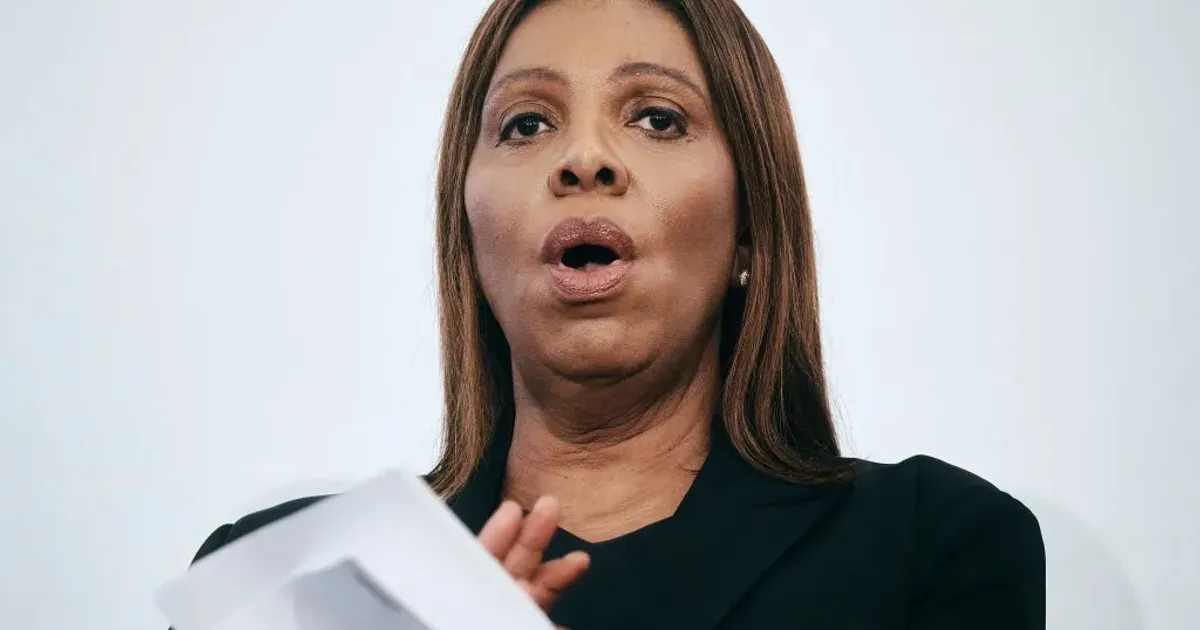
Trump’s lawyers have made Michael Cohen communications the center of a new attack on Letitia James. The legal push surfaced on March 12, 2026.
Trump’s legal team is using Michael Cohen communications to open another front against Letitia James.
Trump Team Opens a New Legal Front
Donald Trump's defense team moved aggressively against New York Attorney General Letitia James on Wednesday, submitting a 25-page filing that could disrupt the long-standing civil litigation against the former president. Attorneys representing Trump are demanding the immediate release of every communication between the Attorney General's office and Michael Cohen, Trump's former personal lawyer and a central witness in various state investigations. Cohen recently claimed he was coerced into his testimony, a revelation that has provided fresh ammunition for the Trump camp to challenge the validity of the state's multi-year investigation. Lawyers for the defense argue that any secret coordination or pressure applied to Cohen would constitute a violation of due process and discovery rules. This discovery request focuses on emails, text messages, and internal memos generated during the critical months when Cohen was preparing to testify against his former boss. Michael Cohen once served as the loyal fixer for the Trump Organization, yet his public break with the former president led to a series of legal confrontations that redefined Trump's post-presidency. Cohen has spent years cooperating with investigators, providing testimony that formed the backbone of the $450 million civil fraud judgment against Trump and his adult sons. Recent statements from Cohen suggest a more complicated reality behind the scenes of the Attorney General's case, putting Cohen-linked communications back at the center of a political courtroom fight. He now alleges that investigators or prosecutors exerted undue pressure on him to tailor his testimony, an admission that Trump's lawyers describe as a game-changing development. If Cohen was indeed pressured to exaggerate or alter facts, the foundation of the state's victory begins to crumble under the pressure of legal scrutiny. New York discovery laws require prosecutors and civil litigants in state-led actions to turn over any evidence that might be favorable to the defense. Trump's attorneys contend that Letitia James' office suppressed communications that would have exposed Cohen's reluctance or the specific methods used to secure his cooperation.
They are seeking a full accounting of all interactions between Cohen, his legal counsel, and the senior staff within the Attorney General's office.
Cohen Communications Become the Target
Such a request often precedes a motion to vacate a judgment or a demand for a mistrial in ongoing matters. Critics of the Attorney General argue that her office has been overly reliant on a witness with a documented history of perjury and personal animus toward the defendant. The stakes for the New York Attorney General have never been higher. Letitia James campaigned on a promise to investigate the Trump family's business dealings, a fact that Trump has frequently used to allege political bias.
Her office has successfully argued that Trump inflated his net worth to secure favorable loan terms and insurance rates. Still, the reliance on Michael Cohen as a primary source of information has always been a point of vulnerability for the state. Cohen's credibility has been challenged in multiple courts, but he remained a staple of the New York cases due to his intimate knowledge of Trump's internal operations. This tactical maneuver by the defense seeks to prove that Cohen was not just a willing witness but a product of prosecutorial engineering.
Judicial oversight in these matters usually favors broad disclosure when allegations of witness tampering or coercion surface. Trump's 25-page filing details specific instances where Cohen's testimony appeared to align suspiciously well with the state's desired narrative. Lawyers cite inconsistencies between Cohen's private statements and his public testimony as evidence that he was being coached or threatened by state officials. They want to see the rough notes of meetings, the preliminary drafts of affidavits, and any correspondence that hints at a quid pro quo for Cohen's cooperation.
But the Attorney General's office has historically guarded its internal communications as privileged work product, setting the stage for a protracted fight over executive and prosecutorial privilege.
The Politics Are Impossible to Separate
Silence from the Attorney General's office suggests a brewing legal storm. Legal experts suggest that if even a fraction of Cohen's coercion claims are substantiated, it could trigger a series of appeals that might last for years. This specific allegation strikes at the heart of the American adversarial system, which relies on the integrity of witness testimony to reach a just conclusion. Should the court find that the Attorney General's office overstepped its bounds, the consequences could extend beyond the Trump case, potentially impacting how state-led civil investigations are conducted in the future.
Legal observers in Manhattan are closely watching how Judge Arthur Engoron, who presided over the original fraud trial, will handle these new demands. Financial markets and political analysts are also weighing the implications of a potential reversal in the New York cases. Trump's ability to fund his political operations and maintain his real estate empire depends largely on his ability to fight off these massive financial penalties. A successful challenge to Cohen's testimony could result in a significant reduction of the fines or a complete dismissal of the civil judgment.
However, James has remained steadfast in her public statements, maintaining that her office acted with the utmost professionalism and that the evidence against Trump remains overwhelming regardless of Cohen's personal grievances. Witness coercion is a serious charge that requires substantial proof, and the burden now lies with Trump's team to show that Cohen's claims are not just the ramblings of a frustrated former employee. Cohen has often changed his story to suit his current circumstances, making him a difficult figure to pin down for both the prosecution and the defense.
His latest claims of being coerced might be an attempt to distance himself from the legal fallout of his own cooperation or a genuine admission of institutional misconduct. Trump's lawyers are betting that the paper trail will reveal a level of coordination that transcends the typical witness-prosecutor relationship.
Legal Requests Become Campaign Combat
Trump's legal team targeted Letitia James over communications involving Michael Cohen. The move extended a long-running fight over New York legal actions against Trump. The dispute blends discovery strategy, political messaging and credibility attacks.
Cohen communications may be used to challenge motives, coordination or credibility in litigation connected to Trump. The legal maneuver may have procedural logic, but it also functions as political warfare. Every discovery fight involving Cohen and James becomes another chance to recast prosecution as persecution. That does not make the evidence irrelevant; it means the public should separate courtroom standards from campaign messaging.