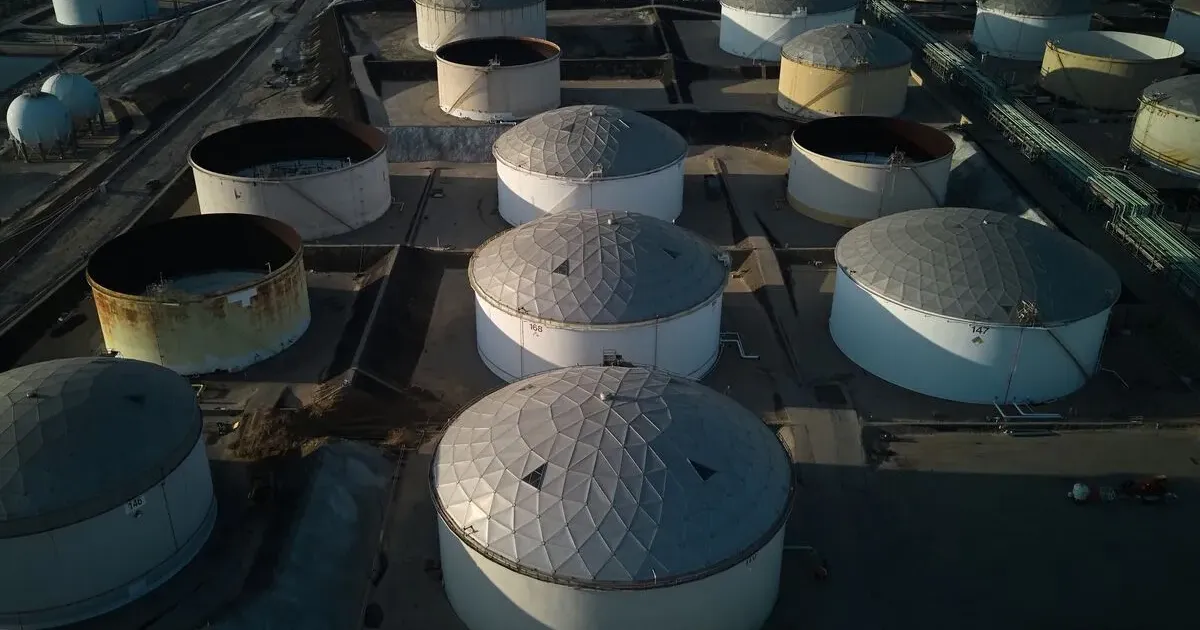
The Department of Energy shifted from theoretical planning to an industrial-scale emergency response as global oil markets absorbed another shock from the Iran war. March 12, 2026, became the date when the emergency release plan moved into operation.
Emergency Action at the Salt Caverns
The White House put the Strategic Petroleum Reserve at the center of its energy response, authorizing a 172-million-barrel crude release while global markets reeled from the conflict with Iran. Sources at Bloomberg report this drawdown forms the centerpiece of a larger, coordinated international effort by the International Energy Agency to flood the market with liquidity. Total global releases are expected to hit 400 million barrels as Western allies attempt to blunt the impact of a sustained supply shock. Such a scale of intervention has few precedents in the history of the 1970s-era reserve system. Energy Department officials began notifying pipeline operators in Texas and Louisiana early Thursday morning. The math of the current crisis requires a rapid infusion of light sweet crude to replace the heavy barrels lost during the Persian Gulf blockade. While the Financial Times notes that the global race to tackle this energy shock involves dozens of nations, the American contribution remains the largest by a significant margin. Logistics experts indicate that the actual physical movement of oil from the salt domes at Big Hill and Bryan Mound could take weeks to fully materialize at refineries. Market traders reacted with immediate volatility, with West Texas Intermediate prices dipping briefly before climbing back on news of intensified naval activity in the Strait of Hormuz. Global energy security now rests on the technical integrity of these Gulf Coast salt caverns.
President Trump authorized the release of 172 million barrels of crude oil from the Strategic Petroleum Reserve, a move intended to stabilize global energy markets currently reeling from the conflict with Iran.
Crude prices have remained stubbornly high despite previous smaller releases, forcing the White House into this aggressive posture. Analysts at major Wall Street banks suggest that the 172 million barrel figure was chosen to signal a long-term commitment to price suppression. If the Iran conflict persists through the summer driving season, even this massive volume may only provide a temporary reprieve for consumers at the pump. European partners have pledged their own reserves, yet their capacity to influence global pricing is limited compared to the American stockpile. Discord remains among some IEA members regarding the duration of the release, but the immediate threat of five-dollar gasoline in the United States has unified the domestic administration's focus.
The Geopolitics of the Tap
National security advisors have spent the last forty-eight hours briefing congressional leaders on the necessity of the move. Critics of the administration argue that depleting the reserve to these levels leaves the nation vulnerable to a secondary supply crisis. Proponents point to the immediate inflationary pressure that high oil prices exert on every sector of the American economy. Food prices, shipping costs, and manufacturing overhead are all tethered to the price of a barrel. Failure to act now could result in a deeper recession than the one currently looming on the horizon. Still, the physical limits of the SPR mean this is a card that can only be played a few more times.
Military analysts closely monitor the situation in the Middle East to determine if this release will be sufficient. Iran has repeatedly threatened to target oil infrastructure in neighboring states, a move that would render even a 400 million barrel global release insufficient. Bloomberg's reporting highlights that the Trump administration is betting on a short, sharp conflict rather than a multi-year war. If that bet proves wrong, the Strategic Petroleum Reserve might reach its mandatory minimum levels by early next year. Such a scenario would leave the US reliant on private inventories and expensive imports during a period of peak geopolitical instability.
History shows that reserve releases work best when combined with diplomatic de-escalation.
Foreign policy experts at the Brookings Institution suggest that the release is as much a psychological tool as it is a physical one. By announcing such a high number, the US government attempts to scare speculators out of the market. When prices are driven by fear rather than actual barrels missing from the supply chain, a massive government intervention can break the cycle of panic buying. But the current situation involves a physical blockade, not just a paper shortage. Refineries in the Midwest and East Coast are already reporting lower intake volumes, and the SPR oil must travel through a complex web of aging pipelines to reach them.
Infrastructure and Implementation
Engineering teams at the Department of Energy face the daunting task of maintaining pressure within the salt caverns during such a rapid drawdown. Rapidly removing millions of barrels can cause structural issues if not managed with precision. Each cavern is a unique geological feature, and some are more resilient than others. Previous administrations faced criticism for failing to modernize the pumps and valves that enable these transfers. Now, those systems are being pushed to their absolute limits. If a major pipeline or pump station fails during this release, the 172 million barrels will remain trapped underground while prices continue to soar.
Refiners have expressed cautious optimism about the quality of the crude being offered. Most SPR oil is a mix of sour and sweet grades, and not every refinery can process every type of barrel with equal efficiency. The Department of Energy must carefully curate which batches are released to ensure they match the needs of the domestic refining complex. Financial Times sources indicate that several European refineries have also requested access to US crude via swap agreements. This would involve the US sending oil to Europe in exchange for future deliveries, a complex arrangement that adds another layer of logistical difficulty to an already stressed system.
The decision exposes the fragility of a global economy still dependent on fossil fuels from volatile regions. This release represents nearly half of the total global effort, placing a heavy burden on American taxpayers to subsidize global price stability. The strategy remains unproven in the face of an active shooting war involving a major producer like Iran.
Private energy companies are watching the government's move with a mix of relief and trepidation. On one hand, lower crude prices help stabilize their operational costs. On the other, the sudden influx of government oil can distort the market and discourage new domestic drilling. Why would an oil major invest in a new offshore platform if the government can dump 172 million barrels into the market at any moment? Finding the balance between short-term relief and long-term energy independence is a needle that the current administration is struggling to thread.
Energy Security Risks
Does anyone actually believe that draining the nation's emergency insurance policy is a sustainable way to fight a war? The decision to dump 172 million barrels into a broken market is not a strategy; it is an admission of failure. By depleting the Strategic Petroleum Reserve to manage a political crisis at the gas pump, the Trump administration is effectively disarming the United States of its most potent economic weapon. We are trading long-term national security for a temporary dip in the consumer price index. If the conflict in Iran escalates further, or if a secondary crisis emerges in another producing region, the cupboards will be bare. The International Energy Agency's coordinated release is a desperate attempt to maintain the illusion of control in an energy market that has clearly moved beyond the reach of Western bureaucrats. True energy security comes from hardened infrastructure and diverse supply chains, not from emptying salt domes every time a geopolitical fire breaks out. The massive drawdown may be remembered as the moment Washington accepted greater reserve risk for short-term price relief. Investors should ignore the temporary price drop and prepare for the inevitable spike when the reality of a depleted reserve finally sets in.