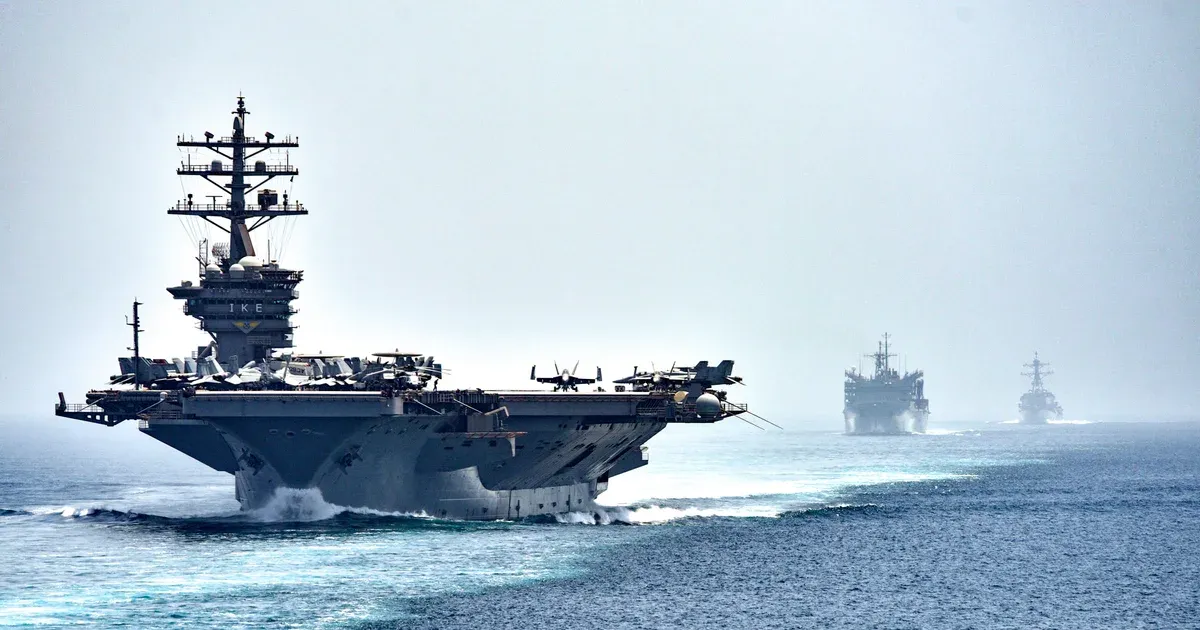
Donald Trump said the U.S. military had begun preparing for a new phase of global engagement after the formal pause in hostilities with Iran. The April 9, 2026, remarks framed military readiness as leverage over Tehran and other rivals. Ships, aircraft and personnel remained forward deployed rather than returning to domestic bases. Critics said the language of conquest risked turning deterrence into a standing invitation to escalation.
Military commanders received orders to maintain all ships, aircraft, and personnel in the region indefinitely. Trump specified that the pause in kinetic activity does not signal a permanent return to domestic bases. He characterized the current posture as a period of replenishment and strategic repositioning. Officials in Washington confirmed that logistics chains are moving heavy equipment to several undisclosed locations. These movements align with the president's stated objective of ensuring the armed forces are ready for what he termed their next conquest.
Pentagon Maintains High Alert Level Across Persian Gulf
Defense officials describe the atmosphere as one of armed observation. Thousands of sailors aboard strike groups continue to run combat drills within reach of the Iranian coastline. Trump warned that any deviation from the ceasefire terms would trigger military responses that are bigger and better than previous operations. This specific phrasing indicates a shift toward large-scale conventional warfare rather than the surgical drone strikes used in past years. Defense spending projections show a sharp increase in munitions procurement for the upcoming fiscal quarter.
Satellite imagery reveals increased activity at $11 billion worth of regional infrastructure projects designed to support long-term deployments. Intelligence reports suggest that the military is now loading up on advanced hardware to sustain high-intensity operations. Logistics hubs in Qatar and Bahrain report a surge in cargo flights delivering spare parts and electronic warfare components. Strategic planners at the Pentagon are reportedly drafting multiple contingency maps that extend far beyond the borders of the Middle East.
Tehran's leadership has expressed skepticism regarding the longevity of the peace deal. Iranian state media outlets reported that the presence of American carriers in the Strait of Hormuz constitutes a violation of the spirit of the ceasefire. Trump dismissed these concerns during a brief exchange with the press corps. He asserted that the United States would dictate the terms of engagement and the timeline for any eventual withdrawal. Compliance is the only metric the White House now recognizes as a valid reason for de-escalation.
Iranian Compliance Dictates Future Strike Capability
Verification teams from international bodies have requested access to sites across the Iranian plateau. The White House insists that American intelligence will independently verify every step of the disarmament process. Trump noted that military personnel are looking forward to the challenges presented by future theaters of operation. This rhetoric has caused some unease among traditional European allies who favor a more isolationist or defensive stance. Donald Trump remains committed to a policy of overwhelming force as the primary tool of diplomacy.
“All U.S. ships, aircraft and military personnel will remain in place until Iran fully complies,” Trump said during a press briefing.
Specific demands include the dismantling of short-range ballistic missile batteries and the shuttering of specific research facilities. Congressional leaders have requested a detailed briefing on the definition of next conquest to understand the potential for new conflicts. While the administration has not named a specific target, the language used suggests a proactive instead of reactive military doctrine. Budgetary allocations for the Marine Corps and Special Operations Command have been revised upward to reflect this aggressive outlook.
Strategic Shift Toward Military Conquest Rhetoric
National security analysts note that the word conquest has rarely appeared in modern American presidential speeches. Historically, the United States has preferred terms like liberation, intervention, or stabilization to describe overseas missions. Trump has discarded these euphemisms in favor of a vocabulary that emphasizes victory and territorial or political dominance. These linguistic changes coincide with the deployment of new hypersonic missile systems to Pacific and European bases. The fleet's readiness remains at its peak since the height of the Cold War.
Regional power brokers in the Middle East find themselves caught between the demands of Washington and the threats of local insurgencies. Saudi Arabia and the United Arab Emirates have increased their own defense orders to match the American buildup. Instead of finding a path to regional stability, the ceasefire has seemingly become a reset button for the next round of geopolitical competition. Heavy bombers recently conducted long-range sorties from the continental United States to the Indian Ocean to demonstrate global reach. These flights occurred without pre-clearance from international aviation authorities.
Energy prices fluctuated wildly as traders attempted to interpret the president's warnings of bigger strikes. Crude oil futures rose by 4 percent within hours of the announcement that ships would stay in place. Investors are now weighing the benefits of a ceasefire against the risk of a broader conflict involving the next conquest. Aerospace and defense stocks saw a substantial uptick in trading volume. Market participants anticipate that the loading up phase will lead to multi-year contracts for major defense contractors.
Global shipping lanes remain under the protection of the international maritime coalition led by the United States Navy. Commercial vessels have been advised to maintain heightened security measures when passing through the Bab el-Mandeb strait. Trump's insistence on total compliance creates an unstable environment for merchant mariners who must navigate these contested waters. The administration has not provided a sunset clause for the current military posture. Total expenditure for the ongoing mobilization is expected to exceed previous estimates by a wide margin.
Conquest Rhetoric and Military Risk
Does the term conquest belong in the 21st-century American lexicon? By opting for the language of imperial expansion, Donald Trump is doing more than posturing for a domestic audience; he is signaling a fundamental rejection of the post-1945 international order. The ceasefire with Iran appears less like a diplomatic victory and more like a tactical pause intended to give the American war machine time to recalibrate for a more formidable foe. It is not the behavior of a nation seeking peace, but of a superpower seeking a new frontier for its unmatched kinetic capabilities.
Critics will argue that this rhetoric invites unnecessary escalation, yet the administration clearly believes that the threat of bigger and better strikes is the only currency that matters in Tehran or Beijing. The shift from defense to conquest suggests that the White House has lost patience with the slow-moving mechanisms of international law. It is a dangerous gamble that assumes American resources are infinite and that the global appetite for American hegemony is still viable. If the next conquest fails to materialize or results in a mess, the political cost will be secondary to the erosion of American moral standing.
Trump has effectively turned the military into a looming shadow that refuses to retreat. The permanent state of mobilization creates a self-fulfilling prophecy where conflict becomes the only logical outcome of such immense preparation. Diplomacy is dead.