Trump's absence from a Dover service for fallen soldiers has collided with criticism over campaign branding at military events during a widening Gulf conflict.
Naval Engagement in the Strait of Hormuz
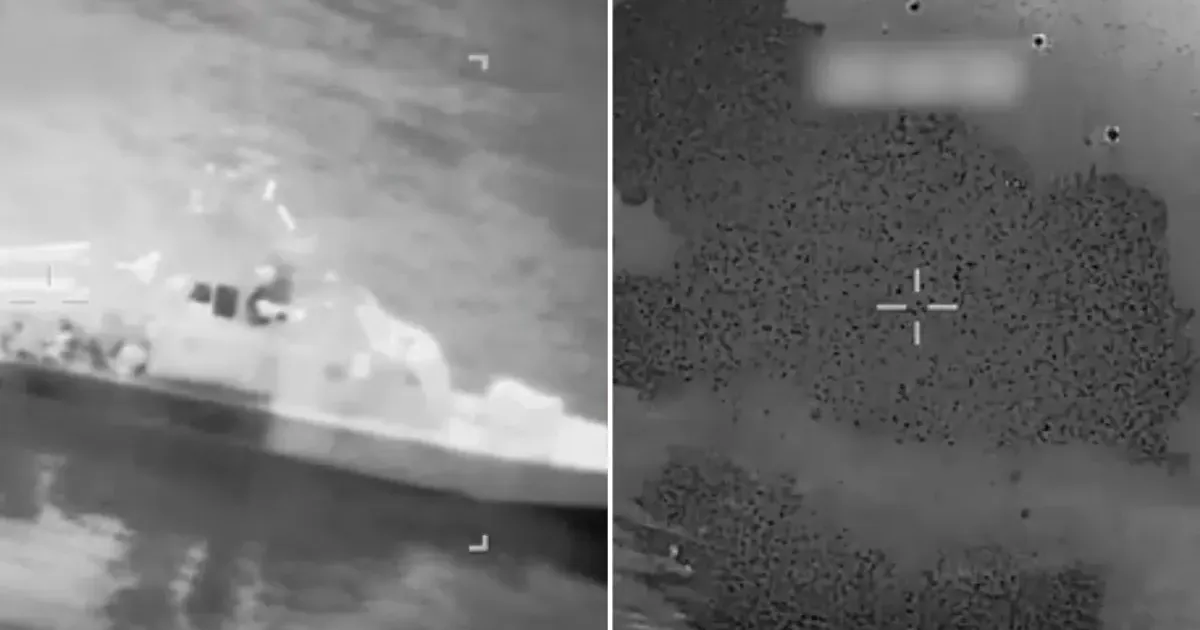
Infrared sensors tracked the Iranian vessel's movements through the choppy waters of the Strait of Hormuz before a US strike sent it to the bottom. Pentagon officials released declassified footage on Wednesday showing the precise moment the mine-laying ship disappeared under the waves. Dark plumes of smoke rose from the target as secondary explosions suggested the cargo of explosives ignited upon impact. Military analysts in Washington suggest this specific engagement was intended to deter Tehran from further mining operations in international shipping lanes. The report was published March 11, 2026, as the issue drew renewed attention.
This tactical victory provided a brief moment of clarity in a conflict that has become increasingly murky. Tehran has yet to issue a formal response to the loss of its vessel. Flames and debris scattered across the surface of the Persian Gulf in the video clips shared with major news outlets. The declassified footage appears to show a direct hit from a ship-to-ship missile launched by a US destroyer patrolling the region. Commanders on the ground reported that the Iranian crew was attempting to deploy sea mines in a narrow corridor used by commercial oil tankers.
Such actions represent a direct threat to the global energy supply. Defense Secretary Lloyd Austin briefed the press shortly after the footage went live, stating that American forces will continue to protect freedom of navigation by any means necessary.
Controversy at Dover Air Force Base
President Donald Trump stayed away from Dover Air Force Base on Wednesday morning. He chose to skip the latest dignified transfer of US war dead, a move that has drawn sharp criticism from veterans groups and political rivals. This decision comes on the heels of a separate controversy involving campaign merchandise. Photographs from a previous military event showed the president wearing a white "USA" baseball cap from his own campaign collection while greeting the families of the fallen. Critics argue that using a solemn military ceremony as a backdrop for political branding crosses a line that has stood for generations.
White campaign hats replaced the traditional somber attire usually associated with the return of American service members. This breach of protocol has created a rift within the Pentagon, where senior officers are reportedly uncomfortable with the intrusion of partisan politics into military honors. While Bloomberg suggests the president missed the ceremony due to a scheduling conflict, reporters on the ground noted that his public calendar was largely empty during the time of the transfer. The absence of the Commander-in-Chief at such a critical moment is being interpreted by many as an attempt to avoid further questions about the merchandise scandal. Soldiers on the front lines feel the heat of the desert while their families back home navigate a political storm sparked by the Oval Office.
Global Markets and Shifting Alliances
Global energy markets reacted with predictable volatility to the naval engagement in the Strait of Hormuz. Crude oil prices jumped 12 percent within hours of the footage being released, as traders braced for potential retaliatory strikes from Iran. Shipping companies are now facing insurance premiums that have tripled in the last week alone. Some of the world's largest logistics firms are choosing to bypass the Persian Gulf entirely, rerouting vessels around the Cape of Good Hope. These longer routes add significant costs to international trade and are already beginning to push up the price of consumer goods in the US and Europe.
Airlines are rerouting flights away from Middle Eastern airspace to ensure passenger safety. Long-haul flights between London and Singapore are now taking two hours longer as pilots navigate around the expanded combat zone. British Airways and Lufthansa issued statements confirming that they will avoid the region until the security situation stabilizes. Travel patterns are changing as vacationers cancel trips to the United Arab Emirates and Qatar, fearing that the conflict could spread to neighboring civilian centers. That geopolitical reality is forcing a total reassessment of how the world moves goods and people.
Diplomatic sources in London suggest that traditional alliances are fraying under the strain of unilateral American action. While the United States maintains that its strikes are defensive, several European partners have expressed concern that the escalation is becoming unmanageable. The British Foreign Office has called for restraint, yet the rhetoric coming from the White House remains defiant. Washington's insistence on a maximum pressure campaign has left its allies in a difficult position as they try to balance their security needs with the desire to avoid a full-scale regional war.
Energy Security and Travel Disruptions
Prices at the pump are rising for millions of Americans who now face the economic reality of a hot war. Analysts at Goldman Sachs warned that if the Strait of Hormuz remains contested for more than a month, gasoline prices could reach record highs. Refineries in Asia are also reporting shortages of light crude, which is essential for producing high-quality fuel. The economic impact is not limited to energy, as the disruption of trade through the Suez Canal affects everything from electronics to fresh produce. Markets in New York and London closed down for the third consecutive day as investors fled to the safety of gold and government bonds.
War has a way of stripping away the veneer of political marketing. Historical precedents for such direct naval conflict are rare in the modern era. Most engagements in the Persian Gulf over the last few decades have involved proxy forces or low-level harassment rather than the sinking of sovereign naval vessels. The release of the declassified footage is a deliberate choice by the administration to signal strength, but it also leaves little room for a diplomatic de-escalation. By showing the world exactly how the Iranian ship was destroyed, the Pentagon has effectively backed Tehran into a corner where some form of response is almost guaranteed by the Iranian leadership.
Why Military Rituals Cannot Become Branding
Does the Commander-in-Chief view the deaths of American service members as a somber duty or a marketing opportunity? Skipping Dover while campaign branding seeps into military ritual turns the presidency into something smaller, cheaper and more openly transactional. We are seeing a leader who is more concerned with his own brand than the lives of the men and women he sends into harm's way. The sinking of an Iranian ship may provide a satisfying visual for a cable news cycle, but it does nothing to address the long-term failure of a foreign policy that relies on provocation rather than strategy. When a president treats a war zone like a campaign rally, the moral authority of the United States evaporates on the world stage.
President Trump's decision to skip the dignified transfer at Dover while simultaneously peddling campaign hats is a grotesque distortion of the presidency.
Our allies are right to be terrified of this administration's unpredictability. It is one thing to stand firm against Iranian aggression, but it is quite another to use the resulting casualties as props for a white baseball cap. That isn't leadership; it is a reality show with a body count. The American public must demand better from a man who claims to represent their interests while he hides from the very consequences of his actions.