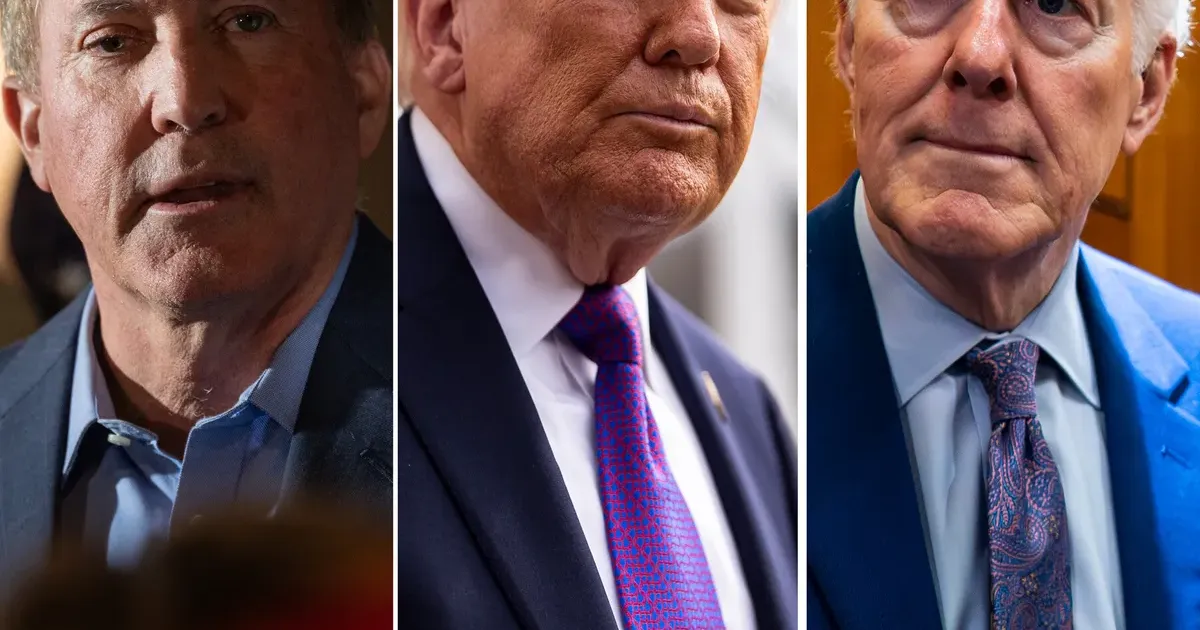
Trump’s Texas Senate pressure campaign has turned voter ID into both a legislative test and a loyalty test. The Texas push intensified on March 12, 2026, turning a state race into a national test of election-rule messaging.
Texas Becomes the Pressure Point
Donald Trump has turned the high-stakes Texas Senate race into a political laboratory for his 2026 legislative priorities. By withholding an endorsement in the contest between incumbent Senator John Cornyn and Attorney General Ken Paxton, the president is signaling that his support carries a heavy price tag: the passage of the SAVE Act. Republican insiders in Washington and Austin suggest this maneuver is intended to break the legislative logjam in the Senate, where a narrow majority has resisted the president's most aggressive election-related demands. Passage of the Safeguard American Voter Eligibility Act, or SAVE Act, remains a central pillar of the president's agenda as he prepares for the midterm elections. Proof of citizenship would become a mandatory requirement for federal voting under this proposal, a move that Democrats argue is designed to suppress minority turnout and create administrative hurdles at the local level. John Cornyn finds himself in a familiar but uncomfortable spotlight. As he seeks another term in the Senate, the veteran lawmaker must navigate a political environment dominated by the whims of a president who demands absolute loyalty to his election integrity agenda. Cornyn has long been viewed as a member of the Republican establishment, a position that once offered stability but now invites scrutiny from the MAGA base. Ken Paxton, meanwhile, has positioned himself as the ultimate Trump loyalist, leveraging his legal battles with the federal government to strengthen his credentials among hardline conservatives. Trump remains aware that a Paxton endorsement could end Cornyn's career, and he is using that leverage to ensure the Senate brings the SAVE Act to the floor for a recorded vote.
Voter ID Politics Travel Nationally
Still, the president remains unmoved by pleas for party unity. He insists that without the SAVE Act, the 2026 midterms will be compromised by the same irregularities he has highlighted since November 2020. This strategy places Cornyn in a precarious position, forcing him to choose between his standing in the Senate leadership and his survival in a primary where Trump's word is law. Sources close to the Cornyn campaign suggest the senator is working behind the scenes to find a compromise that satisfies the White House without alienating moderate voters in the Texas suburbs.
Political survival in the modern Republican Party requires more than a conservative voting record. Trump has shown little appetite for compromise, and the Texas pressure campaign makes clear that election-law loyalty now matters as much as seniority. Washington is bracing for a total legislative shutdown as Trump threatens to block all unrelated bills until the Senate acts on his voter ID priorities. This legislative gridlock could define the next six months, stalling essential government funding and defense authorizations.
Yet Trump has shown little appetite for compromise, recently telling advisors that he is willing to let the Texas seat fall into uncertainty if it means securing a victory on voter identification requirements.
CBS News reports that the president is obsessed with the 2020 election results, which he continues to claim were fraudulent despite exhaustive evidence to the contrary. His focus on the SAVE Act is seen by many as a continuation of that preoccupation, an attempt to retroactively validate his claims by fundamentally changing how Americans access the ballot.
Election Rules Become a Loyalty Test
Senate Majority Leader John Thune has attempted to keep the peace, but he faces a growing caucus of younger senators who are more afraid of a Trump primary challenge than a legislative stalemate. Democratic leaders have already voiced their opposition to the SAVE Act, calling it a direct assault on the Voting Rights Act. They point out that non-citizen voting is already illegal in federal elections and that the president's push is a solution in search of a problem. Senate Minority Leader Chuck Schumer recently stated that the bill is a non-starter for his caucus, setting the stage for a dramatic showdown that could lead to a government shutdown later this spring.
While Bloomberg suggests that some moderate Republicans are wary of the president's tactics, Reuters reports that the vast majority of the GOP caucus is prepared to follow Trump's lead to avoid the wrath of the primary electorate. The pressure is particularly intense for senators up for reelection in 2026 who fear that a lack of enthusiasm from the Trump base will lead to their defeat. Calculated silence is a weapon Trump has perfected. Ken Paxton has used his proximity to the president to paint Cornyn as a relic of a bygone era.
Paxton regularly appears on conservative media outlets to argue that the SAVE Act is the only way to ensure the 2026 elections are not stolen. His rhetoric mirrors the president's own language, creating a feedback loop that leaves little room for nuance or policy debate.
The Process Is the Political Weapon
Trump used the Texas Senate race to intensify pressure around voter ID rules. The move puts election administration inside a broader campaign loyalty fight. Voter ID messaging can energize supporters while raising access concerns for opponents. Supporters frame strict ID laws as election security, while critics argue the rules can burden eligible voters and turn ballot access into a partisan loyalty test.