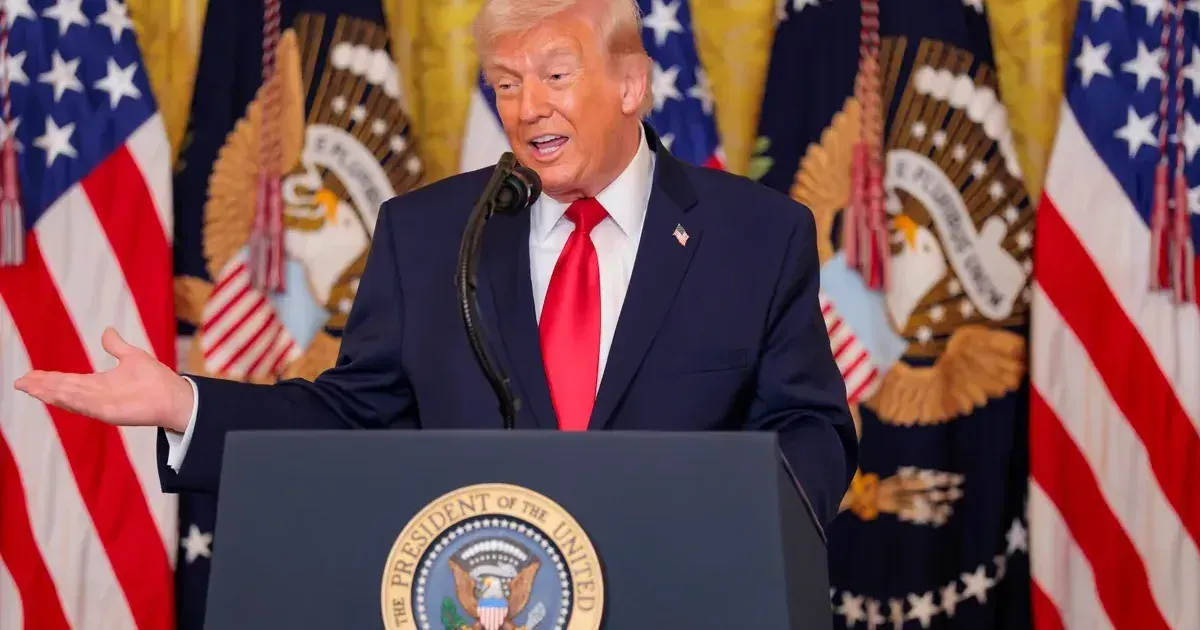
Trump Signals More Action
The day began with a social media barrage that sent global intelligence agencies into a frenzy. President Donald Trump used his online platform to target the Iranian regime with aggressive language, calling the officials in Tehran deranged scumbags. On March 13, 2026, Trump’s warning landed as questions grew around Mojtaba Khamenei’s visibility. He told his followers to watch what happens to these individuals today, suggesting a new phase of the ongoing military operation. This rhetoric coincided with growing uncertainty regarding the status of Mojtaba Khamenei, the recently appointed Supreme Leader of Iran. Reports from the region indicate that Mojtaba has not appeared in public or released any visual proof of life since he assumed the role earlier this week.
Intelligence officials in Washington and London are currently analyzing the lack of communication from the Iranian leadership. Trump suggested during a press briefing that Mojtaba Khamenei is probably alive but could be damaged. Such a description implies that a recent US-Israeli strike may have hit a command center or that the leader is suffering from a significant medical crisis. The silence from Tehran remains absolute.
Military analysts suggest the Iranian government is struggling to maintain a facade of stability while its command structure is under fire. The joint US-Israeli operation, which began seven days ago, has targeted various high-value assets across the Islamic Republic. Without a visible leader to rally the population, the risk of internal collapse or a desperate, uncoordinated retaliation grows. Energy markets reacted with predictable volatility to the escalation of the conflict.
AAA reported today that the average price for a gallon of regular gasoline reached $3.60, a figure not seen in several years. Drivers across the United States are seeing prices at the pump rise daily. This windfall for domestic oil producers has not translated into relief for the average American household.
Trump dismissed concerns about the economic toll on the public during a brief exchange with reporters. He claimed the United States makes a lot of money when oil prices go up, framing the conflict as a net gain for the national treasury. Domestic oil production in basins like the Permian and Bakken has reached record levels, allowing the US to export surplus crude to global markets at premium rates. While this strengthens the American dollar and provides a windfall for energy companies, the cost of transportation for goods and services is rising.
Mojtaba Khamenei’s Absence Fuels Questions
Every cent added to the price of fuel ripples through the supply chain, inflating the cost of groceries and consumer electronics. Rising fuel costs historically serve as a political liability for any administration, yet the White House appears focused on the strategic advantage of high energy prices for its rivals. Beijing and other major importers rely heavily on foreign oil to sustain their industrial output. By allowing or encouraging higher global prices, the Trump administration effectively imposes an indirect tax on the Chinese economy.
The strategy turns the energy market into a secondary theater of economic warfare. But how long can the American consumer bear the burden of high prices for the sake of global leverage? Legislators on Capitol Hill are moving to prevent the administration from expanding its military reach beyond the Persian Gulf. Senate Democrats filed a war powers resolution today specifically aimed at Cuba.
The legislation seeks to bar the president from ordering military strikes against Havana without explicit congressional authorization. Senator Chris Murphy and his colleagues expressed fears that the White House might use the chaos in the Middle East as cover for an intervention in the Caribbean. This legislation reflects a deep-seated distrust between the executive branch and the Senate regarding the use of kinetic force. Constitutional experts point to the War Powers Act of 1973 as the foundation for this legislative maneuver.
That law was designed to check the power of the president to commit the country to armed conflict without the consent of Congress. While the administration has focused its public attention on Iran, the movement of naval assets in the Atlantic has raised questions about potential operations closer to home. Cuba remains a point of contention for Republican hawks who view the island as a persistent threat to regional security. Chaos in the Strait of Hormuz dictates the price of bread in Kansas.
Republicans in the Senate have mostly remained silent on the Cuba resolution, though some have hinted at a willingness to support oversight measures. The memory of rapid military escalations in the past remains fresh in the minds of lawmakers from both parties. If the administration intends to open a second front in the Caribbean, it will likely face a significant legal and political battle in Washington. The current resolution is just the first step in what could be a long period of legislative pushback.
Washington Weighs Escalation Risk
Markets in Europe and Asia are watching the American political divide with concern. Any sign of internal instability in the United States could further destabilize global trade and exacerbate the energy crisis. The joint US-Israeli operation against Iran has already redirected shipping lanes and increased insurance premiums for maritime transport. Adding a Caribbean conflict to the mix would strain the logistics of the global economy to a breaking point.
Only a handful of military vessels currently patrol the waters between Florida and Cuba, but that could change within hours. Trump appears undeterred by the legislative moves or the rising costs at the pump. He continues to focus on the perceived weakness of the Iranian regime and the potential for a total restructuring of the Middle Eastern power balance. If Mojtaba Khamenei is indeed incapacitated, the resulting vacuum could be the most significant geopolitical shift in decades.
The president’s social media posts suggest he is waiting for a definitive result from the ongoing strikes. Whether that result leads to a swift conclusion or a wider war remains the central question of the 2026 spring season. The uncertainty around Mojtaba Khamenei adds a succession layer to an already dangerous military confrontation. In Tehran, personal visibility can matter because rival factions read absence, speeches and public images as political signals. For Washington, that ambiguity complicates messaging. A threat meant to deter Iran can also strengthen hard-liners if it is framed inside Tehran as proof of foreign pressure on the leadership itself.