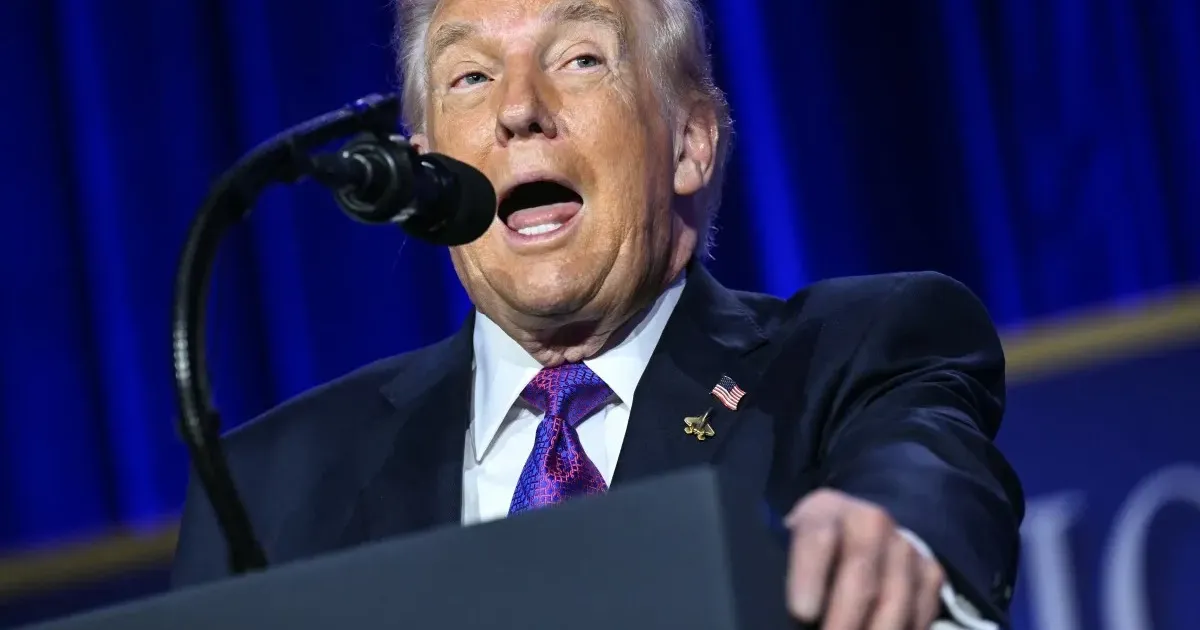
Trump’s power-grid threat against Iran has moved the war argument toward infrastructure collapse and retaliation risk.
War of Attrition Becomes Infrastructure Zero Sum Game
The warning changed the escalation debate. Donald Trump stood before a specialized press briefing on March 12, 2026, and declared that the United States military maintains the capability to dismantle Iran's entire national power grid in sixty minutes. Such a move would effectively paralyze the Islamic Republic, leaving its leadership unable to coordinate basic civilian or military functions. Trump stated that rebuilding would be almost impossible for them. His remarks signal a shift from surgical military strikes to a scorched-earth policy regarding Iranian infrastructure. Washington officials suggest that the White House sees no immediate end to the ongoing operation. While some Pentagon analysts previously hinted at a ceasefire, the president claims Iran has already lost most of its military potential. These assertions collide with reports from Tehran indicating a resilient, albeit battered, resistance strategy. Tehran responded to these threats by initiating what it calls the fortieth phase of its offensive against Western interests. The Islamic Revolutionary Guard Corps (IRGC) announced on state media that it has successfully targeted American military facilities located in Jordan and Saudi Arabia. Details regarding casualties remain sparse, but the geographical breadth of these strikes confirms that the conflict is no longer confined to the borders of the two primary combatants. Iran's military command appears to be testing the limits of regional stability by drawing neighboring states into the line of fire. Bases that once served as logistical hubs for the US Central Command now find themselves under direct missile and drone bombardment. Reliability of Iranian state reports is often questioned, yet the escalation in rhetoric matches the physical reality of explosions reported across the peninsula.
Economic warfare has become the latest theater in this multi-front struggle. Yahya Safavi, a top military advisor to Supreme Leader Mojtaba Khamenei, addressed the nation via state television to denounce the American president. Safavi described Trump as the most corrupt and stupid American leader in history, even labeling him as Satan in person. This assessment ignores the diplomatic norms of previous decades, reflecting the total breakdown of communication between the two powers. Safavi's speech was not just an exercise in name-calling. He used the platform to announce that Iran now considers American and Israeli financial institutions legitimate military targets. Banks, investment firms, and economic centers across the Middle East are now advised by Tehran to clear a one-kilometer radius for civilian safety. This focus on capital as a combat zone suggests a desperate attempt by Tehran to use global market volatility against its enemies.
Israel continues to operate in tandem with American forces, focusing its efforts on neutralizing Iranian proxies and high-value internal targets. Overnight bombing raids by joint US-Israeli forces reportedly leveled a major financial headquarters in Tehran. Iranian media confirmed the deaths of several bank employees in the rubble. Retaliatory threats followed immediately. The Iranian army command stated that the enemy has opened the way for them to strike economic centers belonging to the United States and the Zionist regime. Market analysts in London and New York have noted a sharp increase in insurance premiums for commercial entities operating in the Persian Gulf. Any sustained campaign against financial hubs could trigger a liquidity crisis that transcends the regional borders of the Middle East.
The Proliferation of Sleeper Cells and Proxy Violence
Intelligence agencies in the West are currently tracking what the White House calls Iranian sleeper cells. Trump noted that US agencies know exactly where these operatives are hiding, suggesting that domestic security measures have been heightened to prevent retaliatory strikes on American soil. This rhetoric echoes the paranoia of previous conflicts, but the stakes are sharply higher given the sophisticated nature of modern asymmetric warfare. A drone strike on a luxury residential building in Dubai earlier this month is a chilling example of how non-traditional targets are being pulled into the vacuum. Dubai has long positioned itself as a neutral business hub, but that neutrality is evaporating as the IRGC seeks to punish any regional player perceived as an American ally.
North Korean involvement has further complicated the geopolitical board. Kim Jong-un was recently seen attending missile tests alongside his daughter, a move widely interpreted by South Korean intelligence as a show of solidarity with the Iranian regime. While Moscow and Pyongyang have not formally entered the fray, their diplomatic and technological support for Tehran remains a thorn in the side of the White House. TASS reports indicate that the Kremlin is closely monitoring Trump's threats to the Iranian power grid. Russia may view the total destruction of Iranian infrastructure as a threat to its own regional influence, potentially prompting a more direct Russian intervention if the grid is actually targeted.
A quick resolution now looks increasingly unlikely.
Military potential is a subjective metric in the eyes of the current administration. The White House describes the IRGC as a hollowed-out force, yet the persistent 40th phase of Iranian operations suggests otherwise. If the US proceeds with the destruction of the Iranian electrical network, the humanitarian cost would be astronomical. Hospitals, water treatment plants, and food distribution networks would cease to function within hours. Critics of the administration argue that such a move would not end the war but would instead radicalize the remaining population for generations. Still, the White House remains undeterred, viewing the total collapse of the Iranian state as the only path to a permanent victory.
Trump insists that the IRGC is a hollowed-out force, yet the persistent 40th phase of Iranian operations suggests otherwise.
Jordan and Saudi Arabia find themselves in an impossible position. By hosting American assets, they have become magnets for Iranian missiles. And yet, withdrawing support for Washington would leave them vulnerable to Iranian hegemony. The delicate balance that has defined the Gulf for the last twenty years is effectively dead. Leadership in Riyadh has reportedly considered seeking a separate peace with Tehran, though the recent IRGC strikes on Saudi soil make such a pivot nearly impossible to sell to a domestic audience. For now, the region remains a hostage to the escalating cycle of strike and counter-strike.
One hour of bombing can change the course of a century.
Banks in the region are already shuttering windows and moving digital operations to offshore servers in anticipation of the promised Iranian strikes. The targeting of financial centers is a shift toward what some call total war, where the distinction between a soldier and a bank teller is blurred. If Iran successfully hits a major Western financial hub in the region, the ripple effects will be felt on the floor of the New York Stock Exchange. Such a strategy seeks to make the war too expensive for the American public to support. But Trump has shown little concern for market jitters, betting that a decisive blow to Tehran's infrastructure will end the threat before the markets can fully react.
Why Grid Threats Change the War
The infrastructure threat raises the risk of escalation even if no strike follows immediately. Power grids are civilian lifelines as well as strategic assets, so rhetoric around them carries legal, military and humanitarian consequences.
The practical question is whether the statement is deterrence, bargaining language or a real operational signal. Each interpretation creates a different risk path for Iran, regional allies and energy markets.