Trump Warns Iran of Severe Force Over Hormuz Mine Reports
President Trump warns Iran of severe military force as intelligence reports indicate potential mining of the Strait of Hormuz, threatening global oil supplies.
Naval Intelligence Detects Iranian Mine Layers
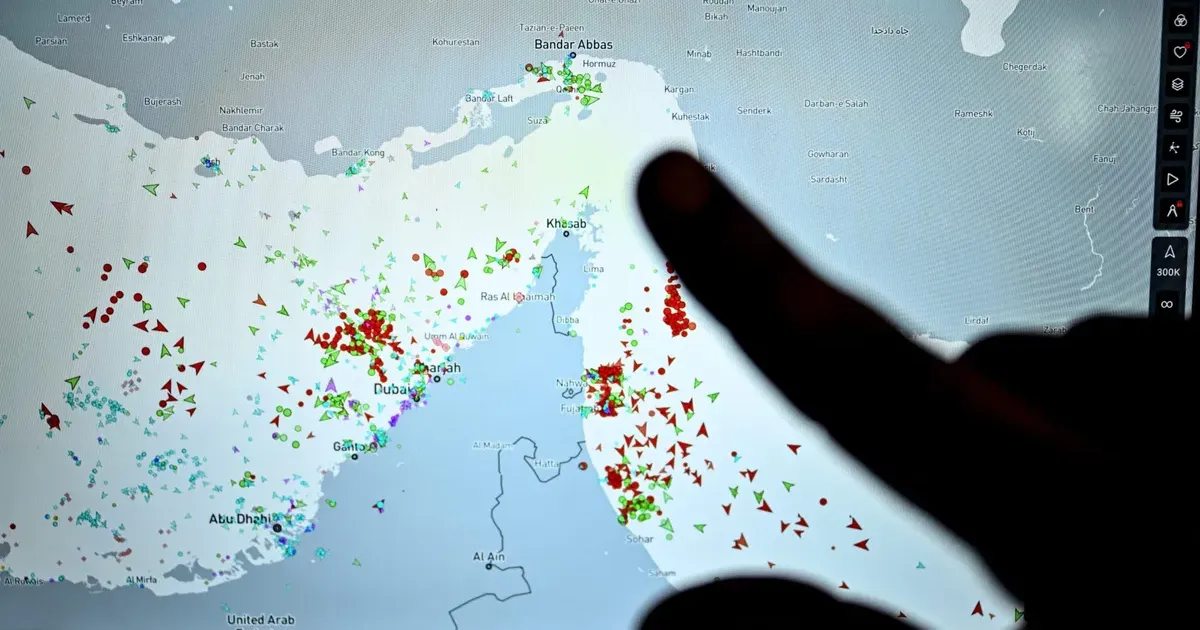
Satellite imagery and signals intelligence from the Persian Gulf have triggered a frantic response in Washington. U.S. intelligence recently identified evidence that Iran may be preparing to disrupt the Strait of Hormuz by deploying naval mines throughout the narrow waterway. Reports first surfaced via CBS News, indicating that Tehran could utilize a fleet of small, agile crafts to carry out the operation. These vessels are capable of carrying two to three mines each, allowing for a dispersed and difficult-to-track deployment strategy.
President Donald Trump took to Truth Social on Tuesday to address the reports with characteristic aggression. He demanded the immediate removal of any mines that might have been placed, though he acknowledged that the U.S. had not yet confirmed active deployment. His warning was blunt. If Iran interferes with the flow of oil through the world’s most critical chokepoint, the President promised a military response twenty times harder than any previous engagement.
Estimates regarding the Iranian naval arsenal vary, but intelligence circles suggest Tehran holds between 2,000 and 6,000 naval mines. Such a stockpile allows for a sustained campaign of maritime disruption that could effectively close the Strait to commercial traffic.
Economic Chokepoint Faces Potential Shutdown
Oil markets remain on a knife-edge because the Strait of Hormuz serves as the artery for 20 percent of the global supply. Roughly 20 million barrels of petroleum liquids pass through this narrow passage every day, representing a fifth of global consumption. Liquefied natural gas trade is equally vulnerable, with 20 percent of the world's LNG supply moving through the same waters.
Crude prices have already begun to swing violently as traders attempt to price in the possibility of a total blockade. London trading floors witnessed record volatility this week, with brokers describing the atmosphere as one of the wildest sessions in recent history. The mere suggestion of mining activity in the Strait can drive insurance premiums for tankers to levels that make shipping economically unviable.
Traders are forced to parse conflicting signals from the American administration. While the President threatens overwhelming force, the White House recently had to walk back claims made by its own Energy Secretary.
Internal Confusion Rallies Market Skepticism
Stability in the energy sector depends on clear communication, but the current administration is struggling to provide it. The U.S. Energy Secretary recently claimed the Navy had already begun escorting tankers through the waterway to ensure safety. Within hours, the White House issued a correction, stating that no such escorts were currently taking place.
This discrepancy created a vacuum of information that speculators were quick to exploit. If the Navy is not yet escorting vessels, the risk to commercial shipping remains at an all-time high. Shipping firms are now debating whether to reroute tankers around the Cape of Good Hope, a move that would add weeks to delivery times and billions to global energy costs.
Market analysts at several London firms noted that the Energy Secretary's error suggests a lack of coordination between the Pentagon and the Department of Energy. Without a unified front, the deterrent effect of Trump's warnings may be diluted in the eyes of Iranian leadership.
The Strategic Reality of the Mosquito Fleet
Iran relies on an asymmetric naval strategy that prioritizes volume over traditional firepower. By using hundreds of small boats rather than a few large destroyers, they can overwhelm the sensor systems of more advanced Western navies. Each small craft acting as a mine layer is a low-cost, high-impact asset.
Washington is reportedly considering a plan to take over the Strait entirely. President Trump mentioned this possibility on Monday, suggesting that a total U.S. military occupation of the waterway might be the only way to ensure the flow of oil continues. He expressed hope that the conflict would end soon, but his rhetoric suggests a readiness for a massive escalation if Iran does not back down.
International shipping companies are caught in the crossfire of this rhetorical war. The cost of securing a vessel for a single trip through the Persian Gulf has tripled in forty-eight hours.
Historical Context of Gulf Hostilities
Friction in the Strait of Hormuz is not a new phenomenon, but the scale of the current threat is different. During the Tanker War of the 1980s, both Iran and Iraq targeted commercial shipping, leading to Operation Earnest Will, the largest naval convoy operation since World War II.
Today, the technology has changed even if the geography has not. Modern mines are more sophisticated, featuring magnetic, acoustic, and pressure sensors that make them harder to sweep. The U.S. Navy's mine countermeasures are capable, yet they are also slow. Clearing a minefield in the Strait would take weeks of careful work under fire.
Global energy security remains hostage to a few miles of water. The math of a shutdown is brutal for the West.
Traders Brace for a Long Siege
Brokers in London and New York are preparing for a period of sustained high prices. If the mining reports are confirmed, the floor of the oil market could shift upward by thirty or forty dollars per barrel overnight. Such a jump would act as a massive tax on the global economy, potentially triggering a recession in energy-importing nations.
Traders are watching satellite feeds for any sign of Iranian naval movements. Every small boat leaving an Iranian port is now a potential trigger for a massive buy order.
Reliability is the currency of the oil market, and right now, that currency is in short supply.
The Elite Tribune Perspective
Western leaders have spent decades pretending the Strait of Hormuz is a global commons when it is actually a loaded gun pointed at the heart of the industrialized world. We continue to subsidize a global energy architecture that relies on the whims of a hostile regime in Tehran and the volatile social media posts of an American president. Trump's threat to hit Iran twenty times harder is the kind of chest-thumping that satisfies a domestic base but does nothing to secure a single barrel of crude. If the U.S. were serious about energy security, it would have long ago rendered the Strait of Hormuz irrelevant through massive domestic production and nuclear expansion. Instead, we are reduced to watching grainy satellite photos of small boats while our economies hang by a thread. The White House's inability to coordinate a simple message about tanker escorts reveals a terrifying level of incompetence at the highest levels. We are not just facing a threat from Iranian mines. We are facing a crisis of leadership that has left the world's energy supply vulnerable to a mosquito fleet of wooden boats. It is time to stop reacting and start dismantling the dependency that makes this theater possible.