War Transitions from Middle Eastern Deserts to American Coasts
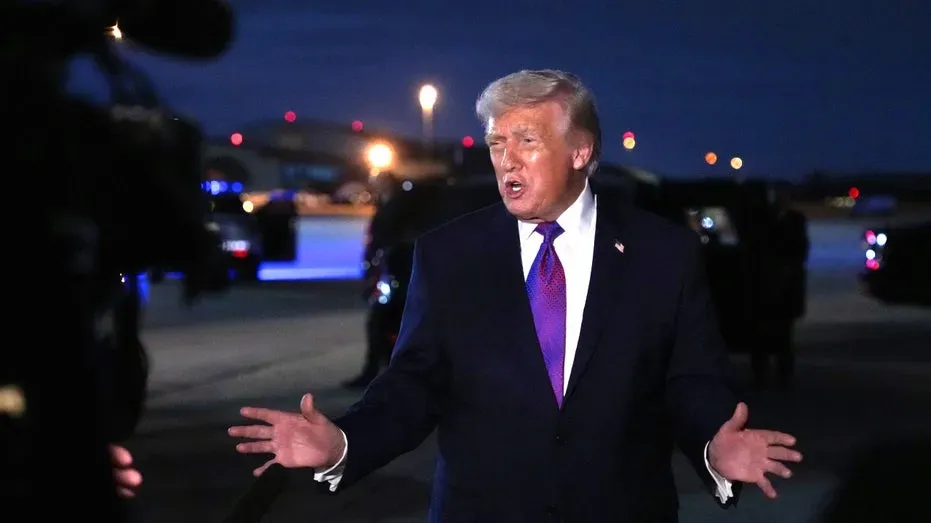
March 12, 2026, marked a shift in the rhetoric of the American presidency. Donald Trump used a Wednesday press gaggle to pivot from the battlefield of the Persian Gulf to the harbors of California. While the administration celebrates the rapid dismantling of Iranian conventional military sites, the conflict is leaking across borders in ways that the Pentagon cannot easily contain. Security officials are now tracking reports of a potential drone swarm attack planned to originate from an offshore boat near the West Coast.
Intelligence bulletins updated in February and March indicate that Iranian agents may be planning a complex revenge strike on American soil. Trump addressed these concerns directly, suggesting that the threat is a byproduct of previous administration policies. He claimed that sleeper cells entered the country through the border policies of former President Joe Biden. The current Commander in Chief told reporters that while law enforcement has its eye on these individuals, the risk remains a reality for domestic security agencies. Investigative teams are currently looking into the logistics of an offshore drone launch, a tactic that would bypass traditional land-based border security measures.
Military operations in the Middle East have been described by the president as being prosecuted at a level never seen before. US and Israeli forces recently conducted a high-profile strike that reportedly killed a top Iranian cybercriminal who had long occupied a spot on the FBI Most Wanted list. This operation highlights the multi-dimensional nature of the 2026 conflict, where digital warfare is as critical as the physical destruction of infrastructure. Despite these tactical victories, the political leadership in Tehran remains defiant. Iranian officials have warned that the world should brace for oil prices to reach 200 dollars per barrel if the blockade and strikes continue.
The economic pressure is mounting daily.
Strategic Focus Shifts to the Revolutionary Guard
Dismantling the conventional Iranian military has not yet achieved the goal of regime change. Reports from The Hill suggest that the Islamic Revolutionary Guard Corps and the Basij paramilitary remain the primary centers of gravity for the clerical government. These organizations function as a state within a state, controlling vast swaths of the Iranian economy and maintaining internal order through brutal suppression. Analysts argue that unless these specific entities are neutralized, the Iranian leadership will likely weather the storm of conventional bombardment. The conventional army is shield, but the Guard Corps serves as the sword and the purse of the regime.
Navy officials confirmed the destruction of 16 Iranian mine boats in the Strait of Hormuz during a recent skirmish. These small, agile vessels represent Iran's preferred method of asymmetric naval warfare. They are designed to harass massive oil tankers and mine the narrow shipping lanes that enable a significant portion of the world's energy supply. NBC News correspondent Richard Engel reported that Iranian strikes are now specifically aimed at driving up global energy costs to force a diplomatic retreat by Western powers. The targeting of civilian tankers near the Strait of Hormuz has created a volatile maritime environment where insurance rates for shipping have skyrocketed.
President Trump maintains that other world leaders are in total agreement with his aggressive posture. He noted during his press gaggle that powerful countries have expressed amazement at the speed of the American military campaign. According to the president, these nations view Iran as a malevolent force that has destabilized the region for forty-seven years. This consensus among allies provides a diplomatic cushion for the White House as it contemplates the next phase of the campaign, which may involve deeper strikes into the paramilitary infrastructure of the Iranian state.
The math of the conflict remains grim for global markets.
Domestic Security in an Age of Asymmetric Warfare
Domestic law enforcement agencies are currently on high alert for the sleeper cells Trump mentioned. Federal investigators are scouring travel records and border crossing data from the past five years to identify potential threats. The warning about a California drone swarm is not a new development, but the escalation of the kinetic war in the Persian Gulf has increased the likelihood of a retaliatory strike. Small, commercially available drones can be modified to carry explosive payloads, making them a nightmare for security details in densely populated coastal cities. Operating these devices from a boat offshore makes detection and interception even more difficult for the Coast Guard and local police.
Trump remains adamant that his administration can handle these threats as they come. Yet the political undercurrents of his statements are clear. By framing the presence of these cells as a failure of the Biden administration, he is consolidating domestic support for his own hardline border and security policies. The president emphasized that while the war is being prosecuted with precision, the porous nature of the American border in previous years created a vulnerability that he must now manage. This narrative serves to link his foreign policy successes with his domestic agenda on immigration and national sovereignty.
The Islamic Revolutionary Guard Corps continues to project power despite the loss of its cyber leadership. Recent intelligence suggests the group is still coordinating with proxy militias in Iraq and Lebanon to stretch American resources thin. The Hill's analysis points out that the conventional military of Iran is largely a distraction from the real power brokers in Tehran. If the United States intends to see a different government in Iran, it will have to target the economic and paramilitary foundations of the Guard Corps directly. Such a move would represent a significant escalation and could lead to the very total war that many in Washington hope to avoid.
Global energy stability hangs in the balance as the Strait of Hormuz becomes a graveyard for small vessels and a danger zone for tankers. If oil does indeed hit 200 dollars a barrel, the economic shock could trigger a global recession, complicating the political environment for the Trump administration ahead of mid-term considerations. The president seems undeterred by these forecasts, focusing instead on the immediate tactical superiority of American forces. He remains confident that the pressure will eventually break the regime's resolve, even as the threat of domestic terrorism looms over the American West Coast.
The Elite Tribune Perspective
Why do we continue to pretend that decapitating a conventional military results in the collapse of a revolutionary state? The current strategy against Iran is an exercise in high-tech vanity that ignores the historical resilience of the Islamic Revolutionary Guard Corps. We are watching the Pentagon win every battle while the White House prepares to lose the peace. Trump’s obsession with sleeper cells and Biden’s border failures is a convenient political shield, but it does nothing to address the reality of asymmetric retaliation. If a drone swarm hits a California pier, the technical success of destroying sixteen mine boats in the Persian Gulf will matter very little to the American public. We have entered a conflict where the front line is a concept rather than a location. Washington is effectively gambling that the Iranian people will rise up and do the heavy lifting of regime change once the bombs stop falling. It is a recurring American delusion that has failed in Baghdad and Kabul. The Guard Corps does not fear missiles; they fear the loss of their black-market monopolies and internal control. Unless the administration is prepared for a decades-long occupation or a total economic siege that starves the paramilitary elite, this war will only succeed in making the world more expensive and the American homeland less safe.