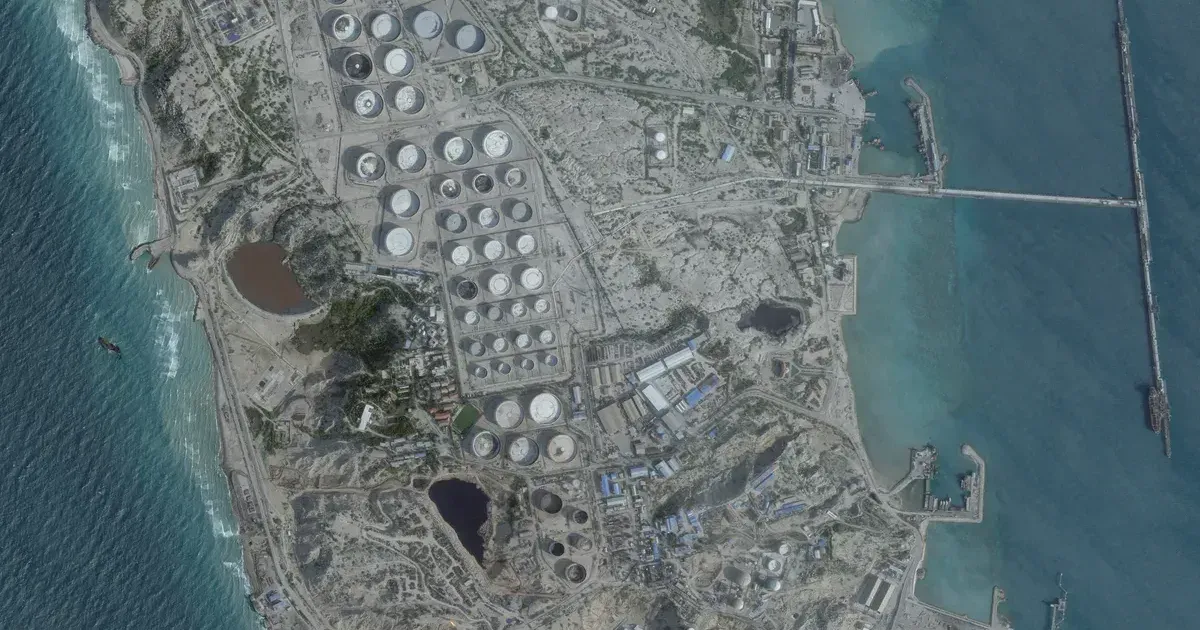
President Donald Trump used Truth Social on Friday to detail a massive air operation against Iranian assets. American bombers targeted military installations on Kharg Island, a location described by the president as the crown jewel of the Islamic Republic. The strike widened the Persian Gulf security risk.
Military Targets on Kharg Island Face Heavy Bombing
American forces focused their firepower on the perimeter defenses of the oil terminal rather than the storage tanks themselves. Military commanders believe that destroying the island's anti-aircraft batteries leaves the facility vulnerable to future strikes if Tehran retaliates. President Trump noted that the U.S. military obliterated every designated target during the sortie. He warned that the decision to spare the pumping stations is subject to change. Iranian military capability on the island has been severely diminished. Still, the underlying oil infrastructure remains operational for the time being. The White House has linked the survival of these terminals to Iran's behavior in international waters. American carrier groups have increased their presence in the North Arabian Sea to monitor for a response. Military intelligence suggests the raid caught the local garrison by surprise. Reports from JP Morgan indicate that the island handles up to 7 million barrels of oil per day. This volume represents the lifeblood of the Iranian state budget. Destroying the piers and loading arms would cause an immediate spike in global energy prices. But the current strategy seeks to use this vulnerability without triggering a global supply shock. The strike served as a demonstration of American reach and precision. Tehran must now decide if protecting its shipping lanes is worth the risk of losing its entire export capacity.
Intelligence sources claim the strike destroyed several command centers used by the Islamic Revolutionary Guard Corps. The Iranian government has called the attack a violation of international law. No immediate counter-attacks have been reported against American bases in Iraq or Syria.
Iranian Oil Exports and Global Energy Vulnerability
China remains the largest buyer of the crude that flows through the Kharg Island terminal. Any permanent damage to the facility would force Beijing to seek alternative suppliers in a tightening market. Energy analysts at JP Morgan released a note stating that a direct hit on the oil infrastructure would trigger a sharp retaliation in the Strait of Hormuz. The bank warned that the global economy could face significant headwinds if the flow of Persian Gulf oil is halted. For now, the physical supply of oil remains stable. But the insurance costs for tankers operating in the region have already begun to climb. Most shipping companies are rerouting vessels or seeking additional security escorts. The US Navy has issued a warning to all commercial mariners to exercise extreme caution when transiting the area. Iranian officials have previously threatened to close the strait if their exports are blocked by force.
Iran had plans to take over the entire Middle East and completely obliterate Israel. Much like Iran itself, those plans are now dead!
The quoted text from the president's social media post reflects a hardening of American policy toward the regime. Washington has signaled that it will no longer tolerate interference with global commerce. For instance, the recent seizure of a European-flagged tanker by Iranian commandos provided the immediate trigger for the strike. The White House maintains that the US has the capability to dismantle any Iranian defense system. And the administration has reiterated that Iran will never be permitted to develop a nuclear weapon. To that end, the strike on Kharg is a warning about the vulnerability of the regime's other sensitive sites. Military analysts believe the raid was a calculated gamble to test Iranian resolve. The response from Tehran will likely dictate the scale of future American operations. By contrast, European leaders have urged both sides to show restraint to avoid a wider war.
Shipping Security Risks in the Strait of Hormuz
Kharg Island is more than an oil port. It is a fortified bastion that allows Iran to project power across the northern Gulf. The island is roughly eight kilometers long and is a base for fast-attack boats used by the Revolutionary Guard. These vessels have been involved in multiple incidents with commercial traffic over the last decade. By striking the military infrastructure on the island, the US has hampered Iran's ability to launch surface-to-sea attacks. Separately, the Pentagon is moving additional drone assets to the region to provide constant surveillance.
The goal is to ensure that no Iranian naval units can leave port without being tracked. In fact, several Iranian frigates have remained in their home harbors since the bombing. The lack of an immediate naval response suggests a period of internal assessment within the Iranian high command. American drones continue to circle the island to assess the damage to the radar sites.
Economically, the stakes could not be higher for the Iranian leadership. The country is already struggling with high inflation and domestic unrest. Losing the 90 percent of revenue provided by Kharg would likely lead to a state of total financial collapse. For one, the regime relies on oil sales to pay its internal security forces and regional proxies. Without this funding, the grip of the clerical establishment on the country might weaken. But the US has chosen to keep the oil flowing as a form of economic hostage-taking. This approach forces the regime to choose between its regional ambitions and its survival. In turn, the Iranian leadership has convened an emergency session of its national security council. Sources in Tehran suggest that the supreme leader is considering various options for a proportional response. The threat to the global energy market keeps the international community on edge.
Kharg Island has been a strategic prize for over two thousand years. In the era of the Persian Empire, it served as an essential stop for ships traveling between Mesopotamia and India. The presence of rare freshwater springs made it an essential haven in the arid Gulf. During the 16th and 17th centuries, the island fell under the control of the Portuguese and later the Dutch. These European powers recognized that whoever held Kharg could control the trade routes of the entire region. The Dutch East India Company established a fortified trading post on the island in 1753.
The fort allowed them to dominate the pearl trade and the movement of spices. Eventually, the Persians reclaimed the territory, but its international importance never faded. Modern engineering transformed the island into a massive industrial hub during the 20th century. The first major oil terminal was completed in 1960 to handle the growing output of the southern oil fields.
Archaeologists have found evidence of Nestorian Christian monasteries on the island dating back to the 7th century. These ruins sit alongside ancient Zoroastrian fire temples and Islamic shrines. Such a layering of history proves the island has always been at the center of cross-cultural exchange. Even so, the modern focus is entirely on the black gold that flows beneath its surface. The island's height above sea level allows for gravity-fed loading of tankers, which increases efficiency. Deep-water berths can accommodate the largest supertankers in the world. These geological and man-made advantages are difficult to replicate elsewhere on the Iranian coast.
For this reason, the regime has spent decades turning the island into a fortress. The recent American strike proves that even the most fortified positions are vulnerable to modern air power. The historical record shows that control over Kharg often shifts during times of great regional upheaval.
Kharg Strike Raises the Escalation Risk
The Kharg strike was designed to show restraint and threat at the same time. That is a dangerous diplomatic language, because Tehran may read spared infrastructure not as mercy but as a target list for the next round. Washington can claim precision, but every strike around an oil terminal turns the global economy into collateral.