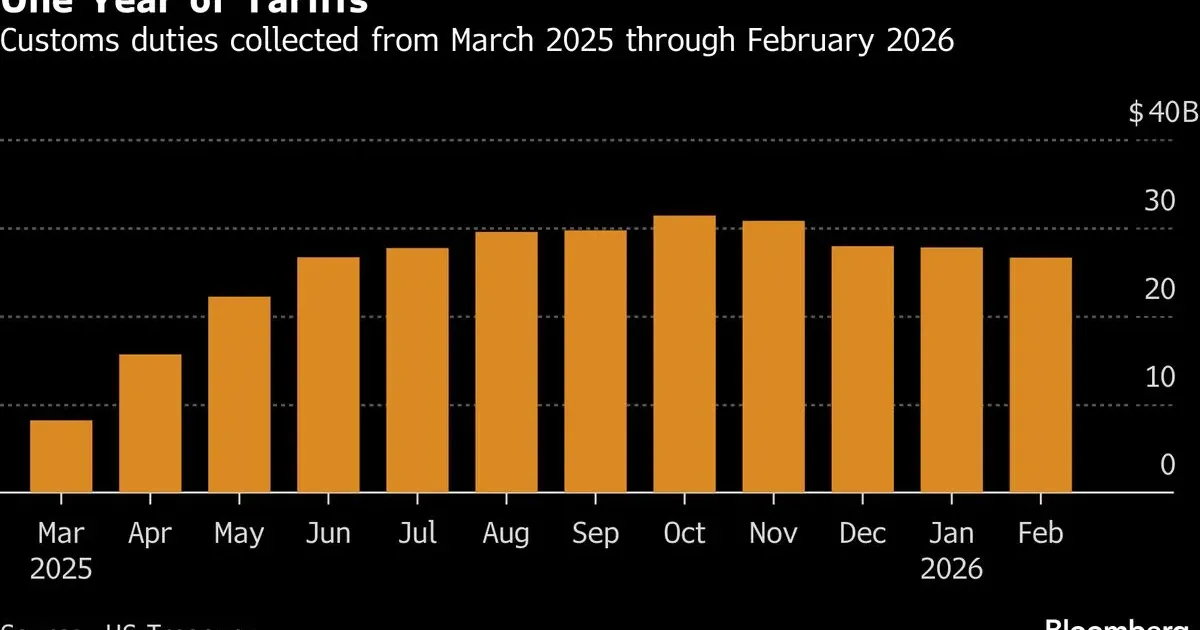
The federal deficit is still narrowing, but February data shows the improvement is slower and less durable as tariff receipts lose force. The budget picture sharpened on February 12, 2026.
This deceleration suggests that the fiscal windfall provided by aggressive trade levies may have reached its natural limit. Treasury officials reported that while the gap between spending and revenue continues to close, the momentum relies increasingly on domestic tax collection rather than border enforcement. Receipts from customs duties fell from the record heights recorded in the final quarter of 2025. Economists at major financial institutions noted that the peak tariff rates of late last year created a temporary surge in cash flow that current trade volumes cannot sustain under the revised, lower schedules. Washington remains focused on whether internal growth can offset the diminishing returns from these external levies.
Import patterns underwent a significant shift once importers adjusted to the new, softer rate environment. High-duty goods that previously entered the country at an accelerated pace to beat further hikes or to capitalize on specific demand cycles are now arriving under a more stable, albeit less lucrative, tax regime. Revenue from these sources helped trim the deficit by several billion dollars less than initial projections suggested for the February window. Many analysts believe the cooling of this specific revenue stream will force a broader reassessment of the 2026 fiscal outlook.
Tariff Revenue Loses Momentum
The Math of Diminishing Border Returns
Customs and Border Protection data indicates that the sheer volume of goods has not declined, but the effective tax rate per container has. This change in the weighted average of duty collection accounts for the majority of the narrowing deficit’s loss of velocity. During the height of the trade enforcement cycle in 2025, some categories of electronic goods and industrial machinery faced rates that effectively doubled their contribution to federal coffers. Those same categories now operate under moderated terms that prioritize consumer price stability over federal revenue generation. This decision by the administration to ease trade friction appears to be achieving its goal of lowering inflation, but it comes at the direct cost of slower deficit reduction.
Financial markets reacted with caution to the Treasury's latest figures. Debt yields remained largely stable, though some traders expressed concern that the slowing pace of deficit narrowing might require the government to issue more debt than previously anticipated for the spring quarter. If revenue from tariffs continues to sag, the Treasury might need to adjust its auction sizes for ten-year notes. Such a move would potentially increase borrowing costs for the private sector, complicating the very economic recovery the lower tariff rates were designed to support.
While Bloomberg suggests the deficit narrowing is simply normalizing after a freakish spike in 2025, some independent researchers claim the drop-off is more severe than the official narrative admits. These researchers point to a hidden cooling in the manufacturing sector that may be suppressing the demand for raw materials that carry even the lower-tier duties. When the demand for these materials slips, the total revenue pool shrinks regardless of where the rate is set. The interaction between lower rates and softer industrial demand creates a compounding effect on the federal balance sheet.
Fiscal Gap Narrows More Slowly
Spending Pressures and Fiscal Friction Revenue is only half of the deficit equation. Federal outlays for February continued to track above historical averages, driven largely by interest payments on existing debt and mandatory spending programs. The narrowing of the deficit requires revenue to grow faster than these systemic costs. When a major contributor like tariff income slows down, the burden shifts to the labor market and corporate profits to fill the void. Corporate tax receipts showed modest gains in the February report, but they were insufficient to maintain the aggressive deficit-slashing trajectory seen in January.
Domestic policy experts argue that the reliance on tariff revenue was always a precarious strategy for fiscal balance. Border taxes are subject to the whims of international trade relations and the logistical capacity of global shipping. Unlike income taxes, which are relatively predictable based on employment data, customs duties can fluctuate wildly based on a single policy shift or a change in a foreign manufacturing hub. The current data proves that the federal government cannot rely on trade wars to solve its structural spending problems.
Instead, the focus must eventually return to the more difficult work of entitlement reform or broad-based tax adjustments. The math doesn't add up for a balanced budget under the current trajectory. Budget hawks in the Senate are already using the February data to call for renewed spending caps. They argue that the slowing revenue growth makes any new infrastructure or social spending projects fiscally irresponsible.
Budget Risk Moves Back to Growth
These lawmakers contend that if the government loses its tariff-based cushion, it must find immediate savings elsewhere to prevent the national debt from spiraling. The tension between those who want to use trade policy as a revenue tool and those who see it as an economic lever is reaching a breaking point within the halls of the Capitol. Past efforts to use tariffs as a primary funding source for the US government date back to the 19th century, yet the modern global economy is far too integrated for such a system to work without significant distortion. The 2025 peak in rates was an anomaly in the post-WWII era. Its subsequent cooling in early 2026 is a return to a more standard, if less lucrative, economic reality.
Historical data from the Treasury shows that whenever the government attempts to extract significant revenue from trade, the private sector eventually finds ways to circumvent the costs or shifts production to duty-free partners. We are seeing those shifts happen in real-time as the 2026 fiscal year progresses. Future projections from the Congressional Budget Office will likely be revised downward if the March data follows the February trend. A slower pace of deficit narrowing could embolden credit rating agencies to take a closer look at the American fiscal position.
While a downgrade is not currently on the table, the loss of fiscal momentum is never a positive sign for international investors. The stability of the US dollar depends on the perception that the government can eventually bring its books into balance. If border taxes cannot do the heavy lifting, the path to that balance remains obscured by political gridlock and rising interest costs. Growth in the service sector remains a bright spot, but it does not contribute to the customs revenue that the government leaned on so heavily last year.