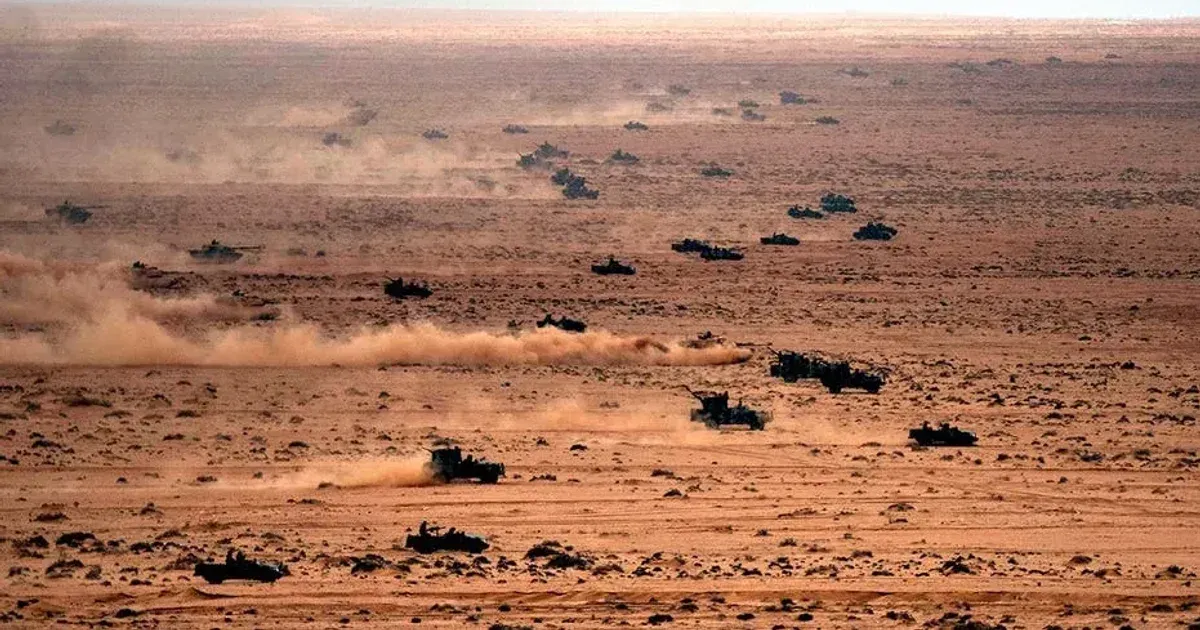
The Morocco search has become a test of military coordination across difficult terrain. US and Moroccan teams are working against distance, weather and limited public information. United States Africa Command launched a major search-and-rescue operation after two American service members vanished during a major training exercise. Military officials confirmed the disappearance of the two Army soldiers on May 3, 2026, noting that the personnel were initially reported missing the previous day. The incident occurred within the Cap Draa Training Area, a rugged coastal sector located in southwestern Morocco. Search teams are currently focused on the terrain surrounding Tan Tan, a Moroccan city situated roughly 15 miles from the Atlantic Ocean.
Military commanders activated multiple assets to support the recovery mission. According to a statement from United States Africa Command, the response includes a coordinated deployment of ground, air, and maritime units. Allied forces from Morocco are assisting in the sweep of the training grounds, which are known for demanding environmental conditions and complex geography. Officials have not yet identified the specific unit or branch affiliations of the missing soldiers beyond their status as Army personnel. Investigation into the circumstances of their disappearance is currently proceeding alongside the active recovery effort.
Multinational Search Teams Deploy Near Tan Tan
Search operations intensified Sunday as additional assets moved into the Cap Draa region. Cap Draa is a primary site for amphibious and live-fire maneuvers due to its proximity to the Atlantic coastline. Ground patrols are navigating the arid landscape while aircraft provide surveillance from above. Maritime units are monitoring the coastal waters to ensure all possibilities are covered. This high-intensity search reflects the urgent nature of the incident within a critical training window.
Moroccan authorities are providing essential logistical support for the American-led search teams. Cooperation between the two nations is a staple of regional security protocols, particularly during African Lion. Officials have not released a complete breakdown of every unit assigned to the mission, and United States Africa Command has not detailed the weather conditions at the time of the disappearance.
Army personnel involved in the exercise were participating in maneuvers designed to simulate rapid response to regional crises. These drills often involve long-range movements and coordination across different types of terrain. Officials have not released the full timeline of the specific training segment where the soldiers were last seen. Commanders have paused some elements of the local training to dedicate full attention to the rescue mission. Success in such operations depends on the speed of the initial response and the integration of local knowledge provided by Moroccan partners.
Strategic Scope and Search Area of African Lion
African Lion 2026 represents the largest annual military exercise conducted by the United States on the continent. Maneuvers, which began in April, involve more than 7,000 personnel hailing from more than 30 different nations. Operations are distributed across four host countries: Morocco, Tunisia, Ghana, and Senegal. Originally launched in 2004, the exercise has grown from a small bilateral drill into a large multinational demonstration of military readiness. U.S. participants include members from the National Guard, Army Reserve, Air Force, and the Marine Corps.
Morocco holds a central position in the strategic framework of the drills. The nation remains a primary ally for the United States in a region characterized by shifting political dynamics and security challenges. Military officers in nearby nations such as Mali, Burkina Faso, and Niger have recently overseen governmental transitions that altered traditional defense relationships. Such shifts have elevated the importance of the partnership with the Moroccan military. African Lion is intended to sharpen troop readiness and solidify the bonds between senior commanders across the Atlantic.
Exercises at Cap Draa typically involve complex coordination between different military branches. Integration of air support with ground movements is a key training objective for the Army units stationed there. These activities carry inherent risks, which is why rigorous safety protocols are established prior to the start of the war games. The current search effort draws upon the same communication and logistics networks established for the exercise itself. Commanders are relying on the exercise's communication and logistics networks to keep search teams coordinated.
"The incident remains under investigation and the search is on-going," United States Africa Command stated in an official release.
Resources dedicated to African Lion are scheduled to remain in the region through early May. This timeline allows for the completion of large-scale maneuvers across the various host nations. The disappearance of the two soldiers has cast a shadow over the concluding phases of the drills. Despite the incident, military planners emphasize that the exercise goals of strengthening security partnerships remain the priority. Personnel from the participating 30 nations are being briefed on the situation to maintain operational awareness during the search.
The Missing-Soldier Search Is an Unplanned Test of US-Moroccan Coordination
How does a localized disappearance impact the broader perception of regional military stability? The loss of personnel during a high-profile exercise like African Lion highlights the physical risks inherent in large-scale power projection. While the immediate focus is the recovery of the two soldiers, the incident tests the real-world search and rescue capabilities of the U.S.-Moroccan partnership. The joint operation is an unplanned stress test for the command-and-control structures that the exercise was designed to refine.
Geopolitical stakes are also at play. In a period when traditional alliances in the Sahel and North Africa are under pressure, the efficiency and transparency of this search will be closely monitored by regional observers. A swift and successful recovery would reinforce the image of a highly capable, integrated military alliance. By contrast, a prolonged or failed search could provide rhetorical ammunition for actors seeking to diminish the perceived value of American military cooperation. The technical hurdles of the Cap Draa terrain are substantial, yet the political necessity of a resolution is perhaps even greater.
The United States Africa Command must balance the need for operational security with the public interest in the safety of its service members. The event highlights that even in controlled training environments, the elements of unpredictability and risk are never fully eliminated.