US forces struck Iranian minelayers in the Strait of Hormuz as shipping risk and oil-market volatility intensified. The update was dated March 11, 2026. Military planners in Washington and Tel Aviv framed the operation as an attempt to preempt a blockade of the world's most critical oil passage.
Naval Conflict Intensifies in the Persian Gulf
March 10 saw the waters of the Persian Gulf turn into a kinetic theater as US Central Command conducted a series of lethal strikes against Iranian naval assets. Sixteen small vessels identified as minelayers were destroyed during the operation, which targeted boats both at sea and docked in coastal positions. Footage released by military officials showed precision munitions impacting stationary targets, sending plumes of smoke over the strategically key waterway. These strikes represent a significant escalation in the joint US-Israeli campaign that began in late February, and shipping and energy markets reacted immediately to the strike.
Commercial traffic through the Strait of Hormuz has slowed to a crawl. Over the past week, at least 10 merchant ships have come under direct attack, forcing major shipping conglomerates to reroute or anchor in safer waters. Reports suggest that Tehran has already begun a sparse mining campaign. Anonymous sources indicate a few dozen mines have been deployed, though this quantity remains a fraction of the total arsenal available to Iranian forces. Concerns are mounting over the ability of the US Navy to clear these hazards. Success currently depends on Independence-class littoral combat ships, yet these platforms have faced persistent criticism for being unreliable in sustained combat environments.
Tehran knows it cannot win a conventional war.
Petroleum futures surged to nearly $120 a barrel on Sunday as the threat of a full blockade loomed. Oil markets have become a barometer for the military friction in the region. Prices saw a sudden reversal on Tuesday, plummeting below $100 after President Donald Trump suggested the conflict might soon taper off. Such volatility highlights how sensitive global energy security remains to political rhetoric and naval skirmishes. Market analysts are closely watching if the US will ease sanctions on other oil-producing nations to compensate for the Persian Gulf supply crunch. Backend options to increase global supply are reportedly under discussion at the highest levels of the Treasury Department.
Economic Resilience and China's Financial Maneuvers
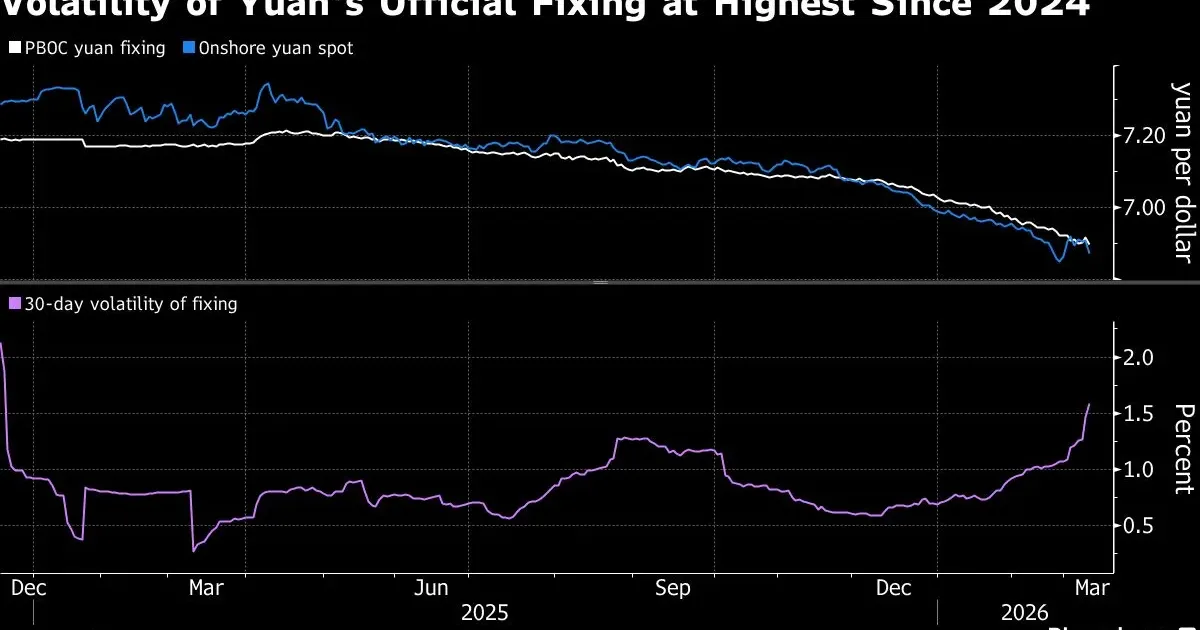
China's central bank is moving to protect its domestic economy from the widening ripples of the conflict. Beijing has signaled an increased tolerance for yuan flexibility, a strategy designed to insulate Chinese markets from global turmoil. This decision by the PBOC suggests a high level of confidence in the underlying strength of the Chinese economy despite the regional chaos. By allowing the yuan to fix at more volatile levels, China can manage the inflationary pressures associated with rising energy costs without exhausting its foreign exchange reserves. Traders are adjusting to this new stance, which marks a departure from Beijing's traditional preference for rigid currency stability.
Energy resilience has become the defining theme of the current global economic discourse. Previous conflicts in the Middle East often led to prolonged stagnation, but the lessons of the 1980s Tanker War have informed modern strategic reserves. Major economies in Europe and Asia are now testing their ability to withstand a total shutdown of the Strait of Hormuz. While some analysts point to the rise of renewable energy and American shale as buffers, the reality of global interdependence remains inescapable. Roughly 20% of the world's crude oil trade passes through this single point of failure, making any disruption a systemic threat to international finance.
The strategic picture is unstable.
Washington's strategic response involves more than naval strikes. Officials are exploring diplomatic channels to ensure that the conflict does not draw in neighboring Gulf states. Regional powers like Saudi Arabia and the United Arab Emirates are maintaining a cautious distance, balancing their security ties with the US against the risk of Iranian retaliation on their own infrastructure. Satellite imagery shows increased activity at alternative pipeline terminals, yet these bypass routes lack the capacity to fully replace the volume traditionally shipped through the Strait. Investors are pricing in a long-term risk premium that could keep energy prices elevated for years.
Why Hormuz Remains the Weak Point
Military planners in Washington often confuse kinetic dominance with economic stability. Destroying sixteen minelayers is a tactical success that does almost nothing to address the structural vulnerability of the global energy supply chain. We are trapped in a cycle where the US military acts as a taxpayer-funded security guard for a waterway that primarily services Asian and European markets. This aggressive posture might satisfy the domestic political appetite for strength, but it ignores the reality that Tehran can achieve its goals through low-cost, asymmetric disruption. A single mine or a cheap drone can do more damage to the global economy than a billion-dollar destroyer can prevent. We must stop pretending that we can bomb our way into energy security. The reliance on the Strait of Hormuz is a geopolitical choice, one that has left the American economy hostage to a strip of water thousands of miles away. Instead of escalating a naval war that benefits no one, the focus should shift toward a radical diversification of energy routes and sources. True resilience is not found in the barrel of a gun or the hull of a littoral combat ship. It is found in a system that does not collapse when a small boat in a distant sea is set on fire.