Navy Escorts Return to the Gulf
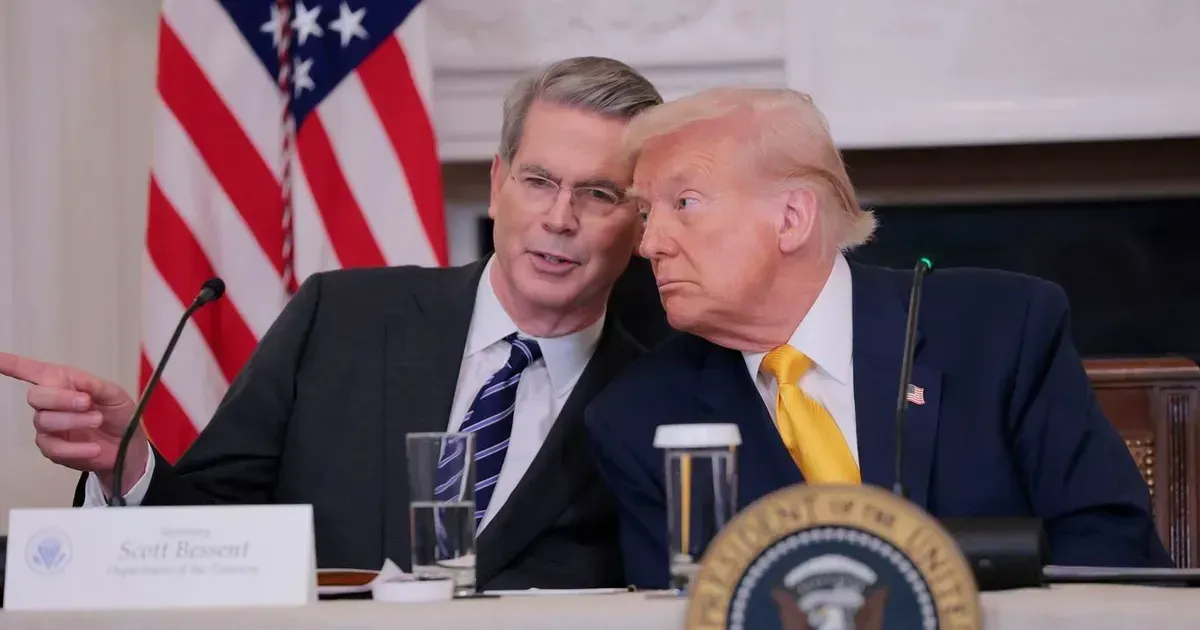
The planned escort mission marks a critical shift in the ongoing military campaign as the Trump administration prepares to pivot from purely offensive operations to the protection of global energy commerce. Treasury Secretary Scott Bessent confirmed in a Sky News interview broadcast Thursday that the U.S. Navy will begin escorting commercial vessels through the Strait of Hormuz soon. On March 13, 2026, escort planning showed how quickly the Strait of Hormuz had become a military and commercial problem. Such a mission could involve an international coalition, though Bessent emphasized that the timeline depends entirely on military readiness and air superiority.
Military planners face the daunting task of securing a waterway that handles roughly 20% of the world's daily oil supply while active hostilities continue on the Iranian mainland. Energy markets reacted with immediate volatility to the news. The International Energy Agency (IEA) issued a report on Thursday characterizing the current situation as the largest supply disruption in history. Oil prices surged past $100 per barrel overnight.
During the 1980s Tanker War, the U.S. launched Operation Earnest Will to protect Kuwaiti tankers from Iranian attacks.
Investors are weighing the promise of naval protection against the reality of a war that Bessent says has already cost the United States $11 billion. Any delay in establishing safe passage through the 21-mile-wide choke point threatens to push fuel costs to levels that could stall the global economic recovery. Tehran's ability to disrupt the strait remains the central concern for Western intelligence agencies. While rumors of sea mines have circulated in maritime insurance circles for days, Bessent provided a counter-narrative based on recent vessel movements.
Iranian tankers and certain Chinese-flagged ships continue to cross the strait without incident. This evidence suggests that the waterway remains clear of indiscriminate mines for the time being. If Iran had laid mines, its own fleet would be anchored or risk destruction. Washington is using this data to calculate the exact risk profile for future convoys.
Hormuz Risk Changes Shipping Costs
Safe passage cannot begin until the U.S. Air Force achieves total dominance over the region. Energy Secretary Chris Wright clarified the military's current posture during a CNBC interview on Thursday, stating that all available assets are currently tasked with neutralizing Iran's offensive manufacturing base. The Pentagon is prioritizing the destruction of missile assembly plants and drone launch sites before committing destroyers to slow-moving escort duties. Wright indicated that naval escorts might commence by the end of March, but he was firm in stating that current conditions do not yet allow for such a commitment. Logistical hurdles for an escort mission are immense. Satellite surveillance indicates that Iran's rebuilding capabilities must be completely degraded before the U.S. Navy risks high-value assets in the narrow channel.
The strait's geography favors small, fast-attack craft and coastal missile batteries, both of which the Iranian Revolutionary Guard Corps (IRGC) has spent decades perfecting. Until those threats are systematically eliminated, the risk of a catastrophic strike on a civilian tanker remains too high for the White House to sanction a full-scale convoy system. ClearView Energy Partners issued a research note Thursday warning that a 30-day wait for escorts could be disastrous for energy stability. While the administration points to the end of March as a likely start date, analysts suggest that prices could skyrocket if the market perceives this as a permanent blockade.
The $100-per-barrel threshold is already a psychological shock to consumers at the pump. If the Strait of Hormuz remains effectively closed to Western-aligned shipping for another two weeks, the IEA warns that global reserves may not be enough to prevent a systemic energy crisis. Bessent's focus on the $11 billion price tag highlights the domestic political pressure facing the Trump cabinet. Sustaining a high-intensity air campaign while simultaneously subsidizing or managing a global energy shock requires a delicate balancing act.
Washington Weighs Deterrence Costs
Some coalition partners in Europe and Asia have expressed private concerns that the U.S. is focusing too heavily on regime-degrading strikes at the expense of immediate maritime security. Still, the Pentagon maintains that protecting a tanker while it is within range of active Iranian missile batteries is a recipe for a naval disaster. Escort missions historically require significant manpower and coordination. During the 1980s Tanker War, the U.S. launched Operation Earnest Will to protect Kuwaiti tankers from Iranian attacks. That effort lasted over a year and involved dozens of warships. Today, the technology has changed, but the physics of the strait remain the same.
A single successful strike on a VLCC (Very Large Crude Carrier) could lead to an environmental and economic catastrophe that would dwarf the current military costs. This military calculation explains why the administration is resistant to rushing the escort timeline despite the mounting pressure from oil-importing nations. Washington is actively seeking to internationalize the escort mission to share the burden of protection. British officials have been in constant communication with the State Department regarding the Sky News revelations.
A combined task force would provide more thorough coverage but requires unified rules of engagement that are difficult to establish during an active war. Some regional allies have hesitated to join a formal coalition, fearing direct Iranian retaliation against their own coastal infrastructure. This hesitation leaves the bulk of the responsibility on the U.S. Fifth Fleet, based in nearby Bahrain.
Tankers Become Strategic Assets
Energy Secretary Chris Wright emphasized that the naval protection system will happen relatively soon. He did not provide a specific list of participating nations, but he hinted that those with the most to lose from an oil cutoff are being asked to contribute hardware. Japan, South Korea, and several European nations rely heavily on the 20 million barrels of oil that transit the strait daily. Their participation would provide the mission with international legitimacy and distribute the logistical load of constant patrolling.
Tehran's response to the escort announcement has been a mix of defiant rhetoric and tactical silence. State-run media in Iran has not confirmed the movement of Chinese or Iranian tankers mentioned by Bessent, but the lack of reported sinkings in the strait supports the Treasury Secretary's assessment. The absence of mines suggests Iran may be holding its most disruptive maritime weapons in reserve for a potential ground invasion or a final stand. That tactical restraint allows the U.S. to focus its current sorties on the industrial base rather than mine-sweeping operations, which are notoriously slow and dangerous. Escort missions can reassure shippers, but they also create new exposure for US forces. Every convoy requires coordination, intelligence and rules of engagement for ambiguous threats such as small boats, drones and mines. The commercial stakes are direct. If insurers decide that naval escorts are not enough to reduce risk, the cost of moving crude and refined products through Hormuz will remain elevated even without a full closure.