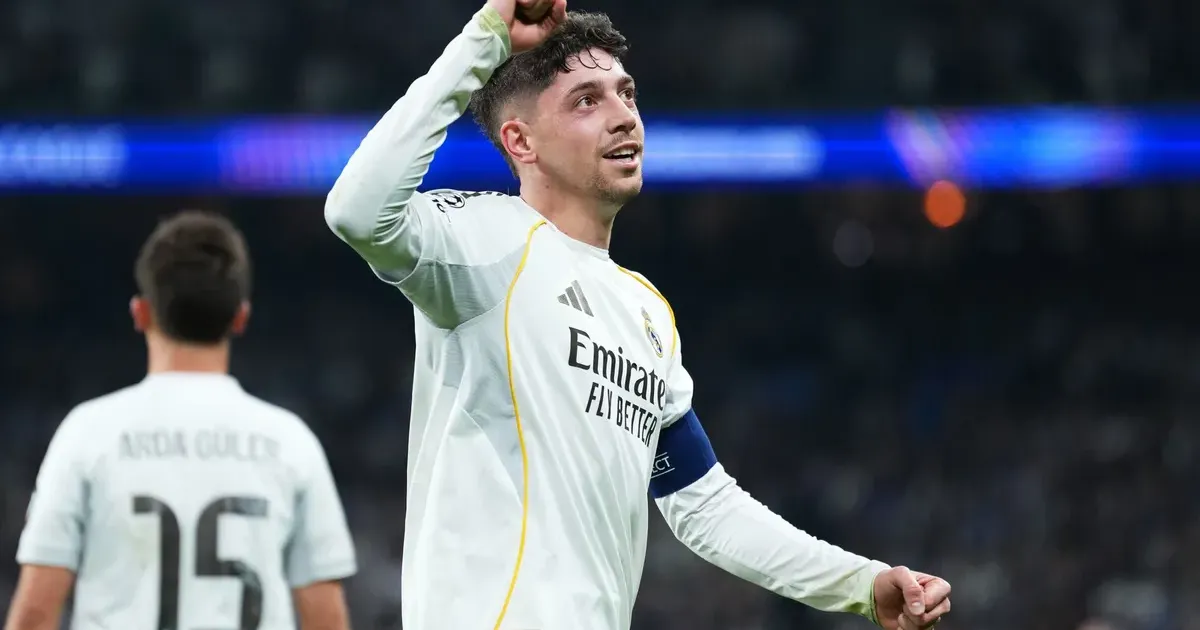
Valverde’s hat trick left Manchester City facing a Champions League problem that cannot be reduced to one bad night. The result landed on March 12, 2026, with City facing the kind of European collapse that rewrites a season.
Valverde Punishes Every Mistake
Federico Valverde stood motionless under the Bernabeu floodlights on Wednesday night, his arms outstretched while eighty thousand fans roared a name that has now become synonymous with Manchester City's European nightmare. Within a frantic twenty-two minute window, the Uruguayan midfielder dismantled the reigning English champions with a clinical efficiency that felt less like a football match and more like a surgical strike. Real Madrid secured a commanding 3-0 victory in the first leg of this Champions League round-of-16 encounter, leaving Pep Guardiola to contemplate one of the most lopsided tactical defeats of his storied career. Valverde's opening goal arrived before the visitors had even settled into their passing rhythm.
A loose ball in midfield, surrendered by a hesitant Rodri, allowed Madrid to transition with terrifying speed. Valverde received the ball thirty yards out and unleashed a low, whistling drive that bypassed the outstretched hand of Stefan Ortega. Sky Sports analysts later described the strike as a catalyst for the chaos that followed. Minutes later, a carbon copy of the first break saw Vinicius Junior square a ball across the six-yard box for Valverde to tap in his second.
The crowd had barely finished celebrating when the third arrived, a thunderous volley from the edge of the area that effectively ended the contest before the halftime whistle blew. Madrid appeared to be playing a different sport during that opening period. Every time a Manchester City player touched the ball, three white shirts converged with predatory intent. This defensive fragility from the visitors shocked seasoned observers who expected a tighter affair between two of the world's most expensive squads.
BBC Sport reports emphasized that City looked shell-shocked by the intensity of the Spanish side's press, a strategy that Carlo Ancelotti seems to have perfected specifically for these high-stakes European nights. Pep Guardiola often faces accusations of overthinking his lineups in the knockout stages, yet the Guardian took that criticism further by labeling him a tactical novice on this specific evening. The decision to play a high defensive line against the pace of Vinicius Junior and Rodrygo proved catastrophic. Without the protective screen usually provided by a fully fit defensive unit, City's back four was exposed to constant one-on-one situations.
City Runs Out of Control
Valverde exploited these gaps with the intelligence of a seasoned poacher, drifting between the lines and arriving late in the box to devastating effect. Manchester City failed to register a single shot on target during the first forty-five minutes. Erling Haaland was a peripheral figure, isolated and starved of service by a Madrid defense that sat deep once the lead was established. Kevin De Bruyne attempted to spark a comeback with several searching crosses, but Antonio Rudiger and Eder Militao cleared everything that entered their airspace.
The lack of cohesion in the City midfield allowed Madrid to dictate the tempo of the game even when they conceded possession. This specific tactical decision to cede the ball and strike on the break left Guardiola pacing his technical area in visible frustration. Journalists in the press box noted the contrast between the two benches. While Ancelotti remained a picture of calm, his counterpart looked increasingly desperate as the minutes ticked away.
ESPN sources within the stadium suggested that the City dressing room at halftime was a scene of stunned silence rather than productive debate. The English side has faced deficits before, but rarely have they been so thoroughly outplayed in every department of the pitch. This three-goal mountain now looms over their season like a structural threat to their ambitions of European dominance. Vinicius Junior had the chance to put the tie beyond any doubt in the second half when Madrid was awarded a penalty for a foul on Jude Bellingham.
The Brazilian stepped up with confidence but watched in disbelief as his effort sailed over the crossbar. While the miss keeps a glimmer of hope alive for Manchester City, the sheer psychological weight of the 3-0 scoreline will be difficult to overcome in the return leg at the Etihad Stadium. One more goal from Madrid in Manchester would force City to score five, a feat that seems impossible given their current defensive form.
Dominance Does Not Survive Panic
Valverde did more than score a hat trick; he turned every City hesitation into evidence that the tie had escaped them. Manchester City has built an identity around control, but knockout football punishes the few minutes when that control vanishes and panic starts making the decisions.
Guardiola's side can still talk about possession, structure and second-leg belief, but Madrid exposed the fragile part of the machine. Dominance means very little when one loose ball becomes a goal, one tactical risk becomes a runway and one midfielder turns a European giant into a team chasing shadows. City does not just need a comeback. It needs proof that its control can survive fear.