A van crash at a White House security gate forced a familiar Washington question back into view: how quickly ordinary traffic can become a security incident.
White House Perimeter Goes Into Lockdown
Lafayette Square became a crime scene on Wednesday morning as a van struck a security barrier on the north side of the White House. Secret Service agents rushed to the intersection of Pennsylvania Avenue and 15th Street at approximately 9:42 a.m. to confront the driver. The crash disrupted downtown Washington on March 11, 2026, as police closed streets around the White House perimeter. They established a wide perimeter to keep tourists and protesters away from the impact site.
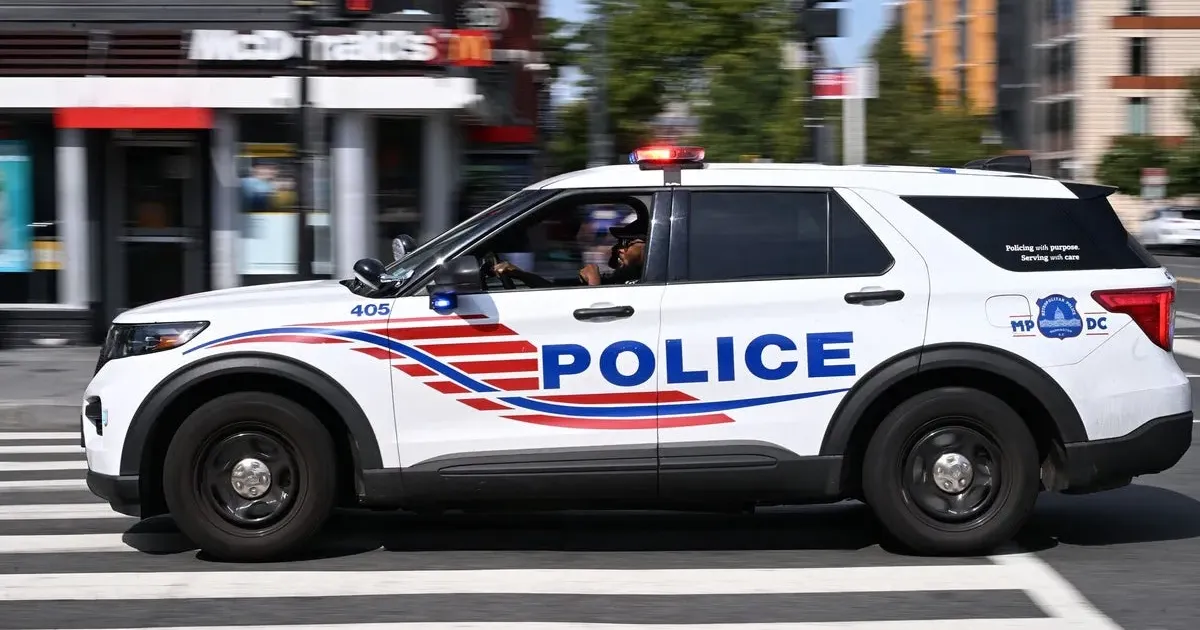
Officers from the Metropolitan Police Department arrived shortly thereafter to assist in closing several blocks of the downtown corridor. Emergency vehicles with flashing lights quickly surrounded the white van, which remained wedged against the metal gate. Pedestrians were ordered to evacuate the park as a bomb squad moved in to inspect the vehicle for explosive devices. Chaos replaced the usual morning bustle in the nation's capital. Eyewitnesses described a loud bang that reverberated through the park and surrounding government buildings.
Security personnel moved with practiced precision, shouting orders for bystanders to clear the sidewalk and seek shelter inside nearby hotels. Sirens blared from every direction while black SUVs blocked every vehicle entrance to the complex. Reports indicate the vehicle crossed a secondary barrier before hitting the main fence line that protects the Executive Mansion. This disruption brought pedestrian and vehicle traffic to a complete standstill across several major arteries of the city. Secret Service Uniformed Division officers maintained a defensive posture with weapons drawn until the driver was safely taken into custody for questioning.
Protecting the White House involves a layered defense system that has grown increasingly complex since the late twentieth century. Permanent concrete bollards and hydraulic gates guard every entrance to prevent unauthorized vehicle access. Lafayette Square remains a particular point of concern for security experts due to its proximity to the official residence of the President. Historical precedents suggest that even a single vehicle can pose a significant risk if it carries hazardous materials or is a distraction for a secondary attack.
Investigators Focus on Motive and Vehicle Risk
The fence itself was recently upgraded to a height of 13 feet, featuring anti-climb technology and enhanced structural integrity to withstand high-speed impacts. Investigators are currently examining the driver's motive while federal agents process the scene for evidence. They have not released the identity of the person behind the wheel or any potential affiliations. Technical teams are searching the van for electronic devices or manifestos that might explain the intent behind the crash. Routine checks for chemical, biological, or radiological agents are standard procedure in such incidents.
Federal law enforcement officials confirmed that the driver is currently being held at an undisclosed location for a mental health evaluation and formal interrogation. The threat environment in 2026 demands nothing less than total vigilance. Downtown Washington faced total gridlock for several hours while the investigation continued. Commuters found themselves trapped on H Street and 16th Street as police cordoned off the entire perimeter. Metro stations near the White House, including McPherson Square and Farragut North, experienced temporary closures and redirected passengers.
This logistical nightmare underscored the fragility of urban movement in high-security zones during an active incident. Local businesses were forced to lock their doors, and several government offices advised employees to remain in place until the all-clear was given by the Secret Service. Political tensions in the capital have remained high throughout the spring of 2026. While no group has claimed responsibility, the timing of the crash prompts scrutiny for intelligence agencies regarding domestic stability. Security at the White House has been bolstered sharply over the last decade following multiple fence-jumping incidents and unauthorized vehicle approaches.
These enhancements are designed to provide seconds of reaction time for the Secret Service Counter Assault Team and other specialized units stationed within the complex grounds. Modern security gates are designed to withstand the impact of heavy trucks moving at high speeds.
Why Stronger Gates Do Not Solve the Threat
Questioning the stability of our national security apparatus is no longer a hobby for conspiracy theorists. Every time a van crumples against a White House gate, we are forced to acknowledge the terrifying reality that our symbols of power are essentially targets in an age of radicalization. This is not about one driver or one vehicle. It is about the systemic failure to address the underlying societal rot that drives individuals to weaponize their cars against the seat of government. We build higher fences and thicker gates, yet we ignore the crumbling social fabric outside those barriers.
The Secret Service will pat themselves on the back for a barricade that held, but they should be asking why someone felt the need to ram it in the first place. Washington has become a fortress, not a capital. If the only thing standing between the President and a catastrophe is a hydraulic bollard, then we have already lost the battle for a stable democracy. We must stop treating these breaches as isolated logistical errors and start seeing them for what they are: desperate acts of defiance against a political establishment that has lost its way. A stronger fence does not make a safer nation.