March 21, 2026, finds VCU and Vanderbilt attempting to dismantle the bracket hierarchy during the second round of the NCAA Tournament. Oddsmakers in Las Vegas and international betting markets reported a surge in underdog money throughout the early morning hours. Sharp bettors frequently target this specific Saturday window to find discrepancies between public perception and efficiency ratings. Analytical models suggest several high-seeded favorites face significant danger in these neutral-site matchups.
Surprises often define the first weekend of tournament play.
Vanderbilt enters its contest against Nebraska with a resume that contradicts its lower seeding. While the Cornhuskers secured a premium position through Big Ten consistency, their perimeter defense has shown signs of fatigue in recent weeks. The Commodores utilize a high-volume screening offense designed to force slow-footed centers into uncomfortable space. Scouting reports indicate that the Nebraska backcourt struggles to recover when forced into secondary rotations. Data from the regular season shows Nebraska allowed a 38 percent conversion rate on open three-point attempts.
For one, the psychological weight of a tournament drought hangs over the Nebraska program. Program history suggests that teams without recent postseason success often play with tighter shooting mechanics during the opening ten minutes. Vanderbilt possesses multiple senior guards who have already navigated high-pressure environments in the SEC. These veteran players focus on ball security, which limits the transition opportunities Nebraska needs to fuel its offense. The betting line opened at four points but quickly moved toward three as professional gamblers weighed in.
Vanderbilt Challenges Nebraska Seeding Advantage
Nebraska maintains a major size advantage in the frontcourt that could negate the Vanderbilt perimeter threat. If the Cornhuskers control the defensive glass, they can initiate the fast break before the Vanderbilt defense sets its half-court trap. Sportsbooks noted that the total for this game sits at 144 points, implying a moderate pace of play. Nebraska head coach Fred Hoiberg has emphasized the need for disciplined close-outs to prevent Vanderbilt from finding a rhythm. Efficiency metrics favor Nebraska, yet the momentum of an opening-round win often carries significant weight.
In fact, the pressure of expectations often is an equalizer in the Round of 32. Teams like Nebraska, which are expected to advance, frequently encounter a psychological plateau once the initial adrenaline of the tournament wears off. Vanderbilt operates with the freedom of a team that has already exceeded national expectations. This contrast in mindset often leads to aggressive shot-taking from the underdog. Nebraska must rely on its interior scoring to stabilize the game during the inevitable Vanderbilt runs.
VCU Momentum Collides with Illinois Defensive Power
VCU arrives at its matchup against Illinois following a dramatic comeback victory against North Carolina. That performance solidified the Rams as the primary giant-killer of the 2026 tournament. Illinois presents a vastly different challenge than the Tar Heels, focusing on physical interior defense and elite rebounding. The Fighting Illini rank in the top ten nationally for defensive efficiency, specifically for limiting second-chance points. VCU relies on forced turnovers to generate offense, a strategy that requires immense physical stamina over forty minutes.
But the Illinois backcourt has been prone to erratic ball-handling when pressured by aggressive ball-screens. VCU coaches have likely identified this weakness as the primary path to an upset. If the Rams can disrupt the Illinois offensive flow, they can negate the size advantage held by the Illinois forwards. Records show that Illinois has lost three games this season when turning the ball over more than fifteen times. The Rams averaged nearly nine steals per game during their conference tournament run.
Still, the talent gap is still a factor that defensive intensity cannot always bridge. Illinois features a projected first-round NBA draft pick who can create his own shot when the play-clock winds down. VCU lacks a singular scoring threat of that caliber, requiring a more democratic approach to the offense. Their success depends on four or five players reaching double figures. The spread for this matchup remains at seven points in favor of the Big Ten powerhouse.
SportsLine's model simulated Texas A&M Aggies vs. Houston Cougars and revealed its college basketball picks for this NCAA Tournament 2026.
Separately, Houston prepares for a defensive grind against Texas A&M. The Cougars have built a reputation on a suffocating man-to-man system that leaves opponents with few clean looks at the rim. Texas A&M prefers a high-possession game, which creates a clash of styles that will likely be decided in the final four minutes. The Aggies have one of the highest offensive rebounding rates in the country. Houston counters this with a disciplined boxing-out technique that involves all five players on the floor.
Texas A&M Confronts Houston Defensive System
Texas A&M must find a way to score in the half-court when their primary transition lanes are clogged. Houston excels at retreating in transition, forcing opponents to work through multiple layers of help defense. Statistical models suggest that this game will have the fewest total possessions of the Saturday slate. Betting markets have adjusted the point total downward to 128 points. This indicates an expectation of a physical, low-scoring affair where every turnover carries immense consequences. Houston has won its last twelve games when holding opponents under 65 points.
So, the battle for the painted area will dictate the outcome of this Texas-based rivalry. Texas A&M forwards are known for their relentless pursuit of the ball, often drawing fouls at a high rate. Houston must avoid early foul trouble to keep its primary rim protectors on the floor. If the Cougars are forced to use their bench early, the Aggies could exploit the lack of depth. Computer simulations currently give Houston a 62 percent chance of advancing to the Sweet 16.
Even so, the Aggies have a history of performing well as road or neutral-site underdogs. Their coaching staff emphasizes a gritty, unattractive style of play that can frustrate more talented rosters. Houston enters as a five-point favorite, a line that has remained stable since it was posted. Experts suggest the value may lie in the point total rather than the point spread. The game will likely be decided by which team survives the physical toll of the first half.
Duke Prepares for TCU Tactical Variability
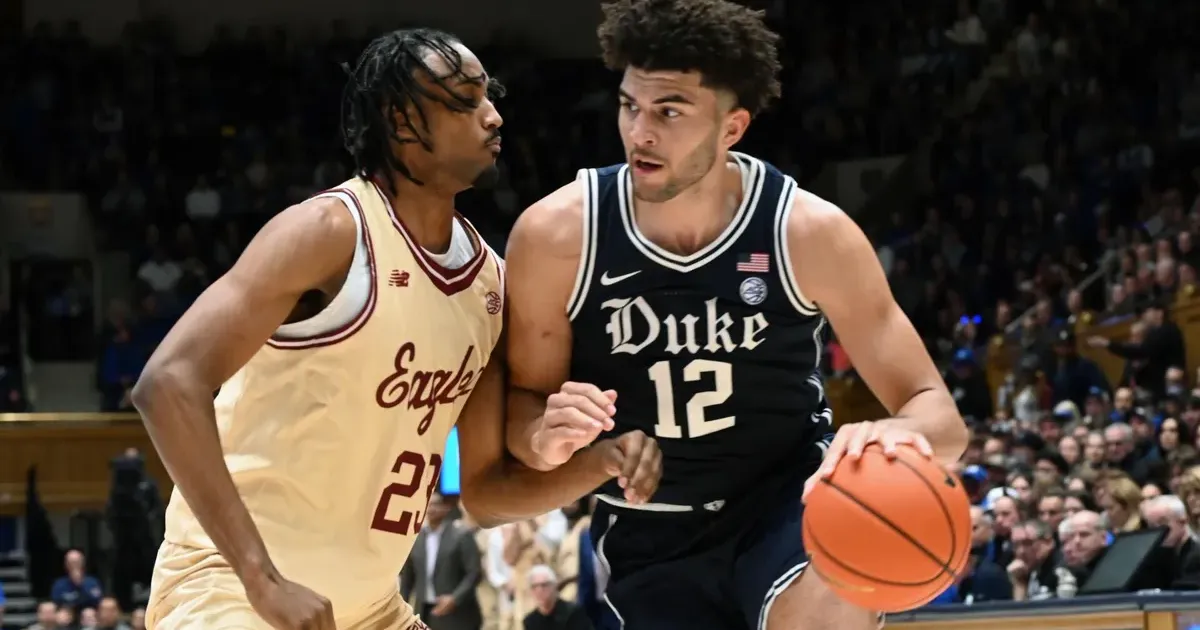
Duke faces a resilient TCU squad that has spent the season managing the toughest conference in the nation. The Blue Devils rely on elite freshman talent, including stars like Cameron Boozer, to overwhelm opponents with athleticism. TCU countered this in their scouting prep by emphasizing a zone defense that disguises its true intentions. The Horned Frogs have used three different defensive looks in their last four games. Duke must show maturity in its ball movement to avoid the traps TCU sets on the perimeter.
TCU prides itself on defensive versatility. One-sentence paragraph transitions are effective here.
And the Blue Devils have shown vulnerability when their primary ball-handlers are denied the middle of the floor. TCU will likely employ a physical brand of basketball, testing the officials' threshold for contact early in the game. Duke averages over 80 points per game, but that number drops greatly against teams that slow the tempo. The Horned Frogs will attempt to turn the game into a series of isolated one-on-one battles. Betting volume on TCU +8 has increased by 15 percent over the last 24 hours.
Pressure remains the defining variable for a program with the stature of Duke. Every season that does not end in a Final Four appearance is viewed as a failure by their global fanbase. TCU players do not carry that same burden, allowing them to play with a level of aggression that can startle younger teams. The Blue Devils must establish their interior presence early to prevent TCU from gaining confidence. Tip-off is scheduled for the late afternoon session in Philadelphia.
The Elite Tribune Perspective
Does a computer model really capture the terror of a nineteen-year-old standing at the free-throw line with ten million people watching? We are increasingly obsessed with simulations and efficiency ratings, yet these metrics consistently fail to account for the fragility of the collegiate athlete. The 2026 tournament has already proven that momentum is a more powerful currency than any expected-value calculation. VCU and Vanderbilt are not merely data points in a spreadsheet; they are programs fueled by the desperation of their respective fanbases.
We see a recurring pattern where analysts overvalue the consistency of major conferences while ignoring the battle-hardened nature of mid-major champions who have played in elimination games for weeks. Betting markets are slowly waking up to this reality, but the arrogance of the high-seeded powerhouses persists. Duke and Illinois may have the luxury of deeper benches and higher recruiting rankings, but those assets provide little protection when a game devolves into a street fight. The obsession with the perfect bracket has blinded us to the inherent chaos of the sport.
We should stop pretending that the higher seed is the better team simply because they have a more recognizable logo on their jersey.