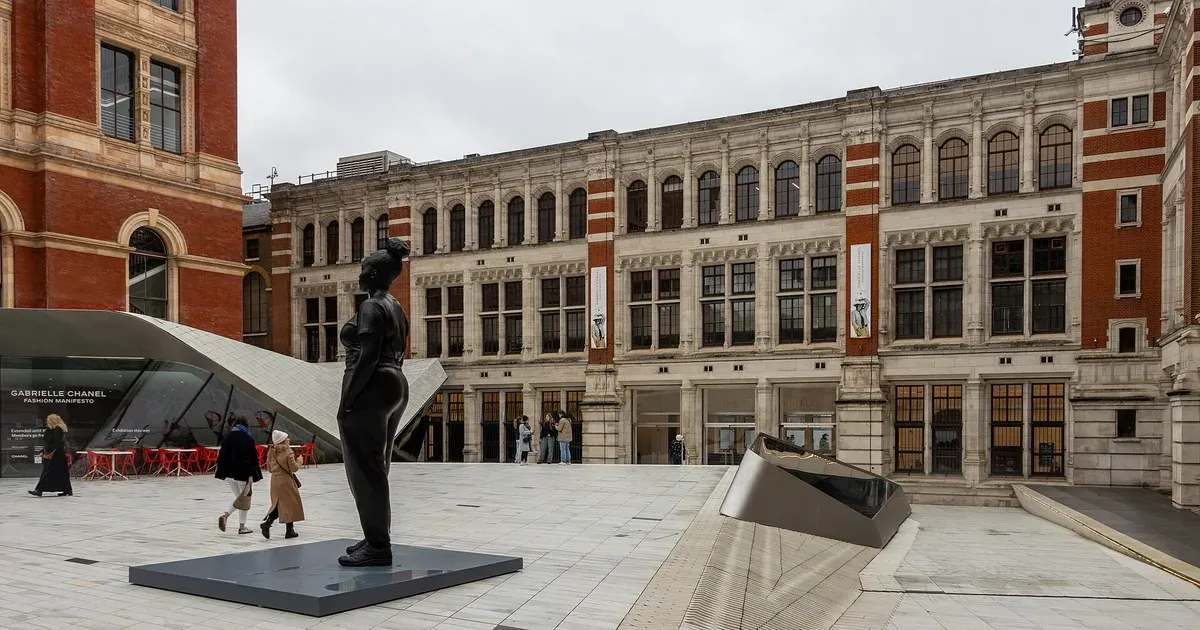
The V&A’s redesigned Gilbert Galleries place gold, silver and micromosaics inside a sharper debate over wealth, provenance and access.
Gilbert Galleries Reopen Around Gold
London's South Kensington district feels the pressure of history today. Victoria and Albert Museum curators opened the doors to a redesigned suite of rooms housing one of the most significant decorative arts collections in the world. The redesigned rooms opened on March 11, 2026, with beauty and provenance placed side by side. Rows of gold boxes and intricate micromosaics now sit within a space meticulously engineered to showcase the Rosalinde and Arthur Gilbert Collection. Visitors walking through these halls find themselves surrounded by items that once moved through the most elite circles of European aristocracy.
Arthur Gilbert spent decades hunting for these pieces, yet the current presentation moves beyond mere aesthetic appreciation to examine the origins of such immense wealth. Gold leaf glimmers under precisely calibrated LEDs. Arthur Gilbert, born Abraham Bernstein, built his primary fortune in the Californian real estate market before pivoting his focus toward the European decorative arts. He and his wife, Rosalinde, gathered more than 1,000 masterpieces over four decades, focusing on craftsmanship that many in the 20th century considered a lost language. Their collection arrived at the museum as a long-term loan before being formally bequeathed to the British nation.
Such a gift prevents these objects from vanishing into the anonymous vaults of private yachts or high-security storage facilities in Switzerland. Public museums rarely possess the capital required to compete with modern billionaires at auction houses like Christie's or Sotheby's, making the Gilbert bequest a key preservation event. Curatorial staff in 2026 face a difficult task when displaying colonial-era wealth or aristocratic spoils. This redesign does not shy away from the uncomfortable questions regarding where these valuables originated. It addresses the ties to colonial extraction and the shifting ownership of items that survived revolutions and wars.
Previous iterations of the gallery focused purely on aesthetics, but the current presentation demands a more rigorous historical accounting. Critics often point to the acquisition of the Schroder treasure by the Holburne Museum in Bath in 2025 as a precursor to this move toward transparency. Both collections represent a level of luxury that is almost impossible to replicate in the modern era without institutional support.
Provenance Joins the Display
Micromosaics remain the undisputed stars of the show. These tiny glass tesserae create images so fine they appear to be oil paintings to the naked eye. One particular snuff box features a Roman scene composed of thousands of individual shards, each smaller than a grain of sand. Silver-gilt plates and enameled watches provide a sensory overload for those accustomed to the minimalist designs of the digital age. Most visitors pause at the monumental silver pieces, which reflect the light in a way that feels almost ecclesiastical.
Successive generations of craftsmen spent years on single items, a pace of production that the modern world has largely abandoned. Beauty possesses a price that most nations can no longer afford. Saving a masterpiece for the nation involves more than patriotic sentiment. It requires a frantic race against private equity and international oligarchs. When a museum attempts to buy a work at auction, the price often skyrockets beyond the reach of public grants.
Bequests like the one provided by the Gilberts offer a rare reprieve from this cycle of inflation. Recent news cycles have seen record-breaking sales where cultural heritage disappeared into private bathrooms, hidden from public view for decades. Museums serve as the only bulwark against this total privatization of history. Heritage experts note that the Wallace Collection served as the 19th-century blueprint for this type of donation. By giving an entire collection to the state, donors ensure their name remains synonymous with high culture while granting the public access to rarities.
The 2026 redesign takes this a step further by including digital interfaces that track the movement of gold and silver through historical trade routes. Visitors can now see the human cost of the precious metals used to house the tobacco and snuff of 18th-century monarchs.
Why Museums Must Audit Wealth
Ask any billionaire why they hoard historical artifacts and they will speak of stewardship, a polite word for cultural kidnapping. We are expected to applaud the Gilberts for their generosity, yet their bequest is merely the final stage of a wealth-cleansing process that turns private accumulation into public virtue. This collection represents the spoils of a world built on extreme inequality, where a single snuff box cost more than a village's annual output. Why do we continue to celebrate the craftsmanship while ignoring the parasitic systems that funded it? The V&A's attempt to tackle provenance is a welcome gesture, but it feels like a footnote in a book written by the victors.
True transparency would mean acknowledging that these objects belong to the public not because of a donor's whim, but because they were often extracted through colonial exploitation. We should stop thanking the super-wealthy for giving us back the history they bought with the world's labor. Museums must stop acting like grateful beneficiaries and start acting like forensic auditors of the past. Until then, these gold boxes are just shiny distractions from the structural thefts that define our global heritage.