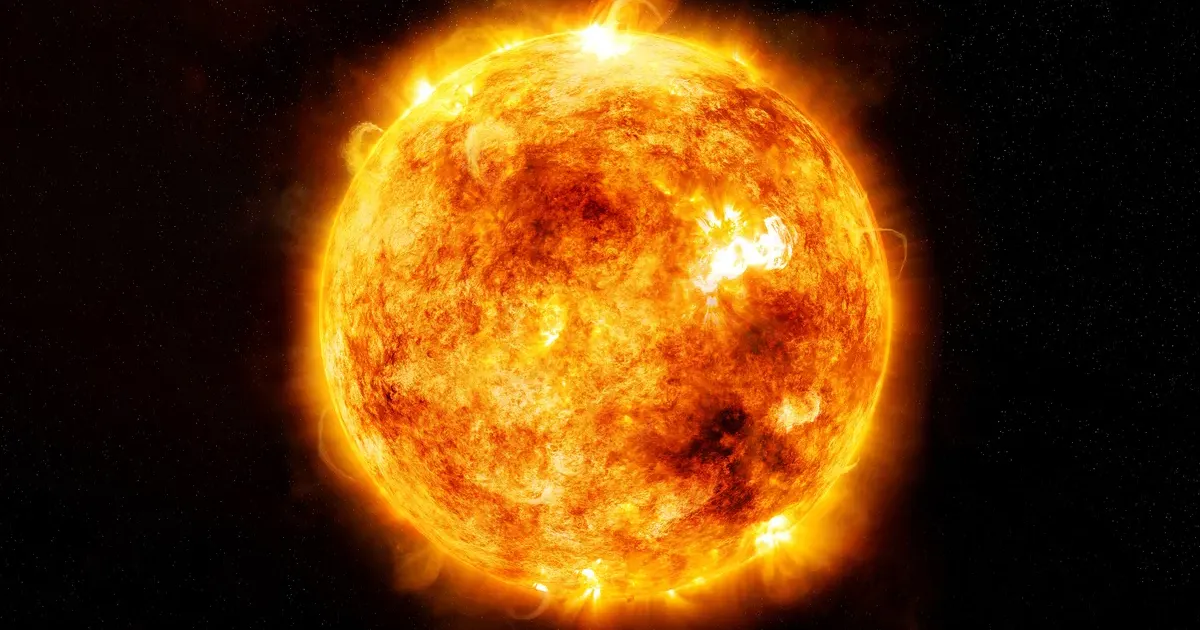
Cosmic Collision Replays Lunar Origins
Astronomers recently witnessed a brutal orbital dance end in total destruction as two planets slammed into one another in a distant solar system. Observation of the wreckage provides a rare, real-time look at the violent mechanics that likely birthed our own moon billions of years ago. Light from the impact reached Earth across vast distances, carrying evidence of a heat signature so intense it blinded sensors for weeks. On March 12, 2026, two discoveries linked violent destruction with the evidence that lets scientists reconstruct the past. Such events were once relegated to computer simulations and theoretical models.
Now, the raw data suggests that planetary formation is a messy, blood-red business of gravity and fire. Massive clouds of molten rock and silicate vapor erupted into space when the two bodies collided. Researchers suggest this mimicry of the Giant Impact hypothesis offers the first tangible evidence that Earth's early history was defined by such chaos. Traditional theories hold that a Mars-sized object named Theia struck the infant Earth, peeling away a layer of debris that eventually coalesced into the Moon. Seeing this happen elsewhere in the galaxy validates decades of astronomical speculation.
It also reinforces the idea that stability is a rare gift in a universe prone to high-speed demolition. Infrared telescopes captured the cooling glow of the planetary debris, which remained visible for months. Scientists noted that the resulting dust cloud was thick enough to obscure the parent star, creating a temporary artificial eclipse. This data set allows geophysicists to measure the cooling rate of planetary interiors after a catastrophic shock. By comparing these observations to the chemical composition of lunar rocks brought back by Apollo missions, experts can refine the timeline of our own planet's cooling period.
Every piece of silicate detected in that distant cloud tells a story of how gravity eventually wins the fight against explosion. Archaeologists in Italy have unveiled a different kind of wreckage, one that trades cosmic scale for intimate tragedy. A new permanent exhibition of Pompeii's historic casts opened this week, showcasing the final, desperate moments of victims trapped by Mount Vesuvius in 79 AD.
Pompeii Turns Disaster Into Evidence
The display marks the first time these organic finds and plaster casts have been brought together in a singular, permanent narrative. Visitors can walk among the shapes of people who were caught mid-breath by a wall of superheated ash and gas. One particular cast shows two individuals embracing, a silent proof of the search for comfort during the apocalypse. Giuseppe Fiorelli developed the technique of pouring plaster into the hollows left by decomposed bodies in the 19th century. Modern curators have refined this process, using advanced scanning technology to see through the plaster and identify bone fragments or clothing remnants.
These victims were not just killed by falling rock; they were vaporized by pyroclastic flows moving at hundreds of miles per hour. The resulting ash hardened almost instantly, creating a negative mold of the human form that outlasted the flesh it once contained. It is a biological echo of the planetary collision seen by astronomers, where a single moment of violence creates a permanent record of what existed before. Preservation of these forms requires constant vigilance against humidity and environmental decay. The new exhibit utilizes climate-controlled chambers to ensure the calcium carbonate within the casts does not degrade.
Scientists working on the site have noted that the chemistry of the ash varies between different sectors of the city, indicating the eruption's shifting intensity. Some victims were found clutching coins or jewelry, while others were simply trying to shield their faces from the heat. Such details provide a granular look at Roman life that no written text could ever replicate. Gravity and heat act as the primary architects of the known world, regardless of whether they are shaping a solar system or a seaside resort. Both the planetary crash and the Vesuvius eruption represent a sudden transition from order to entropy.
While the cosmic event took place over thousands of miles, the tragedy at Pompeii was contained within a few square kilometers. Both events, however, left behind a structural fingerprint that allows modern observers to reverse-engineer the catastrophe.
Why Evidence Survives
Why do we obsess over the wreckage of the past while ignoring the fragility of the present? The fascination with the Pompeii casts and distant planetary collisions stems from a morbid desire to believe that something of us will remain after the inevitable collapse. We treat these plaster shells and infrared signatures like sacred relics, yet we live with a reckless disregard for the planetary stability we currently enjoy. Astronomers gawk at planets being pulverized while we sit on a rock that is just one solar flare or stray asteroid away from the same fate. The Pompeii victims were not heroes; they were people who ran out of time, and their inclusion in a permanent exhibit is less about honoring them and more about satisfying our own voyeuristic curiosity about death. We should stop pretending this is purely about science. It is about the ego of a species that wants to believe its destruction will be witnessed by someone else. The cold truth is that most of the universe dies in silence and darkness, without a telescope or a plaster mold to record the exit. If we want a legacy, we should focus on the living world instead of polishing the bones of the dead.