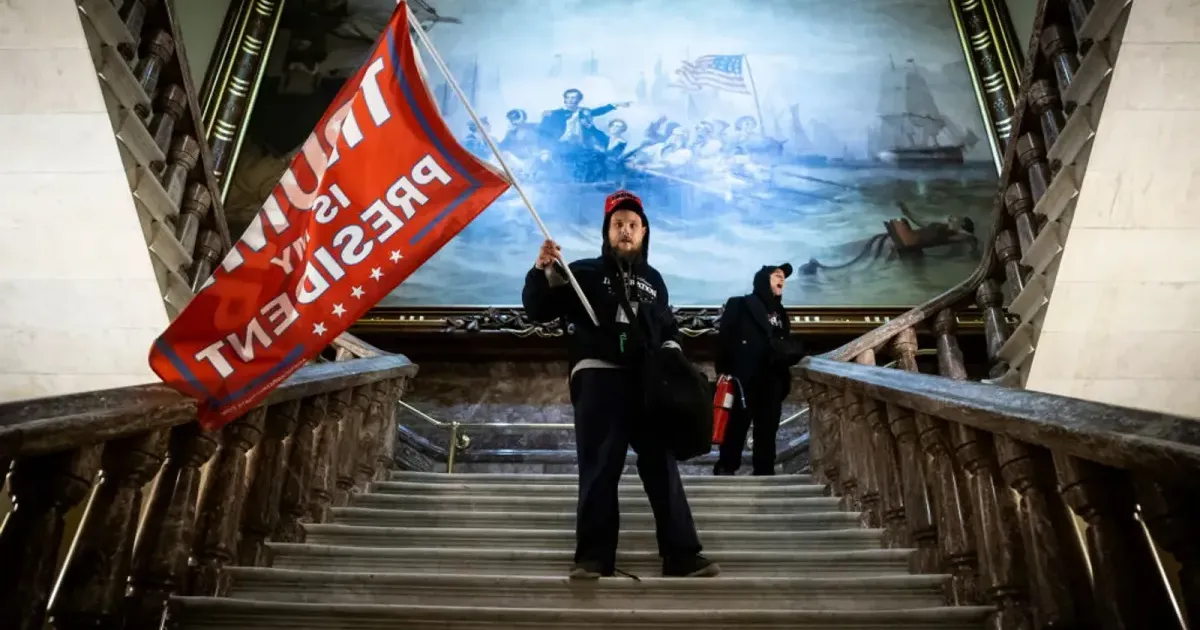
Virginia's Capitol riot mandate is rewriting not only classroom standards but also the political memory surrounding January 6. The Richmond vote landed on March 11, 2026.
Virginia Codifies January 6 Lessons
Richmond lawmakers reached a final consensus late Tuesday on a measure that effectively outlaws the portrayal of the January 6 Capitol riot as a peaceful demonstration in public classrooms. Governor Abigail Spanberger signaled her intent to sign the legislation, which compels Virginia schools to present the events of early 2021 as an unprecedented and violent attack on the democratic process. Such a move marks a significant departure from the educational policies of her predecessor, Glenn Youngkin, whose administration famously sparred with the Board of Education over the inclusion of divisive concepts in history curricula. Democratic sponsors of the bill argued that the legislative intervention was necessary to combat a growing tide of historical revisionism.
They pointed to various school districts where local board members had suggested that the breach of the U.S. Capitol was a mere exercise of First Amendment rights or a guided tour that went awry. By codifying a specific historical interpretation, the General Assembly has moved to ensure that every student from the Blue Ridge Mountains to the Tidewater region receives a uniform account of the day. Republicans in the House of Delegates reacted with predictable vitriol, characterizing the bill as a form of state-sponsored thought control. Delegates from the more conservative southwestern reaches of the state claimed that the mandate overrides local parental rights and forces a partisan narrative upon children.
The vote turned a national memory fight into a classroom mandate, forcing schools to treat January 6 as a fixed civic lesson rather than a local curriculum choice.
Still, the Democratic majority held firm, insisting that factual integrity regarding an insurrection should not be subject to regional preference. Factual clarity remains the primary objective for the proponents of the new standards. Education officials now face the daunting task of rewriting social studies frameworks to align with the statutory language. Under the previous administration, the Virginia Department of Education moved toward a more traditionalist view of American history, often de-emphasizing modern civil unrest in favor of foundational narratives.
Curriculum Rules Reverse the Youngkin Era
Spanberger's administration appears determined to pivot away from that model by prioritizing the immediate political history of the last decade. Legal experts suggest that while states have broad authority to set educational standards, this specific mandate may eventually face challenges in court. Opponents argue that the First Amendment might protect a teacher's right to offer varying perspectives on current events, yet the Supreme Court has historically granted states the power to determine the content of their own curricula. Whether a court would view the mandatory labeling of a historical event as an infringement on academic freedom remains an open question for constitutional scholars. School board meetings across the Commonwealth have already become flashpoints for this debate.
Parents in Fairfax County praised the move as a defense against disinformation, while groups in Hanover County viewed it as an overreach by a Richmond government they feel is increasingly disconnected from their values. These local conflicts reflect a national struggle over who possesses the authority to define the American story for the next generation. Historians usually prefer a decades-long cooling period before codifying events into textbooks. Appointments to the Board of Education will likely become even more politicized as the implementation of the bill begins. Spanberger has already hinted at filling upcoming vacancies with educators and historians who prioritize what she calls objective reality over political comfort.
Her critics claim such appointments will create an ideological echo chamber that ignores the nuances of the 2021 protests. Public school teachers expressed a mix of relief and anxiety following the announcement. Some educators noted that having a state mandate provides a shield against angry parents who might accuse them of bias when they describe the violence of January 6.
Classrooms Become Memory Battlegrounds
Conversely, others worry that the bill sets a dangerous precedent for future governors to mandate their own versions of truth on other sensitive topics, such as the 2020 summer protests or economic policy. Virginia's legislative action coincides with similar movements in deep-blue states, though the Commonwealth remains the most high-profile battleground due to its recent history of fluctuating between party control. In states like Maryland and Massachusetts, similar guidelines exist through administrative policy, but Virginia is among the first to enshrine this specific historical interpretation into state law. The move guarantees that the 2021 riot will remain a central pillar of the state's civic education for the foreseeable future. Statehouses have become the new curators of the collective American memory.
Election cycles in Virginia often serve as a bellwether for national sentiment, and the education debate is expected to dominate the midterms. Spanberger's commitment to this bill solidifies her standing among the national Democratic base while providing a potent talking point for her Republican rivals. They intend to use the curriculum mandate as evidence of what they call an activist executive branch that seeks to bypass local school boards. Data from the Virginia Department of Education shows a stark divide in how history is currently taught across different counties.
Internal surveys conducted last year revealed that while northern Virginia schools focused heavily on the legal and social implications of the Capitol breach, some rural districts barely mentioned the event or framed it as a peripheral moment in a larger election dispute. The new law will force these disparate approaches into a singular, state-approved lane. Sustained focus on the events of January 6 aims to prevent the normalization of political violence in the minds of young voters. Advocates believe that by labeling the event an attack, the state is making a moral and civic statement that transcends simple history.
Why Legislating History Cuts Both Ways
Could the legislative branch ever be a reliable arbiter of historical truth? The decision by Governor Spanberger and Richmond lawmakers to mandate the phrasing of January 6 lessons is a dangerous gambit that prioritizes political victory over intellectual rigor. While the facts of that day involve clear instances of violence and a breach of the Capitol, the act of a state government codifying specific adjectives for a historical event is a tool more commonly found in autocracies than in a healthy republic. If Democrats believe they are protecting the youth from disinformation, they are ignoring the reality that they have just handed a loaded weapon to the next populist Republican governor.
Imagine a future where a conservative administration uses this same legal precedent to mandate that the 2020 racial justice protests be taught exclusively as lawless riots. By inviting the state to become the final editor of history textbooks, we are ensuring that the past will change every time the governor's mansion changes hands. Education should be about teaching students how to weigh evidence and analyze conflicting accounts, not about providing them with a government-approved script. Spanberger has won a short-term battle for the narrative, but she has surrendered the integrity of the classroom to the whims of the partisan cycle.