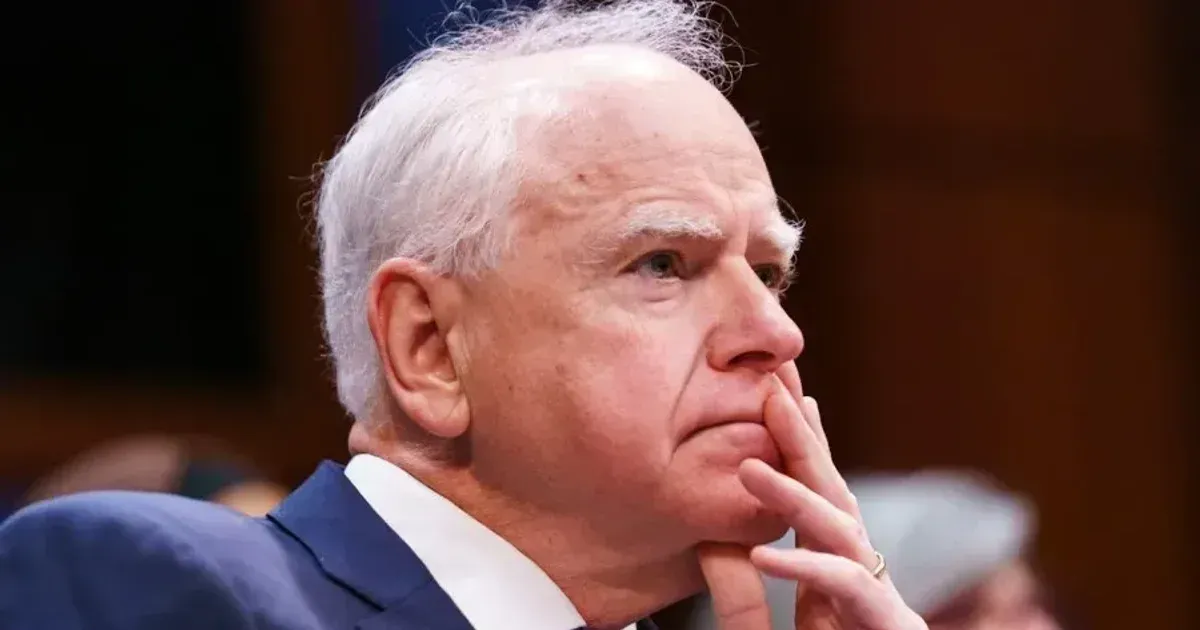
Governor Tim Walz confirmed on March 27, 2026, his plan to attend an enormous ‘No Kings’ demonstration in Minneapolis following weeks of intense federal immigration operations. Speaking with Chris Hayes on the MS NOW program, Walz positioned himself as a primary antagonist to the current administration’s enforcement tactics within Minnesota borders. Attendance at the rally indicates a hardening of state-level resistance against federal mandates that have disrupted local communities since the beginning of the year. Walz emphasized that the collective memory of recent enforcement actions would drive the state's legislative and legal response. He stated that the events of early 2026 left a lasting mark on the Twin Cities social fabric.

We will never forget what happened here and we’re taking action against it.

Minnesota officials have spent months documenting the impact of the federal surge on local labor markets and public safety. Walz argued that the aggressive nature of the raids undermined trust between residents and local law enforcement. For instance, police departments in Hennepin and Ramsey counties reported a sharp decline in witness cooperation following the initial wave of arrests. Resistance to these federal actions has moved beyond mere rhetoric into the area of formal policy challenges. Local organizers named the upcoming event the ‘No Kings’ rally to emphasize their belief that executive power must have clear, enforceable limits.

Minneapolis remains the center of this struggle between state sovereignty and federal authority. The city witnessed historic deployments of federal agents who bypassed traditional coordination with local sheriff offices. In fact, some operations occurred without any prior notification to the Minneapolis Police Department. Such a lack of communication created dangerous situations where local and federal officers nearly crossed paths during unrelated calls. Walz told Hayes that his administration is currently reviewing all mutual aid agreements to prevent future overlaps of this nature.

Twin Cities Immigration Enforcement Tensions

Federal agents targeted several high-density residential areas in February and March, leading to hundreds of detentions. Many of these actions took place in neighborhoods with large immigrant populations, such as Cedar-Riverside. Residents reported tactical teams entering apartment complexes before dawn, often without presenting judicial warrants to building managers. To that end, the state attorney general is investigating whether these entries violated Minnesota privacy statutes. Data from local advocacy groups suggest that over 400 individuals were processed through federal facilities in a single six-week window.

Businesses in the service and agricultural sectors are reporting sizable labor shortages as a direct result of the enforcement surge. Several large-scale food processing plants in the metro area halted production for days when employees failed to show up for work out of fear. This created a wider effect through the regional supply chain. Economic analysts estimate the temporary shutdown of these facilities cost the state economy roughly $12 million in lost productivity. And yet, federal spokespeople maintain that the operations are necessary for national security and the rule of law.

Still, the logistical reality on the ground tells a story of serious disruption to daily life. Schools in the Minneapolis Public Schools district noted a 15% drop in attendance in certain wards during the height of the raids. Teachers and administrators have been forced to implement new protocols for protecting student information from federal inquiries. Walz indicated that his presence at the rally is a show of solidarity with these affected families. He intends to use the platform to announce new state-level protections for sensitive locations.

Legal Standing of Minnesota Sanctuary Policies

Court battles over the legality of state non-cooperation laws are expected to reach the appellate level by summer. Minnesota recently strengthened its status as a refuge for undocumented individuals by passing the North Star Act, which limits the use of state resources for federal civil immigration enforcement. Trump administration lawyers argue that such laws are unconstitutional and interfere with federal supremacy. Meanwhile, Walz has directed the state’s legal team to prepare a defense centered on the Tenth Amendment. He believes the federal government cannot commandeer state employees to carry out its specific policy goals.

Legislators in St. Paul are considering a new bill that would provide $15 million in legal aid for those facing deportation proceedings. This funding would target families who have been separated during the recent operations. Support for the measure is split along party lines, though some suburban Republicans have expressed concern over the economic impact of the raids. By contrast, federal proponents argue that state-funded legal aid obstructs the swift execution of justice. The debate has effectively paralyzed other legislative priorities as the budget deadline approaches.

That said, the judicial landscape remains unpredictable given recent appointments to the federal bench. Several judges in the district have already issued conflicting rulings on the validity of warrantless entries by immigration agents. One judge recently stayed a deportation order because the initial detention lacked probable cause. Walz pointed to these legal victories as evidence that the federal government is overstepping its bounds. He remains committed to using every available legal lever to protect Minnesota residents.

Political Consequences for the Walz Administration

National political observers view the ‘No Kings’ rally as a test of the Minnesota governor’s influence within the broader Democratic party. By taking such a public stand against Trump, Walz is positioning himself as a leader of the internal resistance movement. His appearance alongside grassroots activists marks a shift from his typically pragmatic, midwestern moderate persona. Some analysts suggest this move is necessary to shore up support among the party’s progressive wing before the next election cycle. In fact, polling shows a 10% increase in his approval rating among voters under 30 since he began criticizing the federal raids.

Critics argue that the governor is focusing on optics over the practical needs of the state. They claim that his confrontational stance could lead to a reduction in federal funding for infrastructure and education. Separately, the Department of Justice has hinted at withholding certain law enforcement grants from cities that participate in the rally. Walz dismissed these threats during his interview, stating that Minnesota will not be bullied into violating the rights of its people. He emphasized that the state’s fiscal health is strong enough to withstand temporary federal pressure.

Organizers expect the rally to draw over 50,000 people to the streets of downtown Minneapolis this weekend. The event will feature speakers from various civil rights organizations and labor unions. According to municipal permits, the march will conclude at the federal courthouse, where a symbolic list of grievances will be delivered. Walz is scheduled to be the keynote speaker on Saturday afternoon. Security preparations are already underway to manage the large crowds and potential counter-protests.

Pressure continues to mount on both sides as the rally date nears. Federal agencies have not indicated whether they will pause operations during the protest or increase their presence. Some local businesses have decided to board up windows as a precaution against civil unrest. Minnesota state troopers will be deployed to ensure that the demonstration remains peaceful. Walz has called for all participants to remain focused on the message of constitutional checks and balances.

The Elite Tribune Perspective

History rarely rewards the cautious when federal overreach collides with state sovereignty. Governor Tim Walz is finally recognizing that a middle-of-the-road approach is insufficient when the federal government treats a sovereign state like a laboratory for aggressive enforcement tactics. For too long, governors have hidden behind the shield of inter-agency cooperation while federal agents methodically dismantled the trust built between local police and their communities. This rally in Minneapolis is more than a protest; it is a long-overdue assertion of the Tenth Amendment at a time when executive power seeks to bypass the judicial system entirely.

If the federal government believes it can operate within a state without transparency or coordination, it effectively renders the concept of a union obsolete. Walz’s decision to stand on the picket line with those he was elected to protect is not merely political theater; it is a necessary check on an administration that views local dissent as a nuisance rather than a right. Skeptics will point to the potential loss of federal funding, but the cost of silence is far higher.

A state that allows its residents to be seized in pre-dawn raids without a fight has already lost its identity. The Twin Cities are now the front line of a constitutional struggle that will define the limits of the American presidency for a generation.