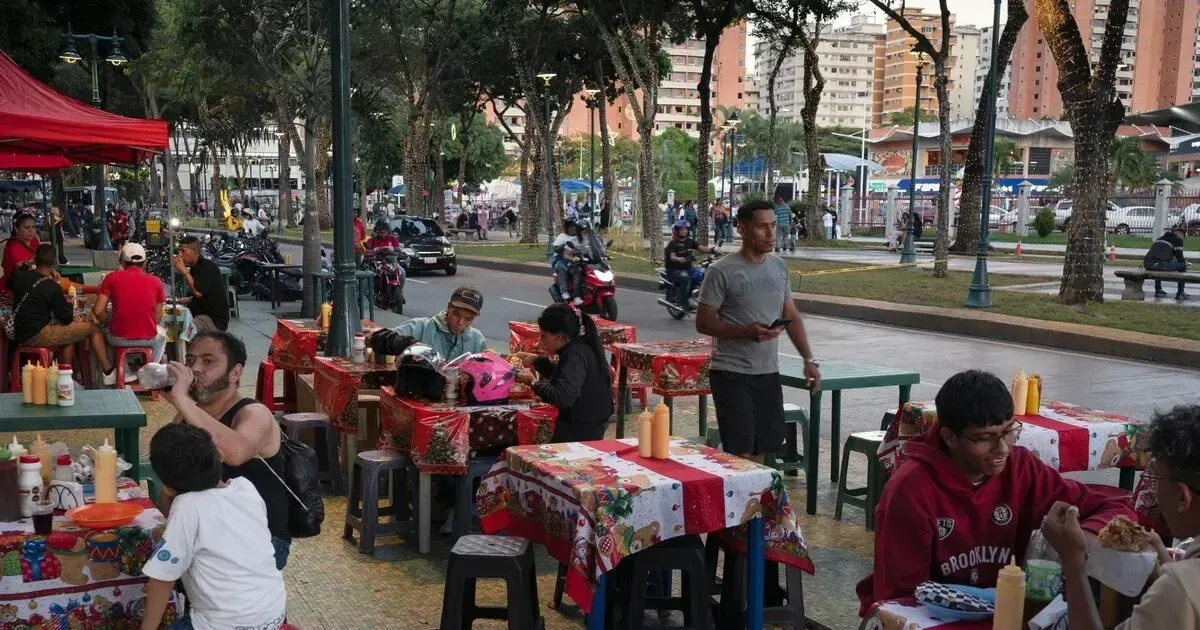
Nicolas Maduro's administration prepared a broad public-sector wage expansion while U.S. diplomats weighed whether to ease financial restrictions on Venezuela's central bank. By April 9, 2026, the wage plan and sanctions debate were moving on parallel tracks.
Economic stability remains elusive for the South American nation despite several attempts at currency recalibration. Projections from Bloomberg Economics indicate that authorities in Caracas have little choice but to increase monthly salaries for public-sector workers to prevent a total collapse of consumer demand. High inflation rates continue to outpace even the most aggressive state-mandated pay raises. Household budgets in the capital city have been decimated by the rising cost of basic goods and services over the last fiscal quarter. Families often find that a month of labor barely covers a week of caloric needs.
Officials within the Banco Central de Venezuela have struggled to manage the supply of hard currency under the weight of international isolation. Shortages of U.S. dollars in the domestic market have forced the government to rely on opaque financial maneuvers to fund its payroll. Public-sector workers, who form the backbone of the state's political support, have seen their real income vanish in a sea of devalued bolivars. The interim government's decision to boost these salaries is a direct response to this intensifying economic volatility.
White House advisors are now contemplating a shift in strategy that could fundamentally alter the financial landscape of the Western Hemisphere. Sources familiar with the matter suggest that the U.S. is considering lifting sanctions on the Banco Central de Venezuela to enable the flow of billions of dollars into the country. Such a move would represent a departure from the maximum pressure campaign that has defined American policy for several years. Proponents of the shift argue that unfreezing these assets is the only viable method to prevent a humanitarian catastrophe that could spill over national borders.
The US is considering lifting sanctions on Venezuela’s central bank to enable the flow of billions of dollars into the country’s battered economy, according to people familiar with the matter.
Lifting these restrictions would allow the central bank to regain access to international clearing systems and foreign reserves held in overseas accounts. Critics in Washington argue that this provides a lifeline to an administration that has shown little interest in democratic reforms. Proponents of the thaw maintain that the current sanctions regime has failed to achieve its political objectives while causing immense suffering for the general population. Internal debates at the State Department have centered on whether financial relief should be tied to specific electoral milestones in the coming year.
Public-Sector Wage Hikes in Caracas
State employees across the country have expressed growing frustration with the disparity between their earnings and the cost of living. Government planners in Caracas recognize that the loyalty of the military and the civil service is not unconditional. Increasing the monthly wage is a tactical maneuver designed to ensure the continued functioning of the state apparatus. While the specific percentage of the increase has not been publicized, early reports suggest it will be the largest nominal adjustment in recent memory. This move seeks to ease pressure on households that have been pushed to the brink by stagnant earnings.
Inflationary spirals have a historical tendency to consume wage gains before the ink on the decree is even dry. Economists in Caracas warn that without a corresponding increase in productivity or a stabilization of the exchange rate, the new liquidity will simply drive prices higher. The central bank has limited tools to soak up excess bolivars from the system. The success of the wage hike depends heavily on whether the U.S. follows through with sanctions relief. Access to foreign currency would allow the Banco Central de Venezuela to intervene in the exchange market more effectively.
White House Debates Sanctions Relief Strategy
Washington's interest in the Venezuelan economy is not purely humanitarian. Global energy markets have been strained by supply disruptions, and Venezuela sits atop the world's largest proven oil reserves. Reintegrating the Venezuelan financial sector into the global economy could pave the way for increased crude exports. This possibility has drawn interest from major oil companies that have seen their operations in the Orinoco Belt stalled by legal hurdles. Ending the central bank sanctions would be the first step in a broader normalization of trade relations.
Negotiations remain shrouded in secrecy to avoid political backlash in both countries. Some members of the U.S. Congress have already voiced opposition to any plan that grants Nicolas Maduro access to frozen assets. They argue that the central bank is an extension of the ruling party rather than an independent monetary authority. Treasury Department officials, however, have pointed out that the current stalemate does nothing to promote American interests in the Caribbean basin. A controlled release of funds could provide the leverage needed to secure concessions on human rights and political prisoners.
Geopolitical Implications of Financial Thaw
Regional leaders in Brasilia and Bogota have watched these developments with cautious optimism. A renewed Venezuelan economy could reduce the flow of migrants seeking opportunities in neighboring countries. Previous waves of migration have strained the social services of Colombia and Peru, leading to localized political friction. If the central bank can stabilize the bolivar, many Venezuelans might choose to remain at home or even return from abroad. This demographic stabilization is a primary goal for diplomats across the continent.
Beijing and Moscow also maintain a substantial stake in the outcome of the U.S. deliberations. Venezuela owes billions in debt to both China and Russia, much of which is serviced through oil shipments. If sanctions are lifted, these creditors may find it easier to collect on their loans. Washington must balance the desire for regional stability with the risk of indirectly benefiting its global rivals. Every dollar that enters the Banco Central de Venezuela is a dollar that could be used to settle old accounts with U.S. adversaries. The path forward is full of technical and legal complications.
Financial Thaw Risk
A sanctions rollback could give Caracas short-term breathing room, but it also tests whether Washington can extract political concessions in return. Currency relief without reform would be a fragile bargain.