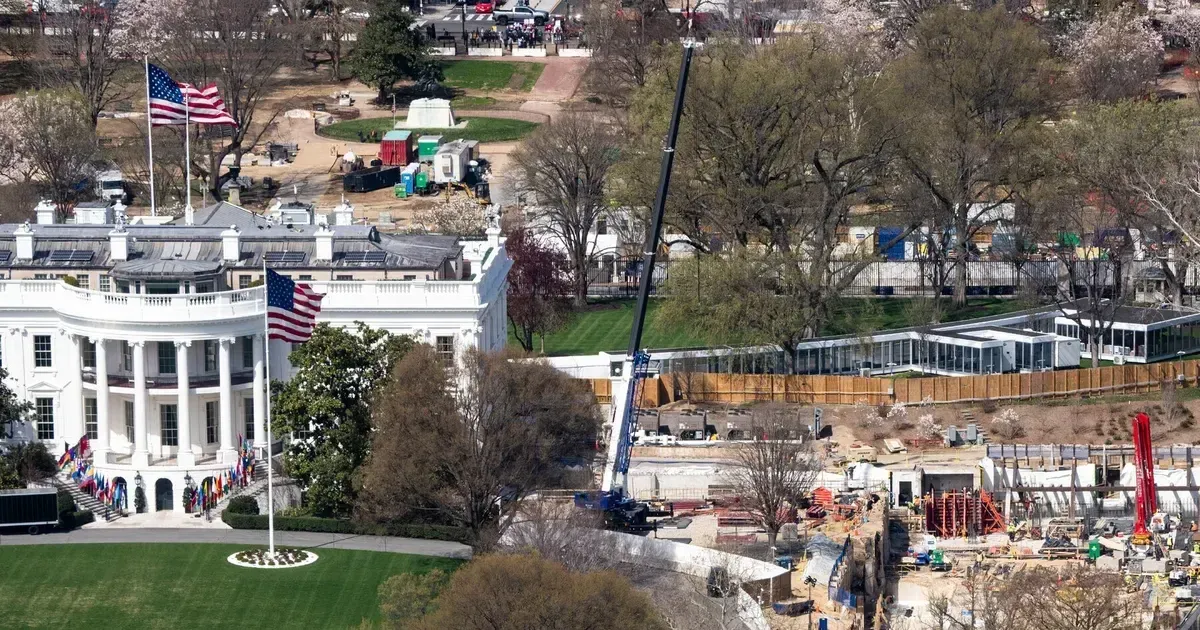
President Trump confirmed that the White House will use tens of millions of dollars in donated foreign steel for its upcoming ballroom expansion. ArcelorMittal, the Luxembourg-based multinational conglomerate, is the sole provider for the structural framework of the executive mansion's newest addition. The April 8, 2026, announcement immediately raised procurement, security and domestic sourcing questions around the project. Corporate filings reveal the company is transferring approximately $30 million worth of high-grade architectural steel to the federal government as a gift. Project managers expect the first shipments to arrive at domestic ports by the end of the month.
ArcelorMittal Steel Donation Scope
Luxembourg is the corporate headquarters for the firm providing these materials, which include specialized I-beams and reinforced girders. These specific components are designed to support a large open-span ceiling without the need for internal columns. Engineers chose this specific European alloy for its high tensile strength and weight-bearing properties. Shipping manifests indicate the materials will depart from Antwerp before reaching the United States.
Construction experts estimate that the raw tonnage involved could support a small skyscraper. ArcelorMittal operates some of the most advanced blast furnaces in the world, capable of producing steel with microscopic precision. Every beam must meet rigorous Department of State security standards before it is installed. Federal inspectors traveled to European mills last week to oversee the initial casting process. The metallurgical composition of the donor steel surpasses the standard grade typically found in domestic commercial builds.
Luxembourg-based executives coordinated the logistics with the General Services Administration over an 18-month period. Documents show the donation includes not just the raw steel, but also the precision cutting and shaping required for the ballroom's unique geometry. This level of customization would normally cost the taxpayer millions in additional procurement fees. International trade observers note that such a gift is historic for a presidential residence renovation.
"ArcelorMittal is honored to provide the essential materials for a project that will stand as a symbol of international cooperation and architectural excellence," a corporate representative for the steel manufacturer said.
White House Ballroom Construction Logistics
Architects have designed the new venue to sit on the South Grounds, offering a view of the Washington Monument. Deep foundations must be excavated to support the weight of the heavy ArcelorMittal framework. Specialized cranes will lift the European girders into place under strict security protocols. Heavy transport vehicles will move the materials through the capital during overnight hours to minimize traffic disruption. Site preparation has already begun with the removal of topsoil and the rerouting of utility lines.
Security measures for the construction site include 24-hour surveillance and background checks for all onsite personnel. Structural integrity is a primary concern for the Secret Service given the ballroom's intended use for high-profile events. Reinforced steel plates will be integrated into the walls to provide ballistic protection. Blast-resistant coatings are being applied to the beams before they leave the manufacturing facility. Experts believe the finished structure will be one of the most secure social venues in the world.
Daily progress reports go directly to the Executive Office of the President. Coordination between the architectural firm and the steel manufacturer requires near-constant communication across time zones. Any delay in the shipping schedule would push the completion date back by several months. Port officials in Virginia have designated a secure holding area for the incoming European cargo.
Foreign Material Ethics and Trade Standards
Legal teams at the Department of Justice reviewed the donation to ensure compliance with the Foreign Gifts and Decorations Act. Federal law generally prohibits officials from accepting large gifts, but exceptions exist for the benefit of the government itself. Tax lawyers suggest the donation could provide ArcelorMittal with substantial tax write-offs in various jurisdictions. Public records show no direct contracts were awarded to the firm in exchange for the materials. Ethical guidelines for the White House historical preservation staff require all additions to match the gravitas of the original masonry.
Trade policy analysts point to the irony of using foreign steel for a high-profile American landmark. Domestic steel producers have spent years advocating for stricter "Buy American" mandates on federal infrastructure projects. While ArcelorMittal has a presence in the United States, the specific materials for this project are sourced from its European foundries. Critics in the Rust Belt have voiced concerns about the optics of the arrangement. American mill owners claim they could have produced similar materials if given the opportunity.
Steel prices have fluctuated wildly over the last three years, making the $30 million gift particularly valuable. Market analysts suggest the donation helps the company maintain a favorable relationship with Washington during a time of increased regulatory scrutiny. Regardless of the political fallout, the financial reality remains that the ballroom project would be unfunded without this private contribution. Treasury officials noted that the gift does not require a specific congressional appropriation.
Domestic Steel Industry Market Reactions
Industry leaders in Pittsburgh expressed skepticism regarding the technical necessity of using foreign-made alloys. American steel mills now produce 80 million tons of metal annually. Trade associations argue that domestic beams are more than capable of supporting a ballroom. However, the specific high-tensile requirements for the open-span design may have limited the available options. Some domestic plants would have needed to retool their assembly lines to meet the project's exact specifications.
Union representatives for steelworkers have remained relatively quiet on the matter. Many workers are waiting to see if the installation phase will prioritize domestic labor. ArcelorMittal has confirmed that while the steel is foreign, the assembly crews will be American citizens with high-level security clearances. This compromise aims to satisfy some of the domestic labor requirements of the project. Logistics firms based in the United States are also profiting from the transport and storage of the materials.
Final assembly of the steel skeleton is scheduled for late 2026. Once the framework is complete, the exterior will be clad in traditional stone to match the existing White House facade. Interior designers are already sourcing marble and crystal to complement the industrial strength of the ArcelorMittal skeleton. The sheer scale of the project ensures it will be a focal point of Washington architecture for decades. Steel beams arriving today will eventually support the weight of history.
National sovereignty often buckles under the convenience of a free lunch. By accepting $30 million in foreign steel for a centerpiece of American power, the administration effectively admits that its "Buy American" rhetoric has a price tag. It is a calculated gamble that assumes the public will value a debt-free ballroom over the principles of domestic industrial independence. The optics are clearly messy for a president who built his brand on the back of the American steelworker. Relying on a Luxembourg-based giant to provide the literal skeleton of the White House social wing is a move that reeks of pragmatic desperation.
Does the structural integrity of a building matter more than the integrity of a trade platform? ArcelorMittal is not a charity; it is a global predator with a history of strategic maneuvering. This donation is a cheap price to pay for the kind of institutional goodwill that prevents anti-dumping investigations or antitrust litigation. The administration is trading a high-profile marketing win for the manufacturer for a polished floor where it can host state dinners. It is a classic example of short-term financial gain creating long-term political vulnerability. One must ask what the American steelworker thinks when the most famous house in the country is held up by European beams. Verdict: Political hypocrisy.