California Warning Meets White House Denial
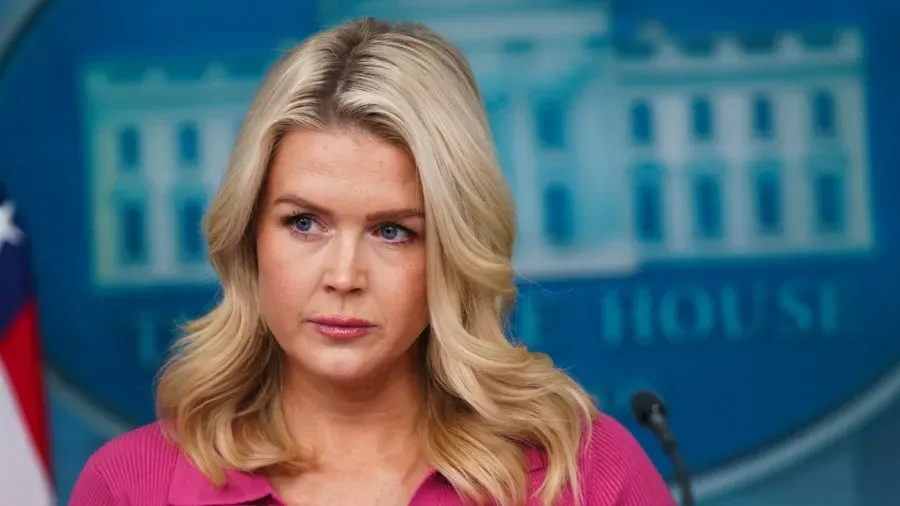
White House Press Secretary Karoline Leavitt stood behind the lectern on Thursday morning to dismantle reports of an imminent Iranian strike on American soil. Her aggressive posture targeted an ABC News report claiming the FBI had issued urgent warnings to police departments across California. These warnings allegedly focused on retaliatory threats tied to recent US military operations within Iran. On March 12, 2026, the California warning collided with a separate drone battle around US forces in Iraq.
Leavitt dismissed the report entirely, stating that no such threat from Iran to the homeland exists or ever did. She went further, demanding that the story be retracted immediately to prevent public panic. Yet, the air of certainty in the West Wing stands in sharp contrast to the kinetic reality facing Western forces in the Middle East. British forces stationed at a base in Iraq spent the previous night engaging hostile targets. Defence Secretary John Healey confirmed that UK troops shot down two Iranian drones during an overnight incursion. Healey described the action as a necessary defensive measure to protect personnel and infrastructure in the region. British authorities remain on high alert as Tehran seeks to project power through its drone program. This military engagement proves that while the White House projects domestic calm, the war remains very much alive on the periphery of the conflict zone.
Reports originating from ABC News detailed a specific advisory from the FBI to California law enforcement agencies. These documents suggested that Iranian operatives might target civilian or government infrastructure in the Golden State. Such a scenario would represent a massive expansion of the current theater of war. Local police officials in Los Angeles and San Francisco reportedly received briefings on heightened surveillance needs. Leavitt's rebuttal went beyond clarification; it became a total denial of the intelligence community's internal communications. She characterized the leak as misinformation that could jeopardize national stability. Intelligence circles in Washington often experience friction with political communications teams. While Bloomberg suggests the FBI did indeed issue a precautionary bulletin, Reuters' sources claim the document was a routine assessment rather than a specific warning.
Discrepancies like these fuel public skepticism regarding the actual level of danger. If the FBI warned California police, the White House denial serves a political purpose rather than a security one. Calming the public becomes a priority when the economy is already strained by the costs of a prolonged military campaign. Healey's announcement in London provided concrete evidence of Iranian aggression that Washington seemed eager to downplay.
The drones intercepted in Iraq represent the persistent threat of proxy warfare.
Drone Battle Raises the Stakes
These unmanned aerial vehicles are inexpensive, difficult to track, and capable of delivering lethal payloads. By shooting them down, British forces prevented a potential catastrophe at their installation. Still, the incident highlights the fragility of the current security arrangement in Iraq. Tehran appears willing to test the limits of Western resolve through these repeated, low-cost provocations.
Military analysts suggest the drones were likely Shahed variants, often used by Iranian-backed militias to harass coalition forces. These machines have become a signature of modern asymmetric warfare. Their presence over an Iraqi base suggests that Iranian commanders are not backing down. Instead, they are doubling down on regional escalation while the US focuses on maintaining internal order.
Success in the air over Iraq does not necessarily translate to safety in the streets of California. Trust in government messaging remains a scarce commodity. Karoline Leavitt faces the difficult task of managing a narrative that keeps the American public focused on domestic recovery. Every report of a foreign threat to a major state like California risks triggering market volatility and social unrest.
If the FBI actually issued a warning, the White House may be trying to manage the fallout by suppressing the information. Such tactics are common during periods of active military engagement. But the disconnect between the West Wing and the FBI suggests a lack of coordination that could have disastrous consequences if a real attack occurs. Governor Gavin Newsom's office has remained relatively quiet on the matter, deferring to federal authorities.
This silence adds another layer of complexity to the unfolding drama. Local law enforcement agencies usually prefer to err on the side of caution when receiving FBI bulletins. If California police were told to watch for Iranian operatives, they will likely continue to do so regardless of what is said from the White House podium. Security at major ports and airports in the state has already seen a quiet increase in personnel over the last forty-eight hours.
National security experts point to the historical pattern of Iranian retaliation. Tehran often waits for months before striking back, choosing targets that maximize symbolic impact. A strike in California would be a devastating blow to the American sense of security. It would prove that the geographic distance between the US and the Middle East no longer offers the protection it once did.
Security Trust Gap
Why does the American public still believe official denials when the horizon is literally on fire? Karoline Leavitt's dismissal of the FBI warning is a classic exercise in gaslighting a population that can clearly see the escalatory spiral. We are expected to believe that Iran is capable of launching swarms of drones at British bases in Iraq but is somehow uninterested or unable to touch the American mainland. The logic is a fantasy designed to keep the stock market afloat while the military industrial complex burns through another multi-billion dollar engagement. The White House is not protecting the public from panic, it is protecting itself from the political consequences of a failed deterrence policy. When the FBI leaks a warning, it does so because professionals on the ground see a gap that the political appointees are ignoring. Dismissing these warnings as non-existent is a dangerous game of chicken with national security. We should stop pretending that geography is a shield in an era of asymmetric proxy warfare. If the administration wants us to believe the homeland is safe, they should start by being honest about the threats we actually face. Transparency is the only currency that matters in a crisis, and right now, the White House is bankrupt.