Daily Games Keep Their Grip
The latest puzzle cycle marks the arrival of Wordle 1,728 and NYT Strands 740, continuing a streak of digital engagement that has fundamentally altered the morning routines of millions. Since the New York Times acquired Wordle in early 2022, the game evolved from a viral hobby into a pillar of a multibillion-dollar media ecosystem. On March 13, 2026, the latest puzzle pair gave solvers another reason to protect a daily streak. This pattern of engagement relies on the scarcity of content, offering users exactly one puzzle per day to maintain a high level of retention. While early critics suggested the novelty would fade, the current scale of the platform suggests otherwise. Complexity remains the primary weapon in the fight for consumer attention.
Wordle 1,728 presents a specific challenge built around deceptive vowel expectations that often bait players into using common starting words like ADIEU or AUDIO. Data from user communities indicates that puzzles with repetitive vowel patterns or unusual consonant placements, such as those beginning with 'Y' or ending in 'H', typically result in higher failure rates. CNET reports that today's solution involves a word with a singular vowel, a rarity that often forces solvers into their fifth or sixth attempts. Success today hinges on a player's ability to identify phonetically deceptive structures without the aid of more common letter combinations.
Digital logic games have moved beyond simple entertainment to become tools of social signaling and habit formation. Players frequently share their results as a badge of cognitive agility, fueling a competitive secondary market for hints and solutions. Platforms like CNET and various dedicated social media accounts now generate significant traffic by providing algorithmic breakdowns and daily help for these specific game numbers. The rise of Strands, which debuted in 2024, added a layer of word-search complexity that requires identifying a central 'spangram' connecting various thematic words across a grid.
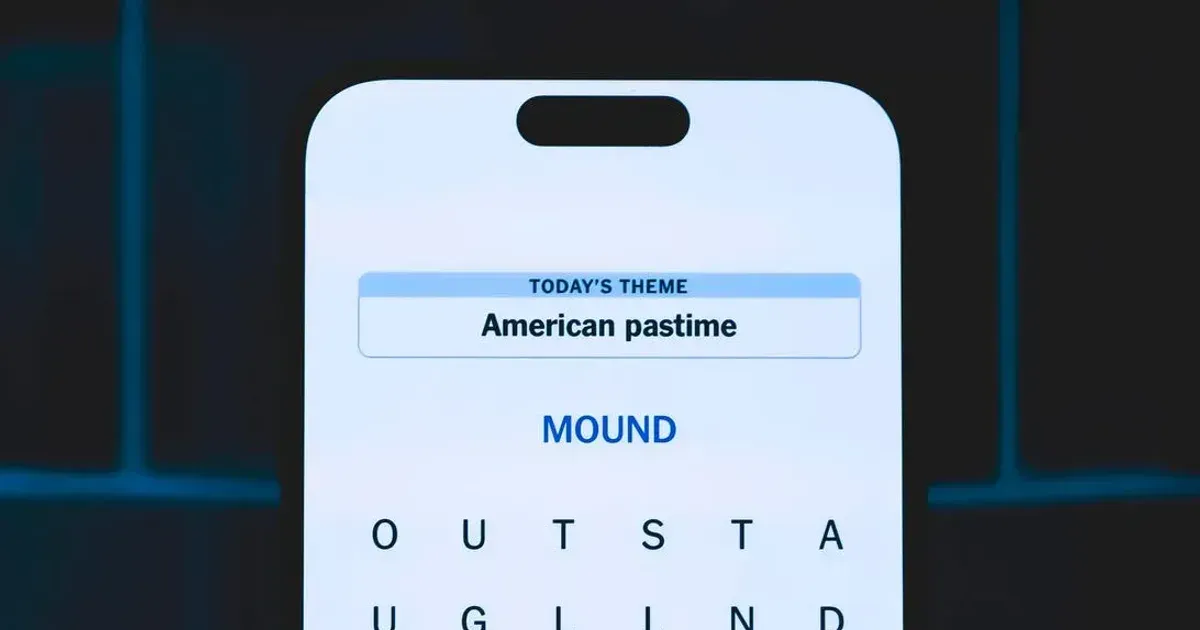
Strands 740 introduces a theme centered on maritime navigation, requiring solvers to identify words that do not overlap or share letters in a traditional linear fashion. Solvers must contend with a grid that appears chaotic but follows a strict internal logic where the spangram must touch two opposite sides of the board. CNET highlights that today's spangram is particularly elusive because it uses archaic terminology not found in common parlance. Such design choices reflect a broader strategy by the Times to increase difficulty as the player base becomes more sophisticated.
Psychological studies on game design suggest that the satisfaction derived from Wordle or Strands comes from the 'Aha!' moment that occurs just before the timer of social patience runs out. If a puzzle is too easy, the user feels no accomplishment. If it is impossible, they abandon the app.
Hints Become Part of the Habit
The editors at the Times Games desk balance these scales by rotating through different categories of difficulty, ensuring that a brutal Friday puzzle like No. 1,728 is often preceded by a more accessible Thursday grid. This specific difficulty spike ensures that the social conversation remains active, as users congregate online to lament or celebrate their performance. Revenue models for the New York Times have shifted toward this bundle-centric approach, where games act as the primary gateway for digital subscriptions.
Analysis of quarterly earnings reveals that a significant percentage of new subscribers initially joined the platform through the Games app rather than the newsroom. By tethering puzzles like Strands 740 to the same subscription as investigative journalism, the company has insulated itself against the volatility of the traditional advertising market. Logic dictates that as long as the puzzles remain culturally relevant, the financial health of the institution remains tied to a five-letter grid. Data suggests the morning routine of the global professional class now revolves around these specific 400 pixels of screen real estate.
Critics argue that the homogenization of these games has led to a predictable pattern that lacks the organic charm of the original Josh Wardle creation. The shift toward more obscure vocabulary and complex thematic links in Strands is often seen as an attempt to artificially inflate the time spent in the app. Yet, the numbers remain strong, with millions of daily active users across the US and UK. Solvers often find themselves trapped between the desire for efficiency and the thrill of the hunt.
The puzzle release serves as another data point in this ongoing experiment in digital habituation. Beyond the internal mechanics of the games, the ecosystem of help-sites and hint-generators has created its own sub-economy. These sites provide a layer of accessibility that prevents total player burnout. CNET's daily coverage of Wordle 1,728 and Strands 740 provides a safety net for those who might otherwise break a multi-year streak.
Maintaining that streak is often the only thing keeping a user from deleting the app entirely. It is a cycle of dependency that the New York Times has mastered better than any other traditional media entity in the digital age. The business lesson is that puzzle difficulty now functions like programming. A hard Friday grid keeps conversation moving across social feeds, while a solvable path prevents exhausted users from abandoning the habit. Hint coverage has become part of the product rather than a separate cottage industry. Players who do not want the answer still want enough structure to preserve a streak and feel that the eventual solve was earned.