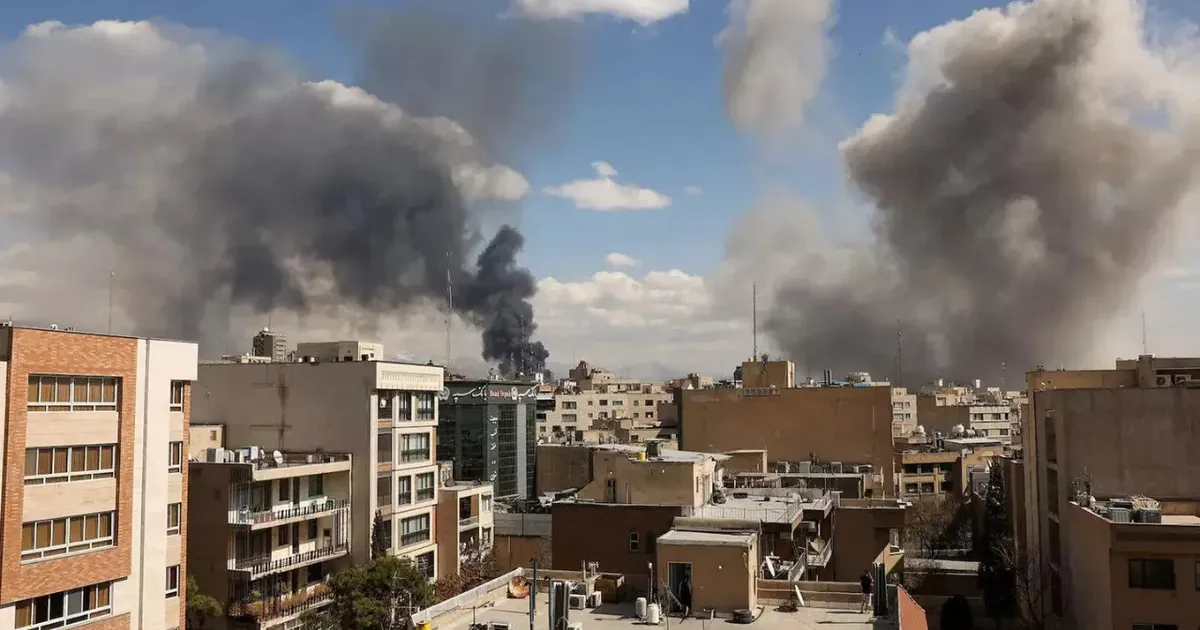
Missile debris injured five Indian nationals in Abu Dhabi, underscoring how regional air defense can still leave civilians exposed. Officials said debris fell near Khalifa Economic Zones Abu Dhabi, or KEZAD, after air defense systems intercepted a ballistic missile. The injuries were described as minor to moderate, but the incident widened concern about the Gulf's civilian risk map.
The immediate danger came not only from the missile itself, but from the physics of interception. When air defenses destroy an incoming weapon above or near an industrial area, fragments can still fall across roads, warehouses and worker zones. A successful intercept can prevent a larger disaster while still producing injuries on the ground.
Indian nationals make up a major part of the UAE workforce, and the incident quickly became a diaspora safety issue as well as a regional-security story. New Delhi has to balance its strategic relationships in the Gulf with its responsibility to monitor risks to citizens working in exposed industrial and logistics hubs.
Abu Dhabi Interception Hazards Near KEZAD
Authorities urged the public to avoid the affected area and rely on official information while emergency crews responded. Local officials said responders treated the injured and worked to manage fire and debris hazards. KEZAD's importance as an industrial and logistics zone made the incident especially sensitive because disruption there can affect trade, manufacturing and port-linked activity.
"Authorities are urging the public to rely solely on official information and refrain from spreading rumors," a UAE government statement noted.
That warning mattered because social media often fills quickly with unverified strike videos during regional escalations. In a missile incident, false claims can create panic, complicate emergency response and distort market reactions. Official clarity is not public relations. It is part of civil defense.
The event also shows the limits of even advanced air defense systems. Interceptors can stop an incoming missile from reaching its intended target, but they cannot make debris disappear. Industrial areas with outdoor shifts, transport yards and storage facilities remain vulnerable to falling fragments.
Regional Missile Threats Reach Civilian Workforces
The Gulf's security environment has deteriorated as the wider Middle East conflict has expanded. Missile and drone attacks aimed at Gulf infrastructure create a different kind of risk than traditional battlefield violence. They target logistics, energy, ports and industrial zones where civilians and migrant workers keep the economy running.
Officials and media reports linked the Abu Dhabi incident to intercepted ballistic missile fire during the broader regional confrontation. Public accounts varied on the exact source and casualty totals in the first hours, which is why careful attribution matters. What is clear is that debris from the interception injured Indian nationals near KEZAD and forced authorities to manage fire, medical and information-control responses at once.
For air-defense planners, the challenge is mathematical and geographic. A missile may be stopped before impact, but the intercept location, altitude and fragmentation pattern can still create ground hazards. That risk becomes more acute near industrial corridors where workers may be outdoors during early or late shifts.
India Faces a Diaspora Security Problem
India's concern is structural. Millions of Indian citizens live and work across Gulf states, sending remittances home and supporting industries from construction to logistics to healthcare. When regional war reaches cities and industrial zones, those workers become part of India's foreign-policy calculation whether New Delhi wants that role or not.
Families in Indian states with large Gulf workforces watch these incidents closely. A minor-to-moderate injury report can still trigger fear because it suggests that the workplace is no longer far from the conflict. If attacks intensify, India may face pressure to push harder for de-escalation, contingency planning and clearer worker-protection channels.
The UAE has strong security capacity and close ties with India, but neither fact eliminates the risk. A wider missile campaign could force governments to think about shelter access, emergency alerts in multiple languages, compensation rules and evacuation planning for foreign workers. Diaspora safety cannot be treated as an afterthought.
The Diaspora Risk Map
The interception over Abu Dhabi is not a tactical failure of air defense. It is a strategic failure of regional containment. For years, Gulf states sold themselves as safe hubs where trade, aviation, energy and expatriate labor could operate above the region's wars. That promise looks weaker when five Indian workers are injured by debris from a conflict they did not choose and cannot influence.
Western capitals remain trapped in a reactive loop, sending more interceptors into a region that also needs a diplomatic architecture capable of lowering the temperature. India's workforce gives New Delhi leverage it has not fully used. If India decides that diaspora safety outweighs strategic silence, the diplomatic math in the Gulf changes. This is no longer a localized military exchange. It is a warning that the cost of every shipping container, fuel shipment and overseas paycheck can rise when the region's security architecture starts to fail.