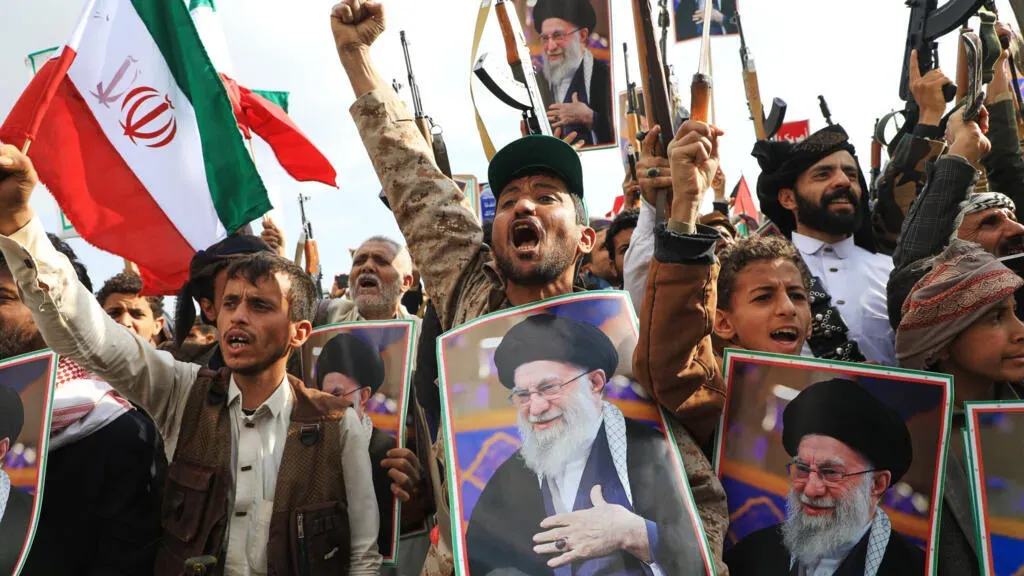
Houthi missile fire toward southern Israel has widened the regional conflict and forced military planners to treat Yemen as more than a maritime threat. By March 28, 2026, the item had moved into the public record. The late-March 2026 barrage followed weeks of fighting involving Iran, Israel and the United States, and it showed how a conflict centered farther north can draw in armed groups across the Arabian Peninsula. Israeli defenses intercepted most of the incoming projectiles, according to the early account, while some reports described impacts in open areas. The important point is not only damage. It is reach. A missile launch from Yemen toward Israel changes air-defense planning, shipping risk and the diplomatic effort to prevent a wider war.
Southern Israel Targeted
The strike pushed sirens across parts of southern Israel and gave Houthi leaders a visible role in the war. The group has used missiles and drones before, especially around Red Sea shipping, but a direct strike toward Israeli territory carries a different political meaning. It links Yemen's battlefield to Israel's internal security map. For Israel, the problem is distribution. Interceptors and radar attention are finite. A northern threat, a possible Iranian missile launch and a southern Houthi vector cannot all be treated as isolated events. Each new front forces choices about where to place defenses and which targets receive the highest protection.
The attack also serves Tehran's broader strategy if Iranian support is involved. Proxy pressure lets Iran stretch adversaries without relying only on its own territory. That makes attribution, retaliation and de-escalation more complicated.
US Troops and Gulf Risk
The Houthi strike came as reports of injuries to US personnel in Saudi Arabia increased the sense of regional exposure. Any confirmed harm to American troops changes the political temperature in Washington. It invites calls for retaliation while raising the cost of restraint. Gulf states face a narrow path. They want missile threats reduced, but they also have ports, energy facilities and population centers within range of retaliation. A wider campaign against Houthi launch sites could protect shipping in one sense while inviting new attacks in another. Energy markets read the risk quickly. Missile activity near the Red Sea and Persian Gulf adds insurance costs, rerouting pressure and uncertainty for oil flows. The global economic effect can arrive even when physical damage is limited.
Red Sea Front
The Bab al-Mandeb strait is a commercial artery as well as a military concern. If Houthi forces demonstrate a willingness to move from anti-ship attacks to longer-range regional strikes, insurers and shipping firms will reassess exposure across the southern Red Sea. That reassessment can make goods more expensive far from the battlefield.
Humanitarian concerns also limit the response. Yemen remains one of the region's most fragile states, and strikes on Houthi infrastructure risk affecting civilians already living under severe conditions. Military planners must weigh the immediate need to suppress launch sites against the long-term cost of deepening Yemen's crisis.
The southern front therefore works as a pressure multiplier. It may not decide the war by itself, but it can force Israel, the United States and Gulf partners to spend more attention, money and interceptors across a larger map. That pressure is useful even when a strike causes limited damage. Air-defense systems are expensive to operate, and every alert carries social and economic costs. Ports slow procedures, airlines reassess routes and civilian authorities have to decide whether to keep communities on heightened alert. The Houthis can impose some of those costs without matching Israel or the United States system for system. The political signal inside Yemen also matters. Houthi leaders can present long-range launches as proof that they remain central to the regional confrontation. That helps them domestically and strengthens their bargaining position with patrons and rivals. The battlefield effect may be limited, but the propaganda value is significant.
The Houthi role also complicates diplomacy because the group is not simply an Iranian switch that can be turned off. It has local incentives, a war economy, domestic legitimacy claims and its own history of bargaining through pressure. Any ceasefire framework that treats Yemen as a secondary theatre may fail if it does not address the launch sites, smuggling routes and political rewards that sustain the campaign.
For the United States, the danger is mission creep. Protecting ships, defending Gulf partners and deterring strikes on Israel are related goals, but they are not identical. Each one can justify another strike, another deployment or another exception to a narrow mandate. That is how a regional response becomes a longer conflict without a single formal decision to expand it.
Israel faces a similar problem of attention. The more directions from which missiles can arrive, the harder it becomes to keep the public focused on one strategic objective. Air defense can intercept hardware, but it cannot remove the social pressure created by repeated alarms, school closures and uncertainty over where the next launch may come from.
Diplomats will also have to manage the shipping industry, not only the states involved. Insurers, port operators and carriers make private risk decisions that can harden a crisis even without new military action. If they reroute vessels, raise premiums or suspend service, the economic disruption becomes its own pressure campaign. That private-sector layer can outlast the missile exchange itself. Once shipping firms rewrite routes or insurers reprice risk, returning to normal requires confidence that the threat has actually receded, not merely a lull in launches. The practical result is a conflict map that keeps widening faster than diplomacy can narrow it. Each new launch direction adds another actor, cost and possible misread signal.
Escalation Risk
The analysis is that the conflict is becoming harder to contain because geography keeps expanding. Yemen's involvement means the war is no longer limited to direct Iranian and Israeli capabilities. It includes aligned groups with their own incentives, local agendas and tolerance for risk.
That makes a clean two-week military timeline unrealistic. Missile wars are not resolved only by hitting launchers. They are shaped by resupply routes, political signaling, local alliances and the ability of non-state actors to survive punishment. The Houthi strike shows that the regional system is absorbing the conflict rather than sealing it off.