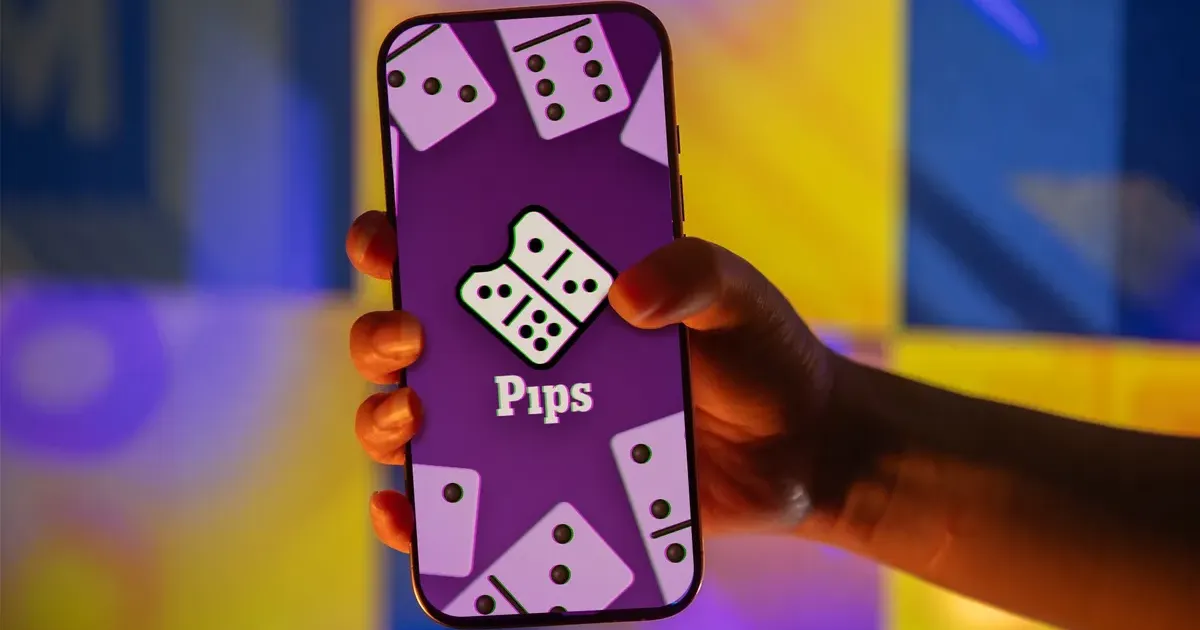
The New York Times reached a serious milestone in its digital evolution as the media giant continued to pivot its primary revenue model toward specialized gaming entertainment. Subscriptions now rely heavily on the daily engagement of users who may never click a political headline, seeking instead the mental challenge of logic puzzles and word associations. On March 29, 2026, players across the globe logged in to find a women's soccer-themed edition of Connections and a complex grid in the newly minted Pips interface. Diversification into these niche puzzle categories helps insulate the company from the volatility of the news cycle. Pips represents the most recent major addition to the gaming suite, having officially joined the roster in August 2025. It functions as a single-player variation of dominoes, tasking participants with placing tiles according to strict color-coded logical constraints. Players must account for specific mathematical conditions that change based on the shaded regions of the board. Unlike traditional dominoes where matching ends is the primary goal, Pips requires users to calculate sums and inequalities across multiple tiles simultaneously. The current iteration of the software offers a total reveals of the solution if a player becomes stuck, a mechanic that forces a complete reset of the difficulty level.
Domino Mechanics Drive Pips Logic
Rules for the March 29, 2026, puzzle involve five distinct logical operators that dictate tile placement. A numerical space requires every pip in that region to add up to the specified total. Equal spaces mandate that every domino half within the zone must possess the same number of pips, creating a uniformity requirement that limits available moves. By contrast, Not Equal spaces demand that every half-tile in the region contain a different number of pips. This creates a spatial puzzle where the player must track previously placed values to avoid logical contradictions. The board often splits tiles, requiring players to satisfy a condition with only half of a physical piece.
Logic dictates that Greater Than and Less Than spaces provide the most flexibility, though they often act as traps for the unwary. These regions require the total pips to exceed or fall below a specific benchmark, allowing for a range of tile combinations. If an area lacks color coding, the New York Times allows any tile placement without restriction. Expert players often use these neutral zones to dump high-value or awkward tiles that do not fit the more rigid constraints of the mathematical regions. Casual users frequently struggle with the interaction between these zones, especially when a single tile spans two different logical requirements.
Sports Edition Expansion and The Athletic Integration
Connections Sports Edition functions as a collaborative effort between the main newsroom and The Athletic, the sports-focused subsidiary acquired to strengthen the publication's reach. Today, the puzzle focuses heavily on women's soccer, requiring a deep knowledge of players, teams, and tournament history. Like the standard version, this game presents a grid of 16 words that must be sorted into four distinct categories of four items each. The difficulty scaling uses a color-coded system where yellow indicates the most straightforward connection and purple represents the most abstract or wordplay-heavy category.
Connections is all about finding the common threads between words.
Mistakes carry a heavy penalty in the Sports Edition, with players allowed only four incorrect guesses before the game concludes. March 29, 2026, presents a particular challenge for generalist fans, as the categories dive into specific rosters and league-specific terminology. To assist players, the interface allows for the shuffling of the word grid, a feature designed to break the mental ruts that occur when words are viewed in a static order. Removing a completed set from the board simplifies the remaining task, yet the final two categories often feature overlapping terminology designed to deceive. The Athletic provides the underlying data and expertise for these puzzles, ensuring that the terminology remains current with the ongoing spring season.
Subscription Retention Through Gamification
Gaming has become the primary driver of digital retention for the company, frequently outpacing traditional journalism for daily active users. While Wordle remains the flagship title of the collection, the introduction of Pips and specialized Connections indicates a move toward hyper-segmentation. Data from previous quarters indicate that puzzle subscribers exhibit far lower churn rates than those who subscribe solely for news coverage. By creating a daily habit that rewards consistent logins, the New York Times has built a defensive moat around its digital ecosystem. The transition from a newspaper to a lifestyle platform is nearly complete.
Financial analysts point to the success of the Games app as a blueprint for other struggling legacy media organizations. Instead of relying on a crumbling advertising market, the company has successfully monetized the human desire for pattern recognition. Daily puzzles create a social currency, as users share their results on messaging platforms and social media, providing free marketing for the subscription service. This viral loop is essential for attracting younger demographics who may view traditional news formats as outdated or overly stressful. The March 29 results show high engagement levels across the new Pips difficulty tiers.
Technical barriers and user experience remain central to whether Pips becomes a durable habit or a novelty inside the Games app.
Pips currently lacks a detailed hint system, which remains a point of contention among the user base. Currently, if a player cannot solve a specific section, the only option provided by the app is to reveal the entire solution. The binary choice between total failure and total spoiled victory leaves little room for a middle ground. Mashable and other third-party guides have stepped in to fill this gap, providing piecemeal answers that function as manual hints. The external ecosystem of guides and tips further drives traffic to the game, as players search for ways to maintain their daily streaks without resorting to the built-in reveal button.
Logic puzzles like Pips require a different cognitive load than word-based games like Connections or Crosswords. The mathematical nature of the game appeals to a segment of the audience that prioritizes deductive reasoning over vocabulary. By offering both, the New York Times maximizes its reach across different cognitive styles. The March 29, 2026, puzzle set highlights this balance, pairing the linguistic gymnastics of a sports-themed Connections with the rigid arithmetic of Pips. The strategic placement of these games within the subscriber app ensures that users spend more time within the ecosystem daily.
What Games Mean for the Times
The transformation of the New York Times into a gamified logic factory is a cynical but necessary surrender to the reality of the attention economy. By burying the investigative reporting beneath a layer of dominoes and word association grids, the Gray Lady has admitted that the news is no longer her primary product. It is not an evolution; it is a retreat into the trivial. When a legacy institution prioritizes the difficulty curve of Pips over the clarity of its front-page reporting, the social contract of the press fundamentally alters.
Is the American public better informed because they can identify four categories of women's soccer stars? Almost certainly not. However, the New York Times board of directors cares more about the $11 billion valuation than the civic health of the electorate. Puzzles are addictive, non-partisan, and cheap to produce compared to a foreign bureau in a war zone. The company has discovered that it is easier to sell a dopamine hit than a difficult truth. The pivot ensures survival at the cost of the institution's soul. The newsroom is now merely the marketing department for a very successful toybox.