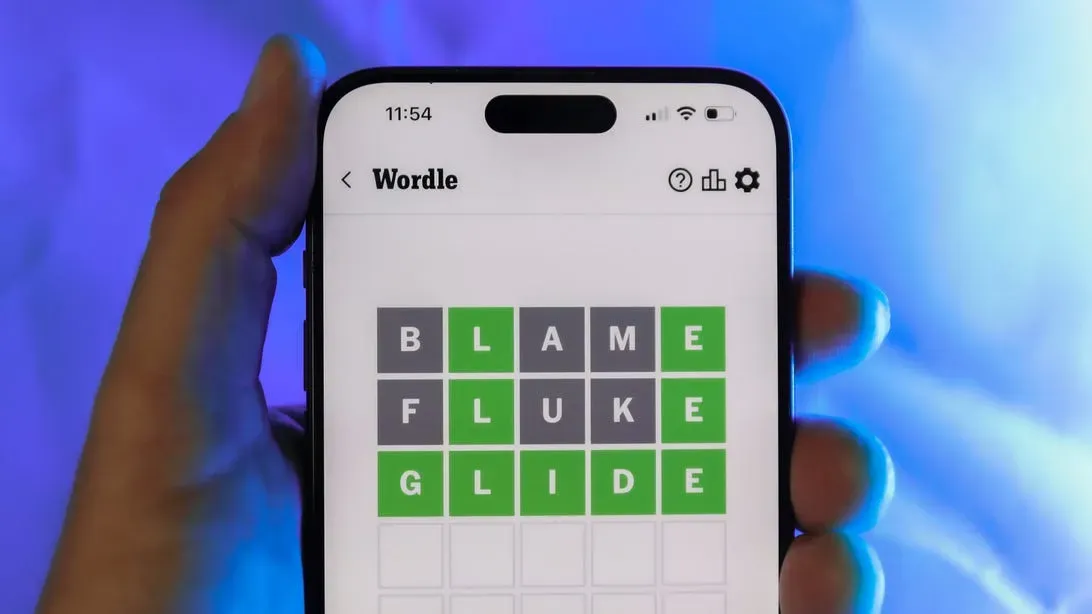
Millions of players across the United Kingdom and United States began their morning by opening the New York Times Games app to solve Wordle puzzle 1735 on Friday. The daily digital habit, which began as a simple gift from software engineer Josh Wardle to his partner, now dictates the early-morning cognitive load for a global audience. March 20 brings a fresh set of challenges for the platform's core trilogy of games, including Connections and the relatively new Strands. Statistics from the media giant indicate that puzzle engagement often outpaces readership of front-page political coverage.

Global engagement with these micro-challenges peaked at 4:00 AM Eastern Time.

Friday's puzzle selection provides a mix of linguistic dexterity and lateral thinking. Wordle 1735 presents a word that describes both a skilled trade and a small vessel. Players who frequently use a starting word rich in vowels, like ADIEU or AUDIO, found limited success in the initial grid. The solution, CRAFT, relies on a cluster of consonants that often trips up casual participants. Data suggests that the average player solves the puzzle in four attempts, though the presence of the letter C and R in the opening positions usually speeds up the identification process.

Meanwhile, the New York Times continues to leverage these games to strengthen its subscription model. Each puzzle acts as a gateway to the broader system of the newspaper. In fact, the company reported that puzzle-only subscribers now number in the millions. This demographic shift has allowed the New York Times to remain profitable while other legacy media outlets struggle with declining advertising revenue. The acquisition of Wordle in 2022 for a price reportedly in the low seven figures remains one of the most successful digital media pivots of the last decade.

Success in these games often depends on pattern recognition rather than raw vocabulary. But the difficulty spikes in Friday's offerings have sparked debate on social media platforms about the fairness of obscure word choices. One user on X noted that the Wordle solution felt less like a common term and more like a technicality. Still, the consistency of the daily refresh ensures that even frustrated players return within twenty-four hours.

Logic remains the only defense against the obscure groupings found in the purple category.

Wordle Evolution and the Psychology of Streaks

Daily players often focus on their streak above the actual enjoyment of the game. For Wordle number 1735, the pressure to maintain a multi-hundred-day record led many to seek hints before their final guess. To that end, puzzle enthusiasts often look for the number of vowels or the presence of double letters. Friday's solution contains only one vowel, an A, positioned in the third slot. This structure typically leads to a higher failure rate among those who do not utilize a varied second-guess strategy. Experts in game theory suggest that the one-a-day limit is exactly what sustains the long-term addiction.

Yet the social aspect of the game remains its most potent weapon. The grid of gray, yellow, and green squares allows for a competitive experience without the need for direct interaction. And the simplicity of the interface has remained largely unchanged since Josh Wardle first uploaded the script to a private domain. It was this lack of friction that originally allowed the game to go viral during the pandemic lockdowns. Even so, the transition to the New York Times system introduced stronger tracking and personalized statistics for every user.

Connections Challenges Logic with Lateral Thinking

Connections puzzle 1013 serves a different cognitive function by requiring players to identify themes across sixteen different words. The editor, Wyna Liu, has become a household name for puzzle fans, known for her ability to hide categories within categories. For instance, Friday's puzzle features a group of words related to speed: Quick, Rapid, Swift, and Fleet. This yellow category is the most straightforward, designed to give players a foothold in the grid. By contrast, the purple category today involves a clever wordplay involving the word Stage, including Stage Name, Stage Fright, Stage Door, and Stage Hand.

Separately, the blue category for March 20 focuses on spices, featuring Mace, Clove, Ginger, and Anise. Many participants found themselves stuck on Mace, which also functions as a tool or a defensive spray. The linguistic ambiguity is the hallmark of the game's design. In particular, the green category today focuses on woodworking tools like Plane, Saw, File, and Drill. Each word in the grid is carefully chosen to have at least two possible meanings, forcing the brain to discard obvious associations in favor of more abstract connections.

The goal is not to find words that fit together, but to find the only four words that fit together in a way that leaves nothing behind.

Players often spend more time on Connections than Wordle because the game permits four mistakes before a total loss. The buffer encourages experimentation, though it can also lead to careless errors. In turn, the social media debate surrounding Connections tends to be more analytical and heated than the Wordle community. One particular grouping in the 1013 puzzle has already been described by early solvers as a classic Liu trap. Logic and patience are the only ways to handle the grid without depleting the allowed attempts.

Strands Expands the New York Times Digital Footprint

Strands puzzle 747 is the newest addition to the daily rotation, a sophisticated take on the classic word search. Friday's theme is Kitchen Essentials, and the spangram is UTENSILS, which spans the entire board from left to right. To solve the board, players must find words like Spatula, Whisk, Grater, Peeler, Ladle, and Tongs. Each letter is used exactly once, and words can twist in any direction, provided the letters are adjacent. According to data from the NYT Games beta testing phase, Strands has the highest completion rate among younger audiences.

At the same time, the inclusion of Strands illustrates the company's desire to own the entire morning routine. If Wordle is the appetizer and Connections is the main course, Strands is the dessert. It is less punishing than the other two games because finding non-theme words provides hints to reveal the actual theme words. Still, the complexity of the grid in puzzle 747 has challenged even seasoned veterans. The board today is particularly dense with overlapping letters, making it easy to miss the shorter words like Tongs or Whisk.

Word games have effectively replaced the morning news crawl for a major portion of the workforce. The shift in behavior has deep implications for how media companies value their digital properties. The New York Times is no longer just a newspaper, it is a gaming platform that happens to report the news. With Wordle 1735, Connections 1013, and Strands 747, the publication has secured its place in the daily lives of millions of people. Each click on the games page is a data point that helps the company refine its retention strategies for the next decade.

The Elite Tribune Perspective

Why do we congratulate ourselves for identifying four synonyms in a digital grid while the actual world burns around our glowing rectangles? The current obsession with the New York Times puzzle suite is not a proof of a sudden surge in global literacy, but rather a surrender to the gamification of our dwindling attention spans. We have traded the hard work of civic engagement for the cheap dopamine of a five-letter word streak.

It is a brilliant business move by the New York Times, which has effectively masked the decline of investigative journalism by selling us a series of linguistic parlor tricks for a monthly fee. The platform has transformed from a pillar of democracy into a glorified arcade. We should be skeptical of any entity that finds it more profitable to help us find the word CRAFT than to help us understand the complexities of international trade or domestic policy. The morning ritual is no longer about being informed, it is about being occupied.

We are not solving puzzles, we are being processed by an algorithm that knows exactly how many yellow squares it takes to keep us from clicking away to a competitor. If this is the future of the fourth estate, then the crossword was a warning we all failed to solve.