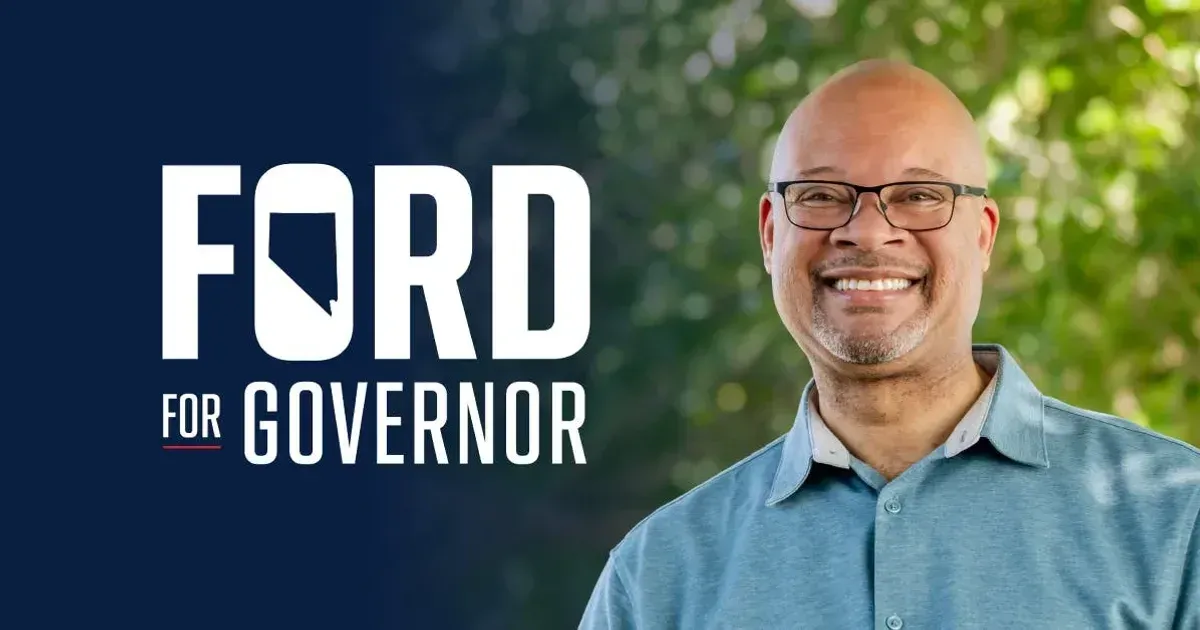
Aaron Ford has won the Nevada Democratic nomination for governor, setting up a fall race against Republican Gov. Joe Lombardo in one of the clearest battleground tests of the midterm cycle.
Ford, the state attorney general since 2019, defeated Washoe County Commissioner Alexis Hill after running a primary campaign that largely looked past the Democratic field and toward Lombardo. The June 9, 2026 primary now turns Nevada from an intraparty contest into a direct fight over the incumbent governor's record.
The match-up gives Democrats a statewide nominee with a legal and consumer-protection record, while Republicans enter the general election behind a sitting governor who has emphasized jobs, education and public safety. It also gives both national parties a clean test of whether legal resistance to the Trump administration still motivates swing-state voters or whether local management issues now dominate the conversation.
Nevada has remained closely divided in recent federal and statewide races, making the governor race a likely national spending target.
Ford Turns Toward Lombardo
Ford's campaign framed the attorney general as a Democrat willing to challenge federal Republican policies and corporate actors. AP reported that he has joined Democratic attorneys general in lawsuits against the Trump administration over issues including tariffs and higher-education funding cuts, and has also pursued litigation against social media companies over allegations that platforms were designed to be addictive for children.
That record gives Ford a way to campaign as both a legal officer and a partisan counterweight. It also gives Lombardo a predictable line of attack: portraying Ford as aligned with national Democrats at a moment when Nevada voters are also worried about housing costs, energy demand and public services.
Ford will try to turn his attorney general record into an argument about protection: protection from federal cuts, abusive corporate conduct and policies he says would raise costs for ordinary families. The challenge is that a courtroom-oriented record can sound abstract unless the campaign ties it to bills, wages and schools. Lombardo, a former sheriff, has tried to occupy a narrower lane during his first term. He vetoed a record number of bills from the Democratic-majority Legislature, but also worked with Democrats on teacher pay and education reform. That mix is likely to become his central case to swing voters: conservative enough to block Democratic overreach, pragmatic enough to govern a divided state.
Money and message discipline will matter quickly. Nevada media markets are expensive enough to punish vague campaigns, and both sides will need Spanish-language, union, suburban and rural outreach that sounds local rather than imported from Washington. Ford enters with statewide name recognition, but Lombardo enters with the advantage of having already governed through a divided legislature.
Why Nevada Is a Hard State to Predict
Nevada politics rarely moves in a straight line. The state combines strong union organizing, a large service-sector workforce, fast population growth and a high share of nonpartisan voters. Those conditions can help Democrats in a presidential year, but they do not guarantee easy statewide victories in a midterm.
The state open attorney general contest may add another layer, because Ford's departure from that office creates a separate debate over law enforcement, elections and lawsuits against Washington. That down-ballot fight could reinforce Ford's message or complicate it, depending on whether Democrats keep the focus on rights and affordability or let Republicans define the legal agenda as partisan warfare. Ford would be Nevada's first Black governor if elected. That milestone may help nationalize attention around the race, but the campaign is more likely to be decided by practical questions: housing affordability, school performance, energy costs and whether voters believe the state government has managed growth competently.
Republicans will argue that Lombardo has provided stability in a narrowly divided state. Democrats will argue that Ford can protect Nevada from federal and corporate pressure while pushing a more aggressive agenda on affordability and public services. Both campaigns will need to speak to voters who do not reliably identify with either party.
Election Stakes in the Desert
The governor race will test whether Nevada voters treat Lombardo as a local executive with cross-party appeal or as part of a national Republican coalition tied to Donald Trump. The answer will shape more than one office, because governor races often decide veto power, agency direction and the pace of state policy even when Washington is locked in partisan conflict.
Ford will try to make the contest a referendum on legal accountability, consumer protection and the direction of state government. Lombardo will try to keep it grounded in management, crime and education.That distinction is strategically important. If the race becomes a national proxy fight, Democrats may benefit from turning out voters who are alarmed by federal Republican power. If it becomes a job-performance election, Lombardo may have more room to separate himself from Washington and force Ford to answer for Democratic control of the Legislature. Nevada's small margins mean neither side can afford a campaign built only for its base.