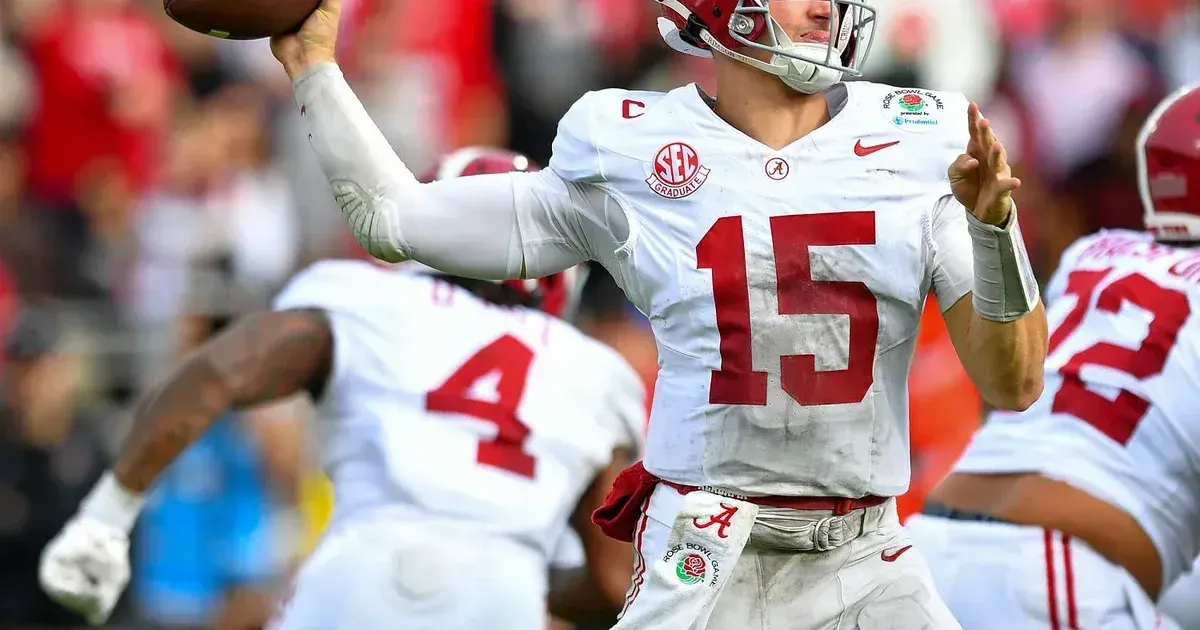
NFL executives and scouting departments gathered in high-security war rooms on April 23, 2026, to finalize their selections for the league's annual talent acquisition event. Ty Simpson, the standout quarterback from Alabama, enters the evening as the primary focus of debate among analysts and franchise owners. Front offices across the league spent months evaluating tape and medical reports before tonight's 8 p.m. ET kickoff. Pressure mounts for teams holding top-five selections because the success of these picks often dictates the employment security of general managers for the next five years.
Major scouting services have failed to reach a consensus on whether Simpson is a generational talent or a high-risk developmental project. The draft starts tonight in Green Bay with millions of viewers expected to tune in across multiple networks.
Ty Simpson and the First Round Quarterback Puzzle
Rumors regarding Simpson's draft stock have fluctuated wildly during the pre-draft process, leading to substantial uncertainty for teams in the middle of the first round. While some scouts point to his mobility and arm strength as elite traits, others highlight a lack of consistent production against top-tier SEC defenses. Alabama coached him through a complex offensive system that rarely allowed for the improvisational style many NFL teams now crave. Evaluation metrics used by the league often prioritize these physical tools over raw statistics. Scouts from several AFC North teams reportedly met with Simpson for private workouts in early April. Teams must decide if his potential outweighs the immediate polished performance of rival prospects.
Quarterbacks selected in the first round carry a unique financial burden due to the league's rookie pay scale. A top-ten selection typically commands a fully guaranteed four-year contract exceeding $38 million, creating a high-stakes environment for any franchise searching for a franchise foundation. Despite the risks, the desperation for elite quarterback play usually pushes these prospects higher than their grades might suggest. Several franchises traded future assets to move up in the order, hoping to secure their choice before the market thins out. Simpson remains the focal point of these maneuvers. His decision to bypass certain drills at the scouting combine added a layer of mystery to his final evaluation.
Draft Order Dynamics and Front Office Strategy
Selection priority for the NFL Draft follows a specific hierarchy based on the previous season's standings and subsequent postseason results. Teams that finished with the worst records pick first, while the defending Super Bowl champion selects last at number 32. This rigid structure aims to promote league parity by giving struggling teams access to the most elite collegiate talent available. Draft order changes frequently through trades, as general managers leverage their draft capital to acquire veteran players or move into better positions. Tonight’s first round features 32 selections that will likely take over four hours to complete. Each team is allotted ten minutes to turn in their choice once they are officially on the clock.
Front offices use complex game theory to predict the moves of their rivals during the first thirty picks. Every transaction in the top ten creates a wider effect that alters the availability of players for teams drafting in the twenties. Scouting directors often have alternate boards prepared for every possible scenario to avoid panic during the live broadcast. Logic dictates that if three quarterbacks go in the top five, elite defensive prospects will slide down to teams that originally expected to pick offensive players. This strategic depth is why the first round is considered the most critical phase of the offseason. Negotiations for trade-ups often happen in seconds over private phone lines.
"The 2026 NFL Draft order determines the future of struggling franchises for the next decade," according to official league documentation regarding the selection process.
Drafting a bust in the first round can set a franchise back years both on the field and for salary cap management. By contrast, hitting on a late first-round pick provides a team with a cheap, high-impact starter for five years including the fifth-year option. Analytics departments now play a larger role than ever in determining which positions provide the best value at specific draft slots. Cornerbacks and wide receivers have seen their values skyrocket in response to the league's pass-heavy rules. Teams like the Dallas Cowboys and San Francisco 49ers have historically excelled at finding value in these middle-round areas. Tonight’s order shows exactly when each fan base can expect their team to address these needs.
Broadcast Logistics and Financial Impact
Broadcasters at ESPN, ABC, and NFL Network have prepared elaborate sets to capture every emotional reaction from the green room. Television rights for the draft contribute a significant part of the league's annual revenue, which now exceeds 2.4 million dollars per hour of airtime during peak events. Fans can watch the proceedings through traditional cable or various streaming platforms including NFL Plus and FuboTV. High-definition cameras are stationed at every team facility to provide live looks into the decision-making process. The spectacle has grown from a quiet hotel meeting into a multi-day festival that generates hundreds of millions for the host city. Green Bay expects record attendance for the three-day event.
Commercial breaks are carefully timed to ensure that major picks occur during high-traffic viewing periods. Corporate sponsors pay premium rates to have their logos associated with the first-round picks of the most popular franchises. This commercialization of the scouting process has turned amateur athletes into household names before they ever take a professional snap. Merchandise sales for top picks usually spike within minutes of the commissioner announcing the name on stage. Retailers have jerseys ready for immediate production the moment a selection is finalized. The league's marketing machine ensures that the draft is as much about fashion and branding as it is about football. Ty Simpson’s suit choice is already a topic of social media speculation.
International interest in the draft has also increased, with broadcasts reaching over 100 countries. NFL expansion efforts into European and South American markets have made the selection process a global interest point for sports fans. Foreign-born prospects are beginning to appear more frequently in the early rounds, reflecting the success of the league's international pathway program. The globalization increases the pressure on teams to find talent outside traditional American football hotbeds. Tonight’s broadcast will feature commentary in multiple languages to accommodate this expanding demographic. The league continues to prioritize these broadcasts as a primary tool for international brand growth.
Ty Simpson Faces First-Round Draft Scrutiny
Professional football has transformed into a high-stakes data science operation where human intuition is increasingly sidelined by algorithmic projections. The obsession with Ty Simpson shows a broader systemic failure in how the league evaluates the quarterback position. Teams are no longer drafting players based on their ability to win games; they are drafting archetypes that fit a pre-determined statistical model of success. The reliance on metrics ignores the psychological resilience required to lead a locker room of professional athletes.
When a franchise spends a top-five pick on a prospect based on a 40-yard dash time or a specific arm angle, it is engaging in a form of institutional gambling that often ignores the human element. The result is a cycle of bust-and-rebuild that leaves fan bases frustrated and franchises in perpetual mediocrity.
Corporate interests have also sanitized the draft process to the point of absurdity. What was once a gritty room of scouts smoking cigars and arguing over tape is now a polished television product designed to maximize ad revenue. The manufactured drama of the green room serves the broadcaster, not the sport. High-stakes personnel decisions should not be treated like a reality television finale. The prioritization of spectacle over substance dilutes the professional integrity of the sport. The league's focus on marketing these young men as brands before they are players is a dangerous precedent. It creates an environment where the pressure of external expectations often outweighs the internal development of the athlete.
Calculated risk management will always be part of the game, but the current trajectory is unsustainable. If the league continues to prioritize television ratings over the raw reality of the sport, the draft will lose its remaining shreds of authenticity. The final assessment of the 2026 class will not be written tonight. It will be written in the training camps and on the sidelines where data points disappear. Professional football must return to its roots of scouting character and competitive fire. Stop the gimmicks.