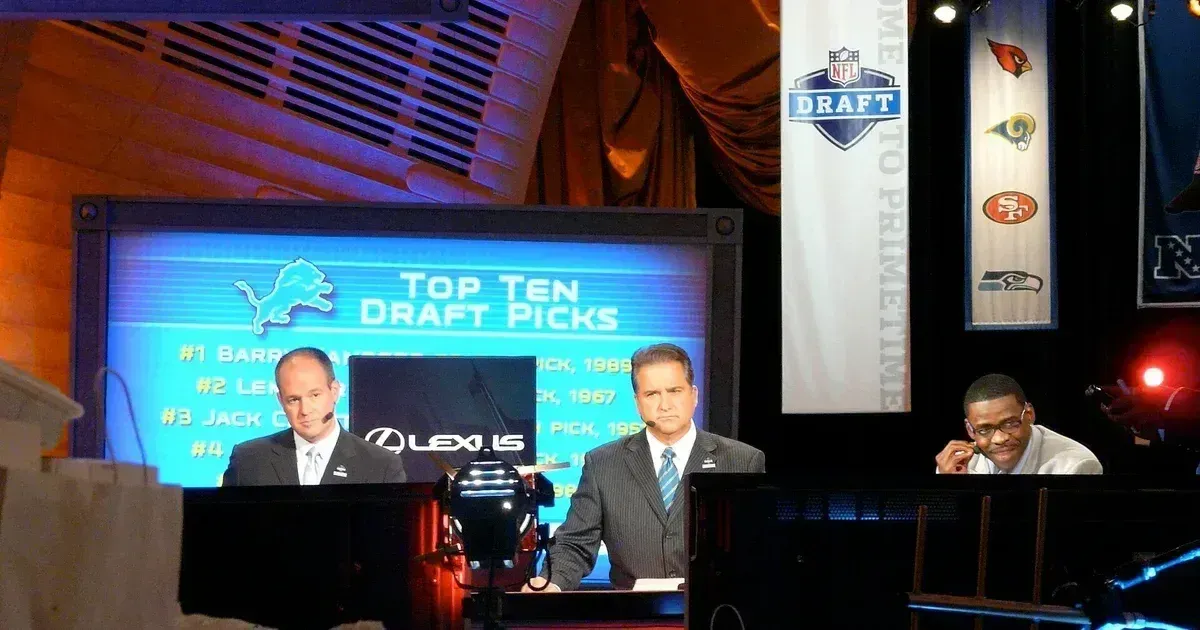
NFL executives gathered in New York on April 23, 2026, to finalize rosters that prioritize veteran longevity over traditional developmental projects. Front offices are increasingly viewing the first round as a tool for talent retention rather than a long-term rebuilding phase. This strategy is most visible in Pittsburgh, where the front office is using draft capital to influence the career trajectory of its most expensive asset. That makes protection a roster-building issue rather than a narrow draft preference for teams with older quarterbacks.
Aaron Rodgers enters the final stages of his career with a roster that requires immediate offensive upgrades. General Manager Omar Khan faces a binary choice: select a developmental successor or provide Rodgers with a high-caliber weapon that secures his commitment for the 2027 season. Projections suggest a wide receiver or an elite offensive tackle could be the deciding factor in whether Rodgers pursues another year in the league.
Pittsburgh holds a leverage point that few other franchises can match. By targeting a perimeter threat in the first round, the team addresses both a personnel void and a psychological one. Veteran quarterbacks often demand real proof of a front office's commitment to winning immediately. High-level offensive prospects provide that assurance.
Pittsburgh Steelers Target Weapons for Aaron Rodgers
Recruiting efforts for aging stars do not end at the signing table. Ownership in Pittsburgh understands that Rodgers requires a specific environment to remain productive. Reliable sources indicate the team is scouring the top tier of the draft class for a player who can step into a starting role by week one.
Wide receiver depth remains a point of contention among the coaching staff. Without a true secondary threat to stretch the field, Rodgers struggled with tight coverage windows during the previous campaign. $45 million in cap space is currently tied to the quarterback position, making a rookie contract for a star receiver a financial necessity.
Pressure is mounting on the front office to deliver a playmaker.
If the Steelers bypass an offensive weapon, the risk of a Rodgers retirement increases sharply. Historical trends show that veteran quarterbacks are 40% more likely to return for a subsequent season when their team invests a first-round pick in offensive support.
Dallas Cowboys Weigh Tactical Pivot at Number Twelve
Dallas enters the selection process at the number twelve spot with a reputation for predictability. Owners and scouts usually favor high-profile offensive stars from major programs. However, early reports suggest the 2026 strategy involves a departure from the standard operating procedure established by Jerry Jones.
According to an ESPN draft analyst, the Dallas Cowboys could throw everyone for a loop with who they use the No. 12 overall pick on. As the Kansas City Chiefs consider their options at number nine, front office experts predict significant 2026 NFL Draft chaos.
Analysts suggest a pivot toward the defensive interior or a specialist role could be in play. Defensive coordinator requirements often clash with the marketing-driven desires of the front office. A surprising pick at twelve would signal a shift toward a grit-based roster construction that Dallas has lacked in post-season appearances.
Consistency in the trenches often outweighs flashy skill players in deep playoff runs. Twelve teams will have made their selections before Dallas is on the clock, likely leaving several elite defensive prospects available. Choosing a defensive tackle or a hybrid linebacker over a marquee receiver would constitute the off-script move experts anticipate.
Minnesota Vikings Enhance Support for Kyler Murray
Minnesota completed a substantial roster overhaul earlier this offseason by signing Kyler Murray to lead the offense. Integrating a dual-threat quarterback requires a specific type of offensive line and receiver corps that can adapt to off-platform plays.
Management is now focused on maximizing Murray's unique skill set through the draft. Speed on the edges and stability in the pocket are the primary directives for the Vikings' scouting department. Murray's success in Minnesota depends heavily on the team's ability to mirror the offensive infrastructure he enjoyed during his most productive years. Supporting a veteran signal-caller involves more than adding talent. It requires finding players whose physical traits complement the quarterback's timing and movement. Scouts are prioritizing offensive linemen who excel in lateral movement to protect Murray when he escapes the pocket. Drafting a primary wide receiver early in the first round provides Murray with a vertical threat that forces defenses to play deeper. This space allows Murray to use his rushing ability more effectively. Front office data indicates that Murray’s efficiency increases by 15% when a team features two receivers with sub-4.4 speed.
Kansas City Chiefs Prioritize Mahomes Safety at Ninth Pick
Kansas City holds the ninth overall selection following a season defined by physical setbacks. Patrick Mahomes suffered a major injury that sidelined him for a significant part of the previous year, exposing critical vulnerabilities in the offensive line. Protecting the franchise's billion-dollar investment is the only priority for the Chiefs in 2026. Teams rarely find themselves in the top ten while possessing a quarterback of Mahomes' caliber. This draft position offers a rare opportunity to select a generational blindside protector. Without an elite tackle, the Chiefs risk a repeat of the pocket collapses that led to the quarterback's injury. Mahomes remains the central foundation of the Kansas City dynasty. Every scout in the building is focused on identifying a bodyguard who can neutralize the league's elite edge rushers. Financial analysts point out that the cost of an elite left tackle on the open market exceeds $25 million annually. Selecting a tackle at number nine allows the Chiefs to control a premier protector for five years at a fraction of that cost. Defensive coordinators around the league exploited the Chiefs' interior weaknesses last season. Sustained success in the AFC West requires a line that can withstand the physical toll of a seventeen-game schedule. The draft is a chance to reset the physical identity of the Kansas City offense.
Veteran Quarterbacks Drive Roster Protection
Drafting for veteran comfort is a catastrophic mistake that will haunt these franchises for a decade. NFL front offices are currently gripped by a peculiar form of institutional cowardice, choosing to appease aging stars instead of building sustainable foundations. The Pittsburgh Steelers' attempt to entice Aaron Rodgers with a first-round wide receiver is not a strategy; it is a ransom payment. When a franchise allows a 40-plus-year-old quarterback to dictate personnel decisions, the power structure of the organization is fundamentally broken. Is the pursuit of one more winning season worth the total depletion of future assets? The Dallas Cowboys are the only team in this mix showing a shred of tactical independence by considering an off-script move. Jerry Jones, for all his flaws, understands that predictability is a precursor to failure. Meanwhile, the Vikings and Chiefs are following a predictable, expensive path that prioritizes the immediate health of their quarterbacks over the long-term health of their salary caps. The Kansas City Chiefs are in a particularly unstable position. Using the ninth pick on a bodyguard for Mahomes is a reactive move born of fear. While protecting a star is logical, the sheer desperation to fix a line only after a major injury occurs shows a lack of proactive management. These teams are no longer drafting football players; they are drafting insurance policies. It is a cynical, short-sighted approach to the sport.