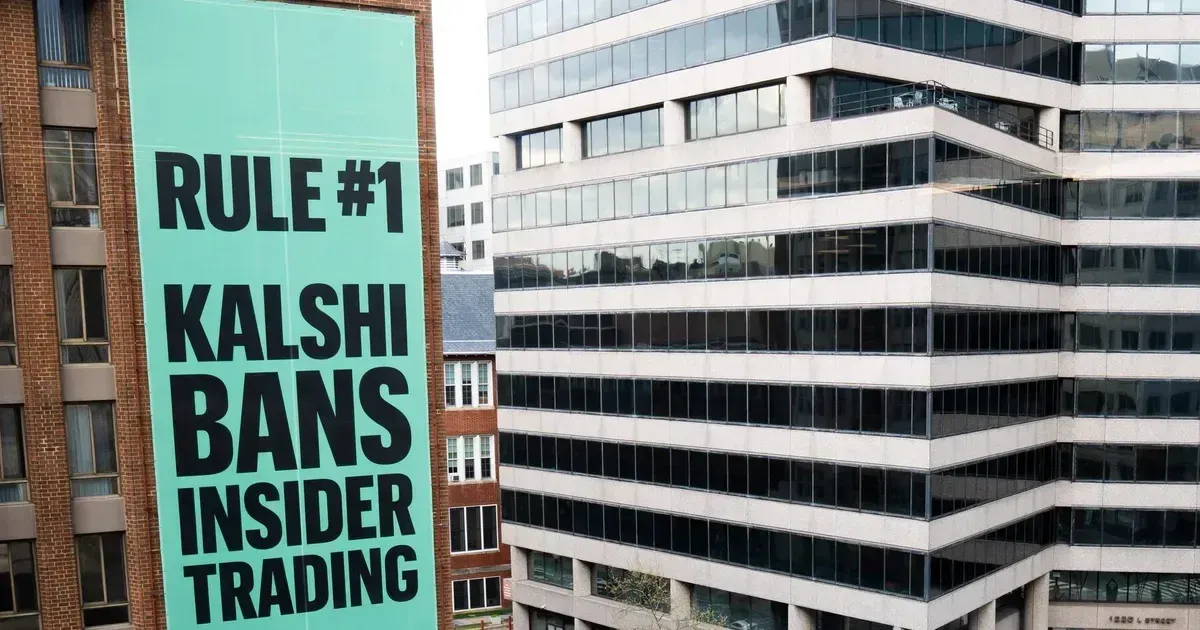
Kalshi’s suspension of three candidates accused of betting on their own elections puts insider information and electoral incentives at the center of prediction-market scrutiny. Kalshi executives confirmed on April 23, 2026, that the platform suspended three political candidates for allegedly trading on the outcomes of their own elections. Internal compliance reports indicate the individuals attempted to leverage non-public polling data to secure financial gains. These suspensions highlight the growing tension between financial innovation and the sanctity of the electoral process. Commodity Futures Trading Commission officials initiated an immediate inquiry into the platform's oversight mechanisms. Security logs show the trades occurred over a period of several weeks before detection. Trading activity spikes usually alert regulators to potential anomalies, but these specific accounts used hidden patterns.
Prediction market platforms allow users to buy and sell contracts based on the probability of real-world events. While Kalshi has long fought for the right to host political contracts, the discovery of insider trading by actual participants creates a new legal crisis. Federal law prohibits candidates from using campaign resources or proprietary knowledge for personal financial enrichment. Analysts at major financial firms suggest this breach could lead to a permanent ban on such contracts. Market liquidity for the affected races dropped 40 percent following the announcement. Investors now worry that the entire election betting sector lacks sufficient guardrails.
Three candidates are currently under investigation by both the company and state-level ethics boards. Records show the suspended accounts were linked to campaigns in at least two different states. Internal audits suggest the volume of trades exceeded six figures in one specific instance. Verification of identity is required for all Kalshi users, which allowed investigators to trace the funds back to the candidates. Initial findings indicate that the participants believed they could hedge against a potential loss. Financial data reveals a heavy concentration of 'No' votes on their own victory contracts.
Corruption in election forecasting is now a quantifiable market reality.
Federal Regulators Scrutinize Election Prediction Markets
Commodity Futures Trading Commission attorneys previously argued that election markets resemble gambling more than legitimate hedging instruments. Judges in Washington, however, ruled in favor of Kalshi in late 2024, allowing the contracts to proceed under strict guidelines. These new violations provide the commission with fresh evidence to challenge that ruling in appellate courts. Enforcement officers are now demanding full access to the trading history of all political figures registered on the site. Such a move would be a major expansion of federal oversight into private financial platforms.
The current investigation focuses on whether the platform's automated flagging systems failed to recognize the conflicts of interest. Regulators want to know why it took weeks to identify the prohibited behavior. Information gathered from the subpoenaed servers suggests the candidates used a network of associates to place some of the bets. This coordinated effort points toward a deeper level of premeditation than originally suspected.
Lawmakers in the Senate Banking Committee scheduled an emergency hearing for next month to address the scandal. Public confidence in election results is already at a historic low, and the presence of financial incentives to lose only complicates the narrative. Betting on elections creates a perverse incentive structure for public officials. Critics argue that a candidate who has bet against themselves might deliberately underperform in debates or starve their own campaign of resources. The total handle for political betting in the 2026 cycle has already surpassed $100 million, making the stakes higher than ever before.
Regulatory capture is a secondary concern for those who fear the market could be used to manipulate public perception. High contract prices often act as a psychological indicator of momentum, potentially influencing undecided voters. This incident follows federal scrutiny of other platforms like Polymarket regarding suspicious bets on geopolitical outcomes.
Internal Kalshi Audit Reveals Candidate Betting Violations
Newsweek reported on Wednesday that the company discovered the breach during a routine sweep of high-volume accounts. While the names of the candidates remain withheld pending formal charges, the races impacted span both the House and local state offices. Compliance officers noted that the accounts violated specific terms of service introduced just six months ago. These rules explicitly forbid candidates, campaign staff, and immediate family members from participating in contracts related to their own contests. Some of the trades involved complex derivatives that paid out more if the margin of defeat was larger.
This specific type of betting suggests the candidates had detailed knowledge of their own failing poll numbers. Investigation teams found that the candidates accessed the platform primarily through encrypted mobile devices. Logs from the platform's API show the trades were often placed immediately after internal campaign briefings. Transparency reports from the platform indicate that other users were disadvantaged by this informational asymmetry.
Three political candidates have been suspended from Kalshi for insider trading, company officials said Wednesday.
Platform developers are now working on a real-time verification bridge with federal election databases. This system would automatically flag any registered candidate who attempts to open a position on a political contract. Whether such a system can be bypassed by using third-party proxies stays a point of contention among cybersecurity experts. Both the New York Times and Reuters have cited sources claiming the FBI is looking into potential wire fraud charges. Evidence of coordinated betting across multiple platforms would suggest a broader conspiracy to rig the prediction markets.
Public filings from the company show that it has spent millions on legal defense over the past year. Maintaining market integrity is essential for the survival of the prediction model. Investors have pulled millions from the platform over the last twenty-four hours.
Insider Trading Allegations Reach State Level Campaigns
State prosecutors in the affected districts have opened their own grand jury probes into the suspended candidates. Local election laws often have strict prohibitions against any activity that could be construed as bribery or self-dealing. Betting against oneself falls into a legal gray area that most statutes did not anticipate. Proponents of prediction markets say the actions of three individuals should not discredit the entire concept of the wisdom of crowds. They argue that the markets actually provided the data necessary to catch the offenders.
Financial records show that one candidate deposited funds directly from a campaign-adjacent PAC into their trading account. The direct link between political contributions and betting markets is a worst-case scenario for campaign finance reformers. Information leaked from the audit suggests the trades were profitable until the accounts were frozen. Any recovered funds will likely be held in escrow until the legal proceedings conclude. Public officials must now disclose their digital asset and prediction market holdings in several jurisdictions. Regulators cannot ignore the incentive for candidates to lose on purpose if the payout is high enough.
Legislative Response to Political Prediction Platforms
Congressional leaders are drafting the Election Integrity in Finance Act to explicitly ban all political wagering. Support for the measure is surprisingly bipartisan, as both parties fear the influence of dark money in betting pools. Similar bans already exist in several European jurisdictions where sports betting is legal but political betting is restricted. If the bill passes, Kalshi would lose its most profitable sector overnight. Business leaders within the fintech industry are lobbying for a compromise that involves stricter reporting rather than a total prohibition. Every major polling firm has faced questions about whether their data is being leaked to traders before public release. Candidates are now being asked to sign pledges that they will not engage in any form of wagering during their campaigns. Trading volume on rival platforms like Polymarket has also seen a sharp decline as users fear a wider crackdown. New York and California are considering state-wide bans on the apps regardless of federal rulings. Questions about the ethics of profiting from democracy will likely dominate the upcoming legislative session.
Candidate Betting Scandal Tests Market Integrity
Political wagering operates under the delusion that prices reveal truth, yet the Kalshi suspensions expose a far more predatory mechanism at work. Betting markets do not just predict outcomes; they create incentives for actors to manipulate the very events they are betting on. If a candidate can profit more from a loss than a win, the democratic process transitions from a public service to a private short-sell. It is not about market efficiency. It is about the fundamental erosion of civic trust in favor of a ticker symbol. Washington must stop treating these platforms as harmless novelties or technological breakthroughs. They are unregulated casinos masquerading as financial instruments. Every dollar placed on an election outcome is a dollar bet against the idea that votes should be the only currency of power. When candidates begin hedging their own careers, the integrity of the office becomes a secondary concern to the liquidation of a position. We are no longer watching a race; the trajectory points to a trade. Either the federal government bans these contracts entirely or it accepts that the next presidency will be owned by whichever hedge fund has the most accurate polling data. The house always wins, but in this case, the house is the republic itself.