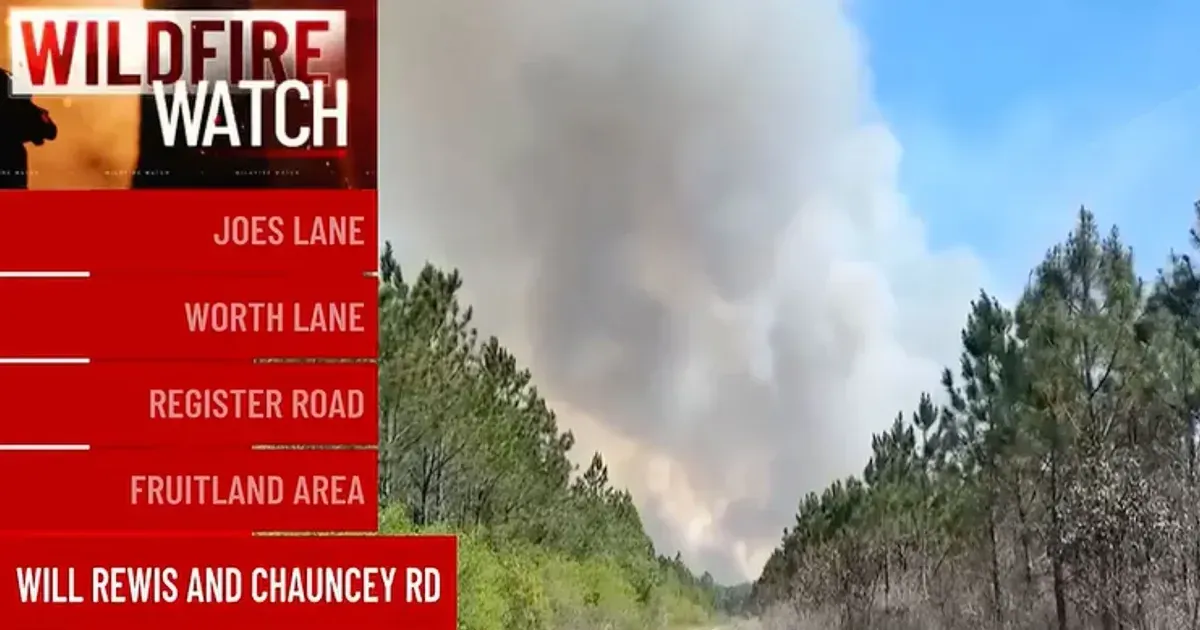
A 17,000-acre wildfire near the Georgia-Florida border has destroyed at least 50 homes, forced evacuations and pushed smoke as far as Atlanta and Savannah. Georgia officials ordered residents to flee their homes on April 22, 2026, as an uncontained wildfire consumed 17,000 acres in the southern portion of the state. Rapidly shifting winds pushed flames through timberlands near the Florida border, destroying at least 50 homes by Wednesday afternoon. Clinch County emergency responders described the situation as a fast-moving front that outpaced initial containment efforts before ground crews could establish a perimeter.
Smoke from the blazes drifted hundreds of miles north, reaching Atlanta and Savannah. Residents in these metropolitan areas reported visibility issues and a sharp decline in air quality throughout the morning hours. Regional health authorities issued warnings for individuals with respiratory conditions, advising against outdoor exertion while the haze persists.
17,000 acres have already been charred, yet the fire stays only 10% contained. This lack of control forced the Georgia Forestry Commission to take historic regulatory action to prevent further ignitions. They announced a mandatory burn ban across 91 counties in the lower half of Georgia to reduce the risk of new outbreaks.
Northeast Florida faced similar threats as the fire perimeter expanded southward into dense woodland. Local school districts in impacted Florida counties closed campuses to ensure student safety. Families in the direct path of the fire gathered belongings and sought shelter in temporary evacuation centers established by local relief agencies.
Georgia Forestry Commission Issues Historic Burn Ban
Drought conditions across the Southeast created a volatile environment for fire ignition over several weeks. The Georgia Forestry Commission noted that this is the first time in the organization's history that a mandatory burn ban has covered such a wide geographical area. This decision reflects the severity of the dry spell affecting the region.
Officials stated that any outdoor burning, including campfires and debris disposal, is strictly prohibited until further notice. State investigators are currently looking into the cause of the initial spark in Clinch County. Initial reports suggest a combination of low humidity and high winds accelerated the spread across dry timber tracts.
Local firefighting crews joined state resources to establish fire lines. Heavy machinery moved through dense pine forests to create gaps in fuel sources. These efforts faced challenges from the terrain and the unpredictable nature of the wind.
High winds continue to push embers ahead of the main fire line. This behavior creates spot fires that bypass existing barriers. Firefighters prioritize life and property over total containment while the wind remains a dominant factor.
Florida School Closures and State Border Logistics
Florida emergency management teams coordinated with Georgia counterparts to manage the cross-border crisis. Schools in northeast Florida stayed shuttered on Wednesday to prevent children from being exposed to thick smoke. Buses were diverted to assist with evacuation efforts in rural neighborhoods near the fire front.
Nassau County and Baker County in Florida monitored the fire's progression closely. Firefighters there established defensive positions around residential developments to prevent a repeat of the losses seen across the border in Georgia. Resources from across the Florida Panhandle arrived to support local units.
"The rapid expansion of this fire across state lines has strained our regional response capabilities, requiring an immediate shift in resource allocation," stated a spokesperson for the Georgia Forestry Commission.
Fifty homes are now confirmed destroyed, leaving dozens of families displaced. Relief organizations established aid stations to provide food and water to those who fled with only what they could carry. Assessments of the total property damage will continue once the fire front moves past residential zones.
Atlanta Air Quality Declines Under Heavy Smoke Plume
Atlanta residents woke to a hazy horizon as the smoke plume settled over the city. Visibility at Hartsfield-Jackson Atlanta International Airport was reduced, though flight operations continued with minimal delays. Public health officials advised people to stay indoors and keep windows closed. Savannah experienced similar atmospheric conditions, with the smell of burning timber widespread throughout the historic district. Meteorologists expect these conditions to persist until at least Thursday. Air quality sensors in the affected region showed levels categorized as unhealthy for sensitive groups. Environmental data indicate that the drought preceding these fires was one of the most severe in recent decades. The lack of rainfall left forest floors covered in dry pine needles and dead wood, which acted as an accelerant. Climate analysts pointed to a pattern of decreasing spring precipitation in the Southeast.
Economic Impact of Timber Losses in Southern Counties
Timber production is a primary economic driver in southern Georgia and northeast Florida. The destruction of 17,000 acres represents millions of dollars in lost revenue for local landowners and mill operators. Recovery for these managed forests will take years of replanting and growth. Local officials worry about the long-term impact on the regional supply chain. Sawmills rely on a steady flow of timber from these specific counties. Prolonged fires could disrupt operations and lead to temporary layoffs in the forestry sector. Firefighters expect to spend several weeks reaching full containment. The perimeter stays active, with spot fires jumping over established lines in several locations. Ground crews rely on aerial water drops to cool the most intense sections of the fire.
Georgia Wildfires Test Emergency Readiness
Why does a region known for its humidity suddenly find itself mimicking the tinderbox conditions of the American West? The current crisis in Georgia and Florida reveals a deep failure in long-term forest management and an inability to adapt to shifting precipitation patterns. Authorities are reacting to the flames with historic bans, but these are defensive measures taken after the damage is already visible. The destruction of 50 homes is a signal that the Southeast is entering a new period of environmental volatility. Policymakers must stop treating these events as anomalies. Reliance on federal disaster funds to patch up recurring systemic issues is a fiscal dead end. If Georgia and Florida do not implement more aggressive controlled burning programs and stricter zoning laws near wildland-urban interfaces, the 17,000-acre figure seen today will soon look like a minor skirmish. Administrative lethargy has allowed dry fuel to accumulate for years. Prepare for more fire. Failure to act now guarantees future catastrophe. The smoke over Atlanta is a visible reminder of administrative failure. The cost of inaction is too high.