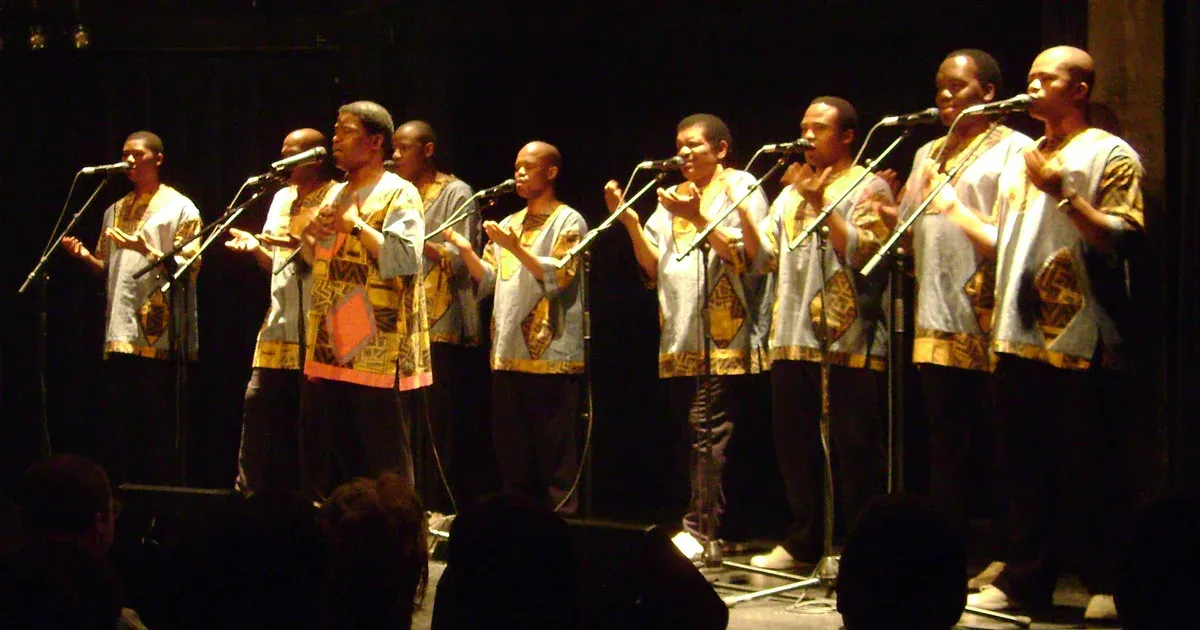
Albert Mazibuko's death closes one of the longest chapters in South African choral music. The primary tenor and longest-serving member of Ladysmith Black Mambazo was 77.
His career linked hostel competitions, anti-apartheid cultural memory and a later global stage. The group confirmed that Mazibuko died on April 6, 2026, after a life spent carrying isicathamiya from KwaZulu-Natal competitions to major concert halls around the world.
Historical Roots of the Isicathamiya Tradition
Isicathamiya, the genre Mazibuko championed for half a century, emerged from the harsh conditions of South African mines and hostels in the early 20th century. Migrant workers, separated from their families and forced into cramped living quarters, used song as a primary means of cultural survival. Since they lived in close proximity to supervisors and other workers, they developed a style of dancing that involved light, tiptoeing footwork to avoid making noise. This physical restraint mirrored the vocal restraint required to create the genre's characteristic blend of deep bass and soaring tenors.
Early performances were strictly competitive affairs held on Saturday nights. These events provided more than entertainment; they were an essential connection to home for men working in industrial centers like Johannesburg and Durban. Mazibuko often spoke about how these roots grounded the group, even as their audience transitioned from Zulu miners to international royalty. He viewed the music as a living record of his people's history and evidence of their endurance. By the time the group achieved global fame, Mazibuko was responsible for teaching younger members the traditional etiquette and vocal techniques that defined their sound.
Evolution of Ladysmith Black Mambazo Ensemble
The name of the group itself carries deep significance that Mazibuko helped protect throughout his long tenure. "Ladysmith" refers to the hometown of the Shabalala family, while "Black" refers to the black oxen considered the strongest on the farm. "Mambazo" is the Zulu word for axe, representing the group's ability to cut down any competitors in their path. Success on the domestic charts during the 1970s made them one of the most popular acts in South Africa, yet international fame remained out of reach due to the isolationist policies of the apartheid government.
Recordings from this era show a group perfecting a sound that was both haunting and technically flawless. Shabalala acted as the visionary, but Mazibuko was the anchor who ensured the harmonies were executed with the necessary precision. Throughout the 1970s and early 1980s, the group released a series of albums that were staple listening in South African households. Each record further solidified their status as the premier practitioners of isicathamiya, setting the stage for a collaboration that would change the course of world music history.
Global Impact of the Graceland Collaboration
Partnering with Paul Simon in 1986 for the album Graceland launched the group into the international spotlight. Critics initially questioned the collaboration, citing the United Nations cultural boycott of South Africa. Despite the political controversy, the album became a global phenomenon, selling over 16 million copies and introducing the world to the group's unique vocal arrangements. Mazibuko was part of the subsequent world tour, which included a celebrated performance at the Royal Albert Hall in London. The exposure provided a platform that few South African artists had ever enjoyed on such a scale.
International audiences were captivated by the contrast between the group's gentle, rhythmic breathing and the power of their synchronized movements. Following the success of Graceland, the ensemble released Shaka Zulu in 1987, which was produced by Simon. This album earned them their first of five Grammy Awards, a milestone that signaled their arrival as major players in the global recording industry. Mazibuko played a key role in adapting the group's stage show for Western audiences without sacrificing the cultural authenticity of the Zulu tradition. The demand for their live performances surged across Europe and North America.
Nelson Mandela, upon his release from prison in 1990, designated the group as South Africa's "Cultural Ambassadors" to the world. They accompanied Mandela to the Nobel Peace Prize ceremony in Oslo in 1993, a moment Mazibuko described as the greatest honor of his life. The group also performed at Mandela's inauguration in 1994, symbolizing the birth of a new, democratic South Africa. Mazibuko often noted that their music had traveled where political speeches could not reach, breaking down barriers through the universal language of harmony.
Vocal consistency was a hallmark of Mazibuko's performance style throughout the later stages of his career. While many founding members retired or passed away, he stayed on to mentor the sons of Joseph Shabalala as they took over the leadership of the ensemble. The continuity ensured that the group did not lose its identity as it moved into the 21st century. They continued to win Grammy Awards for albums such as Raise Your Spirit Higher and Live: Singing for Peace Around the World. Mazibuko was present for every one of these accolades, representing the enduring spirit of the original 1969 lineup.
A Living Archive Goes Quiet
The death of Albert Mazibuko is more than a loss for the music world; it is the final extinguishing of a specific type of cultural resistance that existed before the commodification of the anti-apartheid struggle. While modern observers view Ladysmith Black Mambazo as a benign symbol of global harmony, their origins were rooted in the survival of Zulu identity within the devastating hostel system of the 1960s. Mazibuko was the last direct link to that raw, unpolished era of competition and cultural preservation. His presence ensured that even as the group performed for Hollywood elites, the weight of the KwaZulu-Natal hostels remained embedded in every note.
Skeptics might argue that the group's later years were defined more by a slick, Grammy-chasing aesthetic than by the revolutionary spirit of their early work. The assessment ignores the strategic necessity of their global expansion. By becoming a household name in the West, they made it impossible for the apartheid regime to silence the Zulu voice. Mazibuko understood that visibility was a form of protection. His departure leaves the ensemble in the hands of a younger generation that has known global acclaim but never the visceral struggle that birthed isicathamiya. The music will continue, but the lived history of the migrant worker's plight has now transitioned from memory into archive. Tradition survives, but the grit is gone. An era has ended.