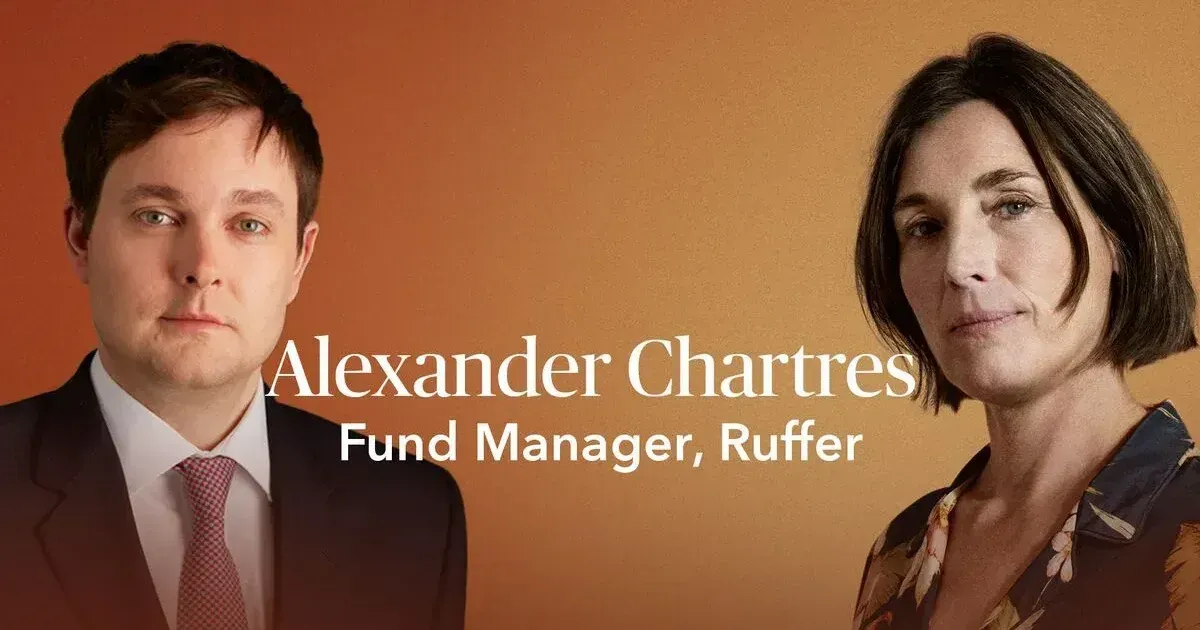
The active-management argument is gaining force as investors reassess geopolitical risk. Alexander Chartres, a fund manager at Ruffer, detailed on April 17, 2026, how the erosion of Western hegemony requires a total departure from traditional investment frameworks. Passive strategies that dominated the previous three decades relied on a specific set of geopolitical conditions. These conditions included stable globalization, low inflation, and the undisputed primacy of the United States. Merryn Somerset Webb discussed these shifts with Chartres, noting that the old guard of financial thinking is ill-equipped for a fractured world. Portfolios must now adapt to a structural environment where shocks are frequent and inflation persists as a constant threat.
History suggests that the long period of relative peace following the fall of the Soviet Union created a false sense of security in capital markets. This era of the peace dividend allowed for the rise of the 60/40 portfolio, a mix of 60% stocks and 40% bonds. Such a model assumes that bonds will always act as a hedge against equity volatility. Chartres argues that this correlation has broken down because inflation now drives both asset classes in the same direction. When consumer prices rise, both stocks and bonds often suffer together, leaving investors without a safe harbor in traditional liquid markets.
Political movements across the globe are accelerating the disintegration of the old order. Donald Trump functions as a catalyst in this process, though he did not initiate the underlying trends. Protectionist policies and the focus on domestic industrial strength have been building since the 2008 financial crisis. Recent trade disputes and the weaponization of financial systems have only hardened these divisions. Markets now face a reality where political goals frequently outweigh economic efficiency, leading to higher costs for consumers and lower margins for global corporations.
Post-Cold War Stability Faces Systematic Decay
Globalization reached its peak during the 1990s and 2000s, but the current trajectory points toward regionalization. Supply chains are being shortened to prioritize security over price. This change is inherently inflationary, as companies move production away from low-cost centers toward more expensive, friendlier jurisdictions. Chartres observes that the cheap labor and cheap energy that fueled the previous bull market are no longer guaranteed. Investors who ignore these geopolitical realities risk being trapped in assets that were designed for a different century.
Central banks once acted as the ultimate backstop for every market downturn. This interventionist policy, often called the central bank put, is now limited by the return of persistent inflation. Policymakers cannot easily lower interest rates to rescue markets if doing so would further spark price increases. As a result, the volatility of the 2020s is a return to a more historical norm after an anomalous period of suppressed interest rates. Financial experts must now look for value in sectors that benefit from disorder rather than those that require stability to flourish.
Active management is becoming a necessity for capital preservation. Passive funds that track broad indices often hold large weights in expensive technology firms and government debt. These sectors are particularly vulnerable to rising yields and shifting regulatory environments. Successful investing in 2026 requires the ability to rotate capital quickly between different regions and asset classes. Flexibility is the primary defense against the sudden policy shifts that define the current era.
Commodities and Industrial Capacity Pivot Away From Services
Industrial capacity is gaining importance after years of neglect in favor of the service economy. Nations are racing to secure the raw materials needed for defense and the energy transition. The competition creates a major demand for commodities like copper, lithium, and rare earth elements. Chartres points to the huge underinvestment in mining and energy infrastructure over the last decade as a reason for structural supply shortages. Prices for these essential inputs are likely to stay higher for longer periods, providing a tailwind for commodity-focused portfolios.
Repurposing existing industrial bases is a key theme for the coming decade. Governments in the U.S. and Europe are subsidizing the construction of semiconductor fabs and battery plants. The enormous injection of capital into physical infrastructure is a departure from the digital-first focus of the 2010s. Engineering firms and heavy machinery manufacturers stand to benefit from this localized manufacturing boom. These companies often trade at lower valuations than their software counterparts, offering a more attractive risk-to-reward ratio for discerning buyers.
Energy security has moved from a secondary concern to a top-tier national priority. Transitioning to renewable sources requires a meaningful amount of traditional fossil fuels to bridge the gap. Yet, the political pressure to divest from oil and gas has limited the development of new projects. It creates a supply crunch that supports high energy prices, even during periods of slow economic growth. Maintaining exposure to energy producers provides a hedge against the geopolitical risks that often disrupt global supply lines.
China Technology Assets Demand Selective Exposure
China presents a complex challenge for global investors seeking growth. While the geopolitical friction between Washington and Beijing is high, the technological advancements within China continue at a rapid pace. Chartres suggests that the market has already priced in a significant amount of political risk, making certain technology firms in the region look undervalued. These companies dominate the global supply chains for electric vehicles and green energy components. Total avoidance of the Chinese market could mean missing out on the primary drivers of the next industrial era.
Active diversification involves looking beyond the standard Western indices. Emerging markets that are not directly involved in the great power competition are also attracting interest. Countries with strong demographic profiles and abundant natural resources offer a buffer against the stagnation seen in aging Western economies. Still, these opportunities come with higher regulatory risks and currency volatility. Navigating these markets requires deep local expertise and a willingness to withstand short-term price fluctuations for long-term gains.
Structural change is not a temporary phase but a permanent feature of the new financial landscape. The transition from an unipolar world to a multipolar one involves friction that manifests as market volatility. Investors must accept that the old rules of diversification no longer apply in a world where asset correlations are changing. Focusing on real assets and companies with high pricing power is the only way to outpace the eroding effects of inflation. Capital allocation is now a matter of navigating through a series of constant, overlapping shocks.
Active Management Returns to the Debate
The era of the mindless investor is officially over. For three decades, the average participant could throw money into an S&P 500 index fund and let the combined forces of US hegemony and globalization do the heavy lifting. That was a historical fluke, not a permanent law of nature. Chartres is correct in identifying Trump as a symptom instead of the disease, but he perhaps undersells the severity of the institutional rot. Western financial systems are built on the assumption that the U.S. dollar stays the undisputed reserve currency forever, a premise that is currently being tested by a coalition of rivals from Moscow to Beijing.
Wall Street still clings to the 60/40 model because it is profitable to sell, not because it works. When the next major inflationary spike hits, those bond portfolios will provide zero protection, acting instead as a lead weight. True diversification now requires looking at things that make people uncomfortable, such as physical commodities, defense contractors, and even pariah markets like China. If you are not holding assets that benefit from a world on fire, you are not diversified; you are just waiting to be burned. The future belongs to the active, the cynical, and the prepared. Passive investing is a suicide pact.