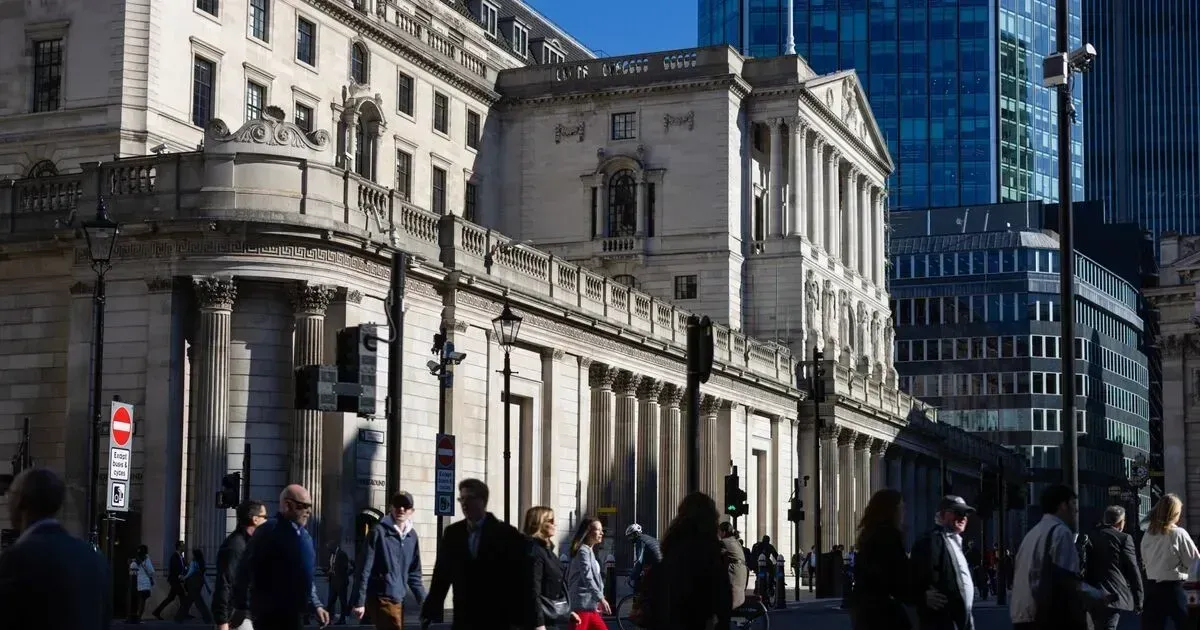
Governor Andrew Bailey and the Monetary Policy Committee signaled on April 17, 2026, that the Bank of England will maintain current interest rates for the remainder of the year. Economists surveyed by Bloomberg indicate a consensus that borrowing costs will stay at their current elevated levels to combat persistent inflationary pressures. Persistence in price increases, driven primarily by external shocks, has forced the central bank into a defensive posture. Energy costs rose sharply in response to the regional conflict involving Iran. Market volatility persists as supply routes through the Strait of Hormuz face frequent disruptions. Supply chain analysts suggest these pressures will keep the Consumer Price Index at 4.2% through December. Brent crude prices reached $100 per barrel last week. High interest rates usually cool the economy by reducing consumer spending. Current conditions differ because the inflation stems from supply-side failures rather than domestic demand. Monetary policy struggles to address price hikes caused by military actions in the Middle East. Inflationary expectations among British households have reached a three-year high.
Energy Markets and Middle East Risk
Conflict in the Persian Gulf has redefined the global energy trade. Britain relies heavily on imported liquefied natural gas and refined petroleum products, making the domestic economy vulnerable to sudden price spikes. Analysts at Goldman Sachs noted that the premium on oil futures reflects fears of a long-term blockade. Shipping insurance rates for tankers in the region have tripled since January. Fuel costs fill every layer of the U.K. supply chain. Transportation companies have already begun applying fuel surcharges to deliveries, which increases the price of groceries and consumer goods. Inflation in the services sector stays stubbornly high as businesses pass these costs to the public. Retailers reported a 2.4% drop in volume as shoppers prioritize essential heating and food over discretionary items.
Britain faces a unique challenge compared to its European neighbors. Reliance on gas-fired power plants means electricity prices track natural gas markets with extreme sensitivity. Government interventions in the energy market have prevented a total collapse in consumer confidence, but the underlying fiscal cost is mounting. Treasury officials estimate that current price caps will require an additional 12 billion pounds in subsidies if the conflict continues. Disruptions in the Strait of Hormuz continue to force global markets to confront oil price volatility.
Inflation Targets Versus Economic Growth Risks
Policymakers at Threadneedle Street must weigh the risk of a technical recession against their mandate for price stability. Conventional wisdom suggests that high rates will eventually break the back of inflation. This strategy assumes that the cause of inflation is something the Bank can actually influence. Military developments in Iran are beyond the reach of the Monetary Policy Committee.
Investment in the U.K. manufacturing sector has stalled. Businesses cannot justify expansion when the cost of capital stays above 5%. Mortgage holders also face serious pressure as fixed-rate deals expire and transition to higher monthly payments. Roughly 1.5 million households will see their housing costs increase by an average of 300 pounds per month this year.
Lending institutions have tightened their criteria in anticipation of a cooling housing market. Average property prices in London fell by 1.2% in the first quarter of 2026. Real estate agents report a meaningful drop in new listings as homeowners choose to wait for more favorable financing conditions. Such stagnation in the housing sector often precedes broader economic downturns.
Stagnation has become the primary concern for the Office for Budget Responsibility. Projections for GDP growth in 2026 have been revised downward to 0.4%. Critics of the current policy argue that the Bank of England is being too cautious. They claim that the energy-driven inflation is transitory and that the economy needs lower rates to avoid a protracted slump.
Sterling Stability in a High Rate Environment
Currency traders have responded to the rate holds by supporting the pound. Sterling reached 1.28 against the U.S. dollar following the latest MPC minutes. Higher interest rates attract foreign capital seeking better returns, which provides a cushion for the currency. A strong pound helps reduce some inflationary pressure by making imports slightly cheaper for British companies.
Market expectations for a rate cut have vanished.
Institutional investors are currently pricing in a 90% probability that rates will not move until at least February 2027. Yields on ten-year Gilts have stabilized around 4.1%. This relative calm in the bond market suggests that investors believe the Bank of England is committed to its inflation-fighting credentials despite the political pressure to provide relief.
Global markets look toward the Federal Reserve and the European Central Bank for similar signals. If the U.K. remains an outlier with high rates while others cut, the pound could appreciate further. Such a move would harm British exporters who are already struggling with increased logistics costs. Balancing the needs of domestic consumers with the demands of international trade remains a delicate task for Governor Andrew Bailey.
Rate Path Uncertainty
Paralysis often masquerades as prudence in the wood-paneled rooms of Threadneedle Street. Governor Andrew Bailey faces a reality where his primary tool, the interest rate, has lost its edge against a war-driven energy crisis. Holding rates steady is not a victory of stability, but a confession of helplessness. Central banks cannot drill for oil or secure shipping lanes in the Strait of Hormuz. By keeping rates at restrictive levels, the Bank of England is effectively punishing British consumers for a geopolitical event they did not cause and cannot fix.
This inertia risks turning a temporary energy shock into a permanent economic scar. The fixation on the 2 percent inflation target ignores the structural shift in global energy security. If the Bank continues to prioritize an arbitrary number over the health of the industrial base, it will oversee a hollowed-out economy that lacks the resilience to survive the next inevitable crisis. Modern monetary policy is failing to adapt to a world where supply, not demand, is the dominant variable. The conclusion is clear: stagnant policy leads to a stagnant nation.