Amazon designers are building a new Alexa smartphone to challenge the market dominance held by Apple and other tech giants. Internal documents suggest this project aims to circumvent the dominant ecosystems controlled by Apple and Google. The hardware effort, known internally as project Transformer, became a second chance for the retail giant to establish a permanent presence in the pockets of global consumers.
But the project is not a typical flagship phone development. Instead of competing on raw processing power or camera megapixels, project Transformer focuses on artificial intelligence. Reuters first reported the development, noting that four anonymous sources confirmed the device is currently being designed by a specialized team. This hardware initiative appears focused on embedding the voice assistant into the daily lives of users more deeply than any standalone speaker could manage.
ZeroOne Leadership and the Microsoft Connection
ZeroOne functions as the primary engine behind this new hardware push. Lead executive J Allard oversees the unit, bringing a decade of experience from his tenure at Microsoft where he helped launch the Xbox and the Zune. Amazon recruited J Allard last year to lead special projects focused on creating breakthrough consumer categories. His presence suggests a pivot away from the corporate culture that birthed previous failures.
Meanwhile, the team is exploring multiple hardware form factors. Sources indicate that ZeroOne researchers have considered both standard smartphone designs and minimalist handsets. These minimalist devices, often called dumbphones, strip away complex features to focus on core communication and voice-led tasks. J Allard reportedly wants to capture a market segment that is increasingly wary of digital distractions and high price points.
In fact, Allard has reportedly encouraged his engineers to look toward unconventional competitors for inspiration. By contrast, most Silicon Valley firms focus on matching the iPhone feature for feature. Project Transformer seems to be taking notes from the Light Phone, a $700 minimalist device known for its black-and-white display and lack of social media access. Focusing on utility over entertainment could help Amazon differentiate itself in a saturated market.
Minimalist Design Strategy and the Light Phone
For instance, the inclusion of an e-ink or low-power display has been discussed in internal meetings. Such a design would focus on Alexa as the primary way to interact with the device rather than a grid of colorful icons. Apple and Google have spent years perfecting the app-store model, but Amazon may try to bypass that entire structure. According to the Reuters report, the device might not even run a traditional custom operating system built around the voice assistant.
"Transformer is currently in development in Amazon's ZeroOne group, led by J Allard, who previously worked on the Zune and Xbox at Microsoft."
Still, the decision to use a minimalist interface carries significant risks. Consumers have grown accustomed to the high-resolution OLED screens found on every modern Apple device. Stripping away these luxuries in favor of an AI-centric experience requires a total shift in user behavior. Most mobile users today treat their phones as entertainment hubs, while Amazon wants to position Transformer as a sophisticated tool for productivity and shopping.
In turn, this tool would serve as a direct portal into the Prime ecosystem. Alexa would theoretically manage shopping lists, handle household reorders, and control smart home devices with greater speed than a third-party app. Prime members would find that buying products on the main platform is easier than ever before. Integration with Prime Video and Music would remain present, though the primary goal is utilitarian efficiency.
Ecosystem Integration and App Store Circumvention
Separately, leaked reports indicate that the Transformer phone could be sold as a secondary handset. This positioning avoids the difficult task of convincing users to abandon their primary Apple or Android devices. A secondary device could focus exclusively on voice commands and quick tasks while the main phone handles photography and social media. Such a strategy allows Amazon to gather data on user habits without needing to replace every aspect of their digital lives.
Buying products through a voice-first interface eliminates the friction of traditional mobile web browsing. Alexa would act as a concierge, filtering search results and providing recommendations based on years of purchase history. This level of vertical integration is something even Apple has struggled to master despite its control over the hardware and software. By bypassing traditional app stores, Amazon keeps more revenue from digital transactions.
Even so, analysts remain skeptical of whether consumers want another device in their pockets. The 2014 era of hardware was defined by a rush to create single-purpose gadgets, but the modern trend favors consolidation. Amazon representatives declined to comment on the Reuters report when reached for clarification. The lack of an official statement has only fueled speculation within the tech industry about the potential launch date.
Financial Risks and the Fire Phone Legacy
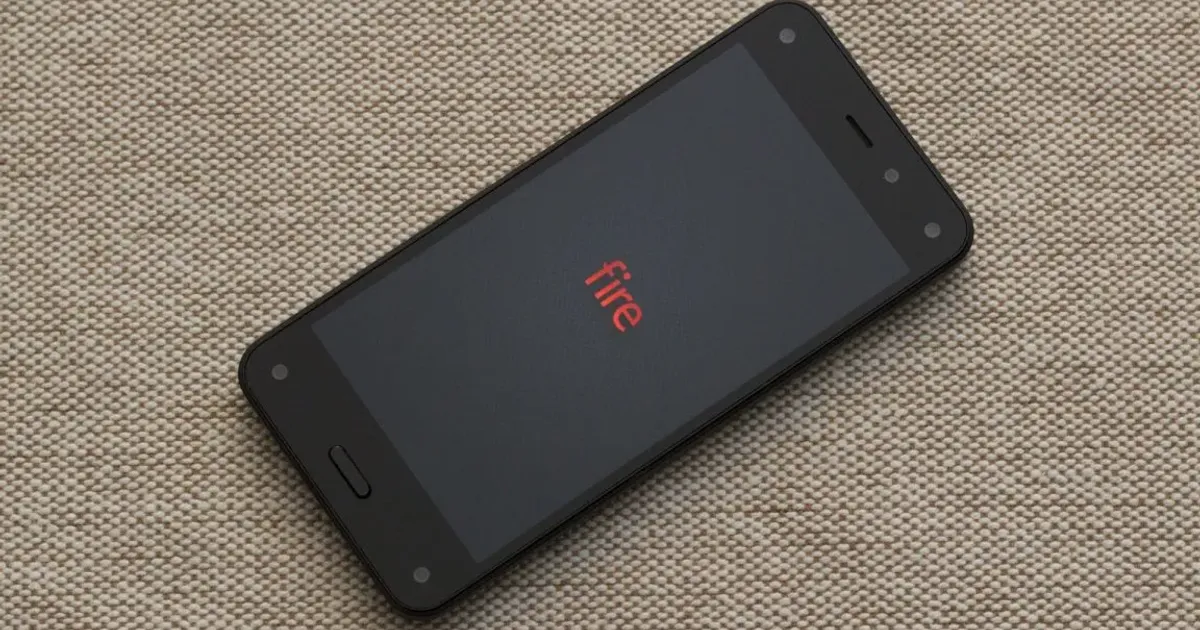
To that end, the memory of the Fire Phone continues to loom over the ZeroOne offices. Launched over a decade ago, that device resulted in a $170 million write-down and left millions of unsold handsets in warehouses. It was widely criticized for its gimmick-heavy interface and lack of popular third-party apps. Amazon cannot afford a repeat of that financial disaster in the current economic climate. an Alexa phone would test whether Amazon can turn ambient assistant use into mobile loyalty. Challenging Apple requires more than hardware; it requires a reason to switch ecosystems.