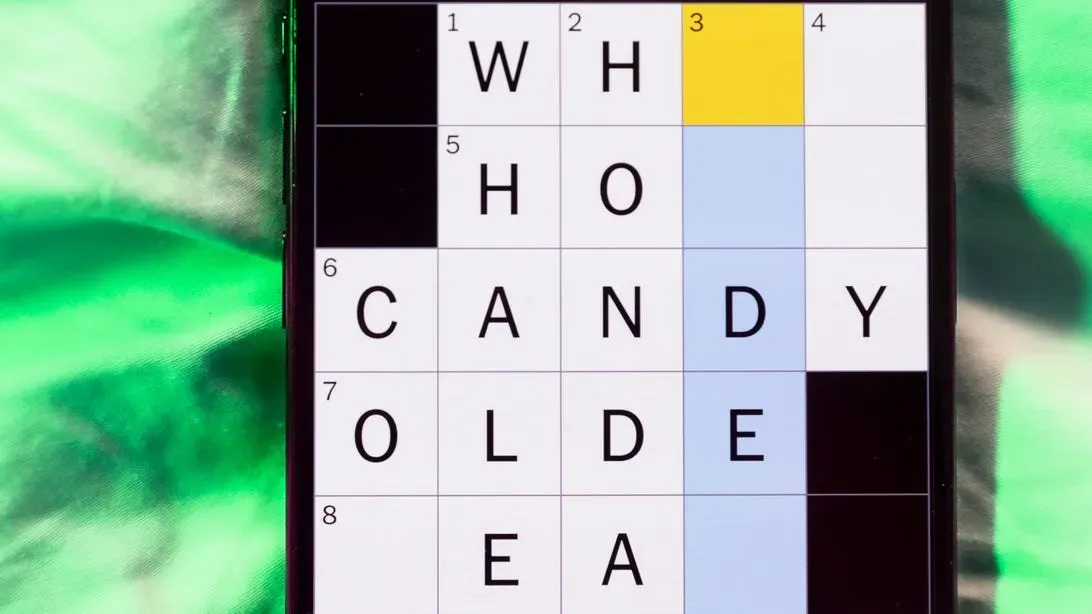
March 20, 2026, defines a specific intersection of digital media and trivia as The New York Times releases its latest bite-sized puzzle. Players managing the grid today encounter a blend of hip-hop culture, television broadcasting, and the seasonal anxiety of fiscal responsibility. The digital gaming ecosystem has evolved into a central pillar for the publication, with high engagement metrics driving a major portion of its subscriber growth.
Clues for the Friday grid require a mix of rapid-fire knowledge and linguistic flexibility. Speed remains the primary motivator for a subset of the user base that treats the small puzzle as a daily sprint. Such engagement relies on the puzzle’s ability to remain accessible yet occasionally friction-heavy to prevent completion times from dropping too low. J. Cole appears as a prominent answer, referencing his fictionalized 2026 album title from the clue.
NYT Mini Crossword Solves and Clue Breakdown
Across clues today begin with a nod to the sports broadcasting world. Cable channel that airs March Madness games leads directly to the answer TBS. Warner Bros. Discovery currently holds these broadcasting rights, a fact that connects with the current collegiate basketball tournament schedule. The inclusion of this clue mirrors real-world events occurring simultaneously with the puzzle’s release date.
Still, the grid moves quickly from sports to the music industry. Rapper with the 2026 #1 album "The Fall-Off" points toward J. Cole, a figure whose discography has long been a staple of pop culture trivia. This specific clue highlights the puzzle’s tendency to integrate contemporary celebrity references to attract a younger, digitally native demographic. The answer is found in the second horizontal row.
Separately, the puzzle addresses more mundane societal obligations. Review thoroughly, as taxes results in the answer Audit, a word that carries significant weight as the spring tax deadline approaches in the United States. This is followed by a common expression of frustration, "Darn it!", which yields the four-letter answer Crap. The final across clue involves household items often forgotten when leaving a residence, resulting in Keys.
Digital Puzzle Speed Running and User Metrics
In fact, the competitive nature of the Mini Crossword has created a subculture of players who track their completion times with precision. Mashable reports that the puzzle functions as a speed-running test, where every second spent on a tricky clue can disrupt a player’s flow. Data suggests that the average completion time for a Friday puzzle ranges between 30 and 90 seconds for experienced users.
"The daily puzzle doubles as a speed-running test for many who play it," notes a recent analysis of digital gaming habits.
But the difficulty of today’s Down clues may slow those seeking a personal best. Yesterday, tomorrow leads to the clever answer Today, a temporal play on words that often trips up those looking for more complex definitions. Radar screen dots results in Blips, a term rooted in mid-century technological jargon that persists in the digital age. The grid placement of these words ensures that the vertical and horizontal answers intersect at critical consonant junctions.
Down clues continue with "On your marks... get...", which is the obvious three-letter bridge Set. Playing card historically called a knave refers to the Jack, a clue that rewards players with knowledge of traditional playing card history. Medical success concludes the Down list with the answer Cure, ending the vertical column on a definitive, positive note.
The New York Times Games Expansion Strategy
Meanwhile, the broader strategy involving the NYT Games app continues to yield impressive financial results. The division contributed greatly to the company reaching a reported $1.1 billion in annual digital subscription revenue recently. By bundling games like Wordle, Connections, and the newly released Pips with traditional journalism, the organization has reduced the churn common in the digital news industry.
According to Mashable, the Mini is an entirely different vibe compared to the lengthy daily crossword. While the standard 15x15 grid requires patience and deep knowledge, the Mini’s 5x5 format caters to the mobile-first consumer. This shift in design philosophy reflects a broader movement within the tech industry to capture small windows of user attention throughout the day. The New York Times has successfully leveraged this to become a dominant player in the casual gaming market.
To that end, the puzzles serve as a gateway for the publication’s more serious reporting. Users who open the app for a quick crossword are frequently funneled toward breaking news alerts and investigative features. The cross-pollination of entertainment and information has become a blueprint for legacy media outlets struggling to modernize their business models. The retention rates for game-first subscribers are consistently higher than those for news-only subscribers.
March Madness and Cultural Referencing in The Mini
By contrast, the inclusion of TBS in today’s puzzle illustrates the teamwork between the crossword and the current sporting calendar. March 20, 2026, falls directly during the peak of the collegiate basketball season. Using clues that reflect the mood ensures that the puzzle feels relevant and timely rather than a static repository of trivia. The editorial choice keeps the content fresh for a global audience.
Even so, the reliance on American-centric clues like J. Cole and March Madness can occasionally alienate international players. The New York Times has addressed this by occasionally including global geography and world history, though the focus remains primarily on Western pop culture. Friday puzzles often lean into this cultural specificity more than the earlier, simpler grids of the week.
In particular, the crossover between different games in the NYT ecosystem is evident. Hints for Strands and Connections often appear alongside the Mini, encouraging players to spend more time within the app. Each game targets a different cognitive skill set, from spatial reasoning to linguistic association. The Mini acts as the primary anchor for this suite of digital products.
For instance, the transition from Wordle to the Mini is a common user path. Wordle provides a once-a-day communal experience, whereas the Mini offers a more individualistic performance metric. Both games utilize the same minimalist aesthetic that has defined the NYT digital brand for several years. The visual consistency helps maintain a smooth user experience across different game formats.
Yet the challenge for editors remains the balance of difficulty. If a puzzle is too easy, it fails to satisfy the competitive urge of the speed-running community. If it is too difficult, it risks frustrating casual users who play during their morning commute. The March 20 grid achieves a balance by using common words for the Down clues to support the more specific proper nouns in the Across clues.
For one, the answer Audit is a bridge for many players who might struggle with the J. Cole reference. Even if a user is unfamiliar with modern hip-hop, the crossing letters from Audit and Keys will eventually reveal the rapper’s name through deductive reasoning. The interlocking architecture is the hallmark of a well-constructed grid, regardless of its size. The 5x5 format leaves little room for error by the puzzle constructor.
The Elite Tribune Perspective
Has the Gray Lady traded her investigative quill for a digital joystick? The expansion of the NYT Games division is not merely a clever diversification of revenue; it is a fundamental reconfiguration of what a newspaper actually is. By focusing on the addictive loops of digital puzzles, The New York Times risks transforming from the world’s most influential newsroom into a high-end arcade that happens to have a foreign desk. The data is clear: subscribers stay for the games, not the op-eds.
The development is a cynical admission that serious journalism is no longer a viable product on its own in the 2026 attention economy. While the $1.1 billion in gaming revenue keeps the lights on, one must wonder if the light is illuminating actual news or just another five-by-five grid. The inclusion of J. Cole and TBS in the March 20 puzzle is a masterful exercise in cultural pandering designed to keep the metrics high. We are watching the slow-motion erosion of a news institution as it dissolves into a suite of casual diversions.
If the future of the free press depends on how fast a 25-year-old can type "TBS" into a smartphone, the industry is in more trouble than any audit could reveal.